UBS
Swiss Senate delays decision on tougher UBS capital rules
The Senate has postponed its decision on stricter capital requirements for UBS’s foreign subsidiaries. The proposal could require the bank to hold around CHF18 billion in additional core capital, setting up a major debate over financial stability and competitiveness.
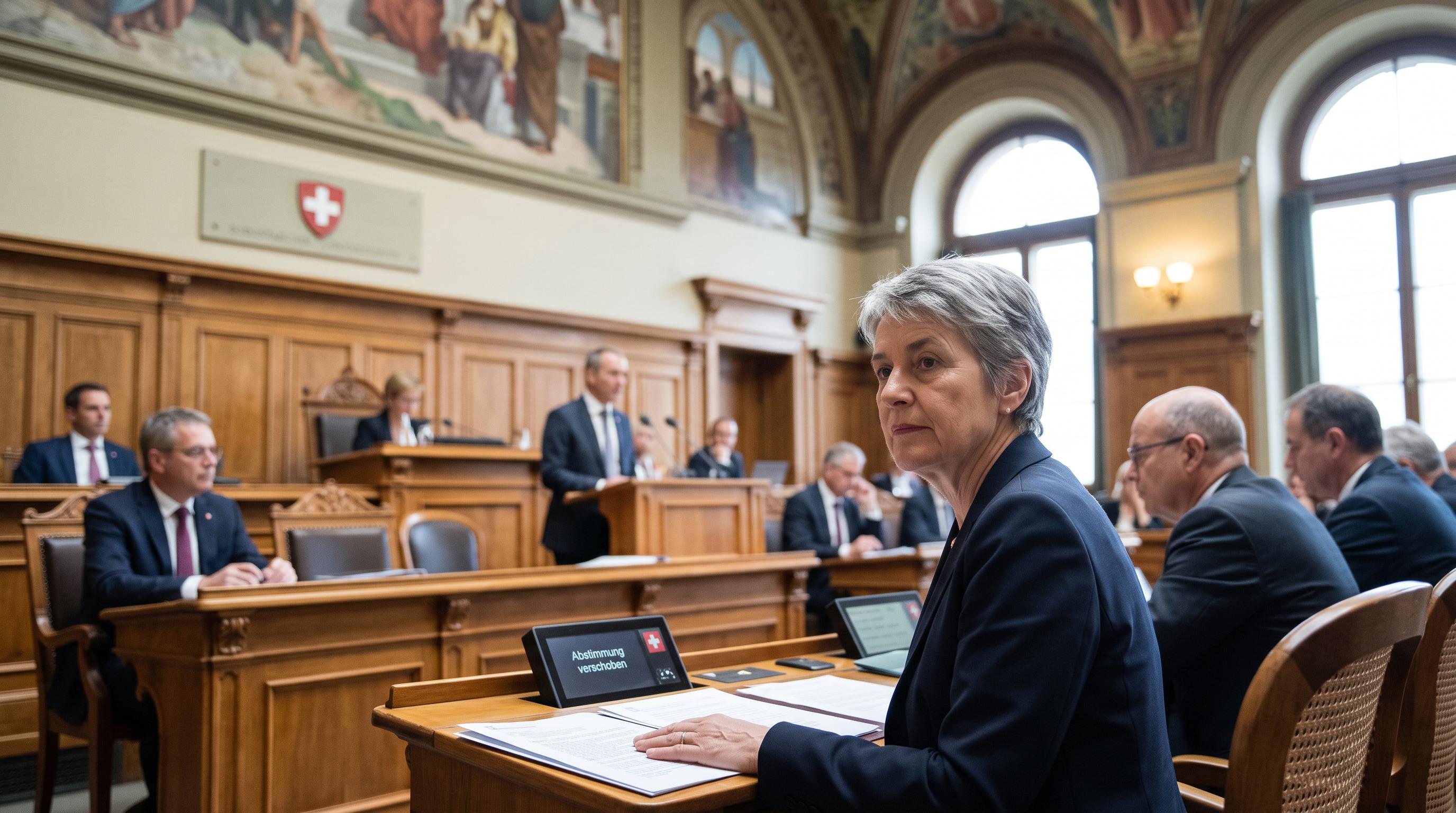
Senate postpones UBS capital vote
The Senate has delayed a vote that could reshape UBS’s capital structure. Switzerland’s Council of States ran out of time on Thursday, September 17, while debating stricter capital requirements for systemically important banks with substantial foreign holdings. The debate will resume next week, leaving the most consequential proposals unresolved.
The legislation would affect UBS in practice because it is currently the major Swiss bank that fits the framework. The Federal Council wants UBS to back its foreign subsidiaries with 100% common equity tier 1 capital, known as CET1. CET1 is the highest quality form of bank capital and consists primarily of shareholders’ equity and retained earnings.
UBS strongly opposes the government’s approach. The bank says the measure could require approximately $22 billion, or CHF18 billion, in additional core capital. That figure has put the issue at the centre of a broader parliamentary debate over how Switzerland should protect itself against a future banking crisis while preserving the international competitiveness of its largest bank.
Because the Senate did not reach the minority motions, the final balance between financial safeguards and operating costs remains unsettled.
Government demands full CET1 backing
The government’s proposal would demand full CET1 backing for UBS’s foreign subsidiaries. Under the plan before the Senate, overseas units of systemically important banks would need to be supported entirely by hard core capital. The requirement targets the capital available to absorb losses directly, rather than relying partly on instruments that can convert or be written down under stress.
The proposal reflects Switzerland’s experience as the home of a globally active bank whose foreign operations could become critical during a crisis. Requiring capital to sit behind those subsidiaries would give Swiss authorities a larger financial buffer and a clearer source of loss absorption if a unit ran into difficulty.
UBS has argued that the change would come at a high cost. Its estimate of CHF18 billion in extra core capital represents funds that could otherwise support lending, investment, share buybacks or other corporate priorities. The source report does not specify how UBS would meet the requirement or how the increase would affect its business lines.
The Senate debate is therefore focused on the design of the rule as well as its headline number. Lawmakers must decide how much protection foreign operations require and which forms of capital should count toward that protection.
Committee proposes capital compromise
The Senate committee has offered a middle course, raising hard capital backing to 50%. The majority of the Economic Affairs Committee of the Council of States, known as WAK-S, has proposed tightening the current too-big-to-fail framework without adopting the government’s full-CET1 model.
Under the committee plan, 50% of foreign holdings would be backed by CET1 capital, up from the current 45%. The remaining 50% could be supported by additional tier 1 bonds, or AT1 instruments. These securities can absorb losses under defined conditions, but they are distinct from ordinary equity and are treated differently from CET1 capital in the regulatory framework.
The proposal would also alter the existing mix. Current rules provide for 45% core capital plus 17% AT1 bonds for the relevant foreign holdings. UBS rejects the committee’s approach as well, according to the source report, although the report does not give the bank’s detailed reasons or a separate cost estimate for this alternative.
The committee’s position now sits between the Federal Council’s 100% requirement and the existing rules. That structure gives the Senate several possible landing points when it resumes debate, including further amendments to the proportions or the instruments allowed.
Minority pushes for 90% rule
A sizeable Senate minority is pressing for a 90% requirement. The alternative would move much closer to the Federal Council’s position than to the committee majority’s proposal. Representatives of left-wing parties supported the government’s plan during the debate, according to Keystone-SDA, while other lawmakers backed the committee’s softer formula.
The figures show the range confronting the Council of States: the current hard-capital level is 45%, the committee majority proposes 50%, a Senate minority wants 90%, and the Federal Council seeks 100% CET1 backing. Those percentages concern the hard core capital requirement and should not be read as a single vote split or as public support figures.
The dispute also highlights the political divide around Switzerland’s too-big-to-fail rules. Stricter requirements could strengthen the country’s ability to manage losses within a global banking group. They could also increase the amount of capital UBS must hold in or against its international operations, potentially affecting how the bank allocates resources.
The Senate has not yet voted on the minority motions. Its next session will determine whether lawmakers endorse the committee recommendation, move toward the government’s model or develop another arrangement before the bill advances.
Senate sets the next regulatory test
Next week’s debate will decide how far Switzerland moves beyond its current safeguards. The Senate must first complete its deliberations and vote on the minority motions. The chamber’s decision will then shape the bill’s path through Parliament, although the source report does not set out the remaining procedural timetable or predict the final outcome.
For UBS, the stakes are measured in both capital and regulatory certainty. The bank operates internationally, while its main supervisory and political accountability remains tied to Switzerland. A rule requiring more CET1 capital behind foreign subsidiaries could give Swiss authorities greater protection in a crisis. It could also make the Swiss framework more demanding than the rules applied to competing global banks, depending on the final design and international comparisons.
For policymakers, the issue follows the logic of the too-big-to-fail regime: the larger and more interconnected a bank becomes, the more capacity it should have to absorb losses without relying on public support. The disagreement is over the appropriate level and the kinds of capital that should count.
The Senate’s postponed vote has extended that calculation. Until lawmakers settle the percentages, UBS, regulators and investors will continue to work with an unresolved picture of Switzerland’s future capital rules.