Geneva
Trump-era funding cuts cost Geneva’s international sector more than 2,800 jobs
More than 2,800 jobs have disappeared from Geneva’s international organisations since the return of Donald Trump to the US presidency. This article would assess the effect of US funding cuts on Geneva’s international ecosystem, while examining why the government considers the losses lower than feared.
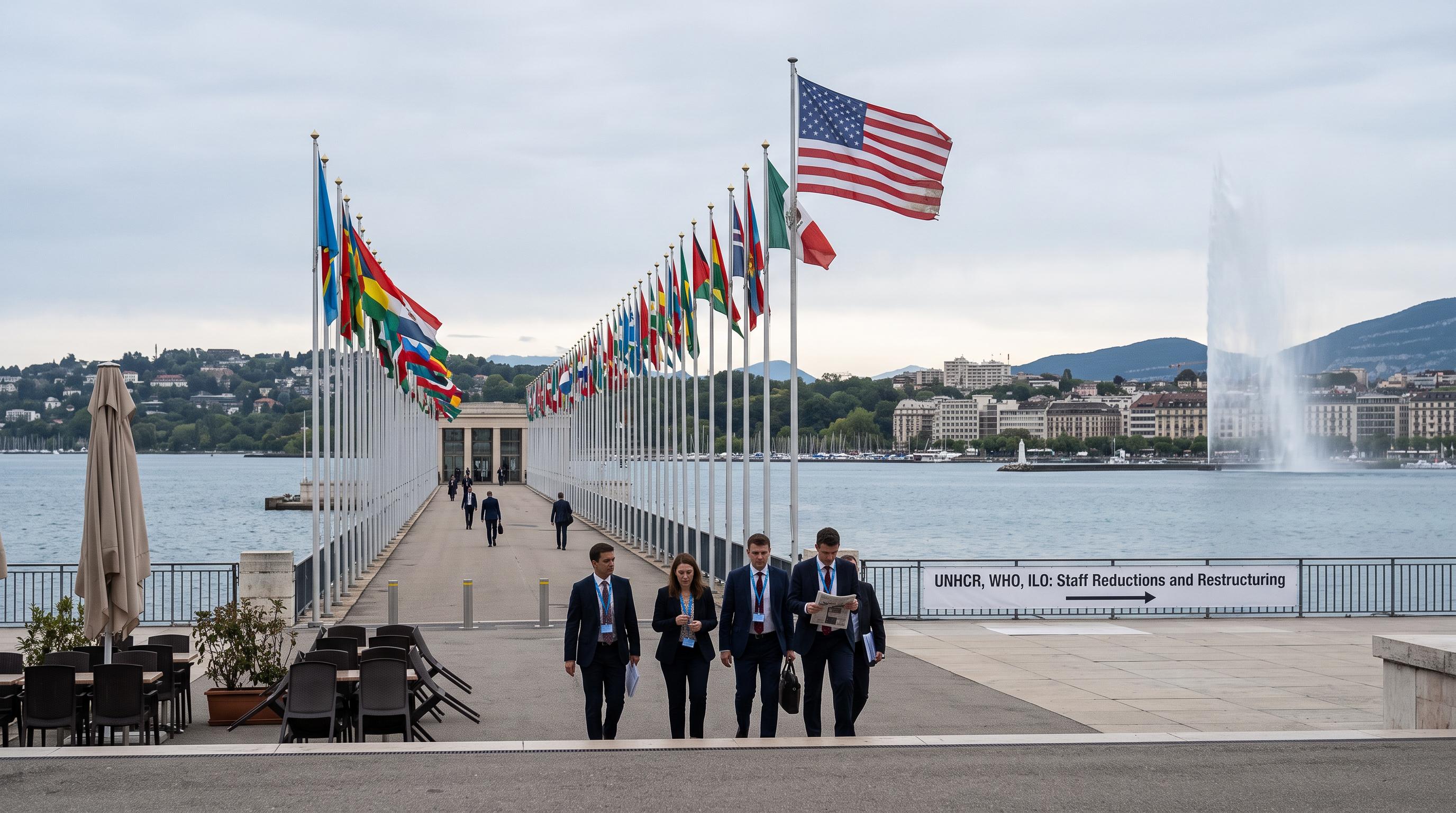
Trump Cuts Leave Geneva’s International Sector Short More Than 2,800 Jobs
More than 2,800 jobs have disappeared from Geneva’s international organisations since Donald Trump returned to the US presidency. The figure, released by Switzerland’s foreign ministry on Monday evening and reported on September 15, 2026, offers the clearest measure yet of the pressure facing the city’s multilateral sector.
In 2024, the organisations counted 25,696 employees. By September 2026, the reported workforce had fallen to just under 23,000. The decline followed Trump’s decision, after his return to the White House in early 2025, to cut US funding for United Nations agencies and non-governmental organisations. Other countries followed with reductions of their own.
The numbers matter well beyond payrolls. Geneva hosts a dense network of UN bodies, diplomatic missions, aid agencies and specialised institutions. Their employees support offices, schools, hotels, transport companies and a large professional services economy across the canton.
The published count remains incomplete. It excludes NGOs and does not fully include job cuts at the Geneva headquarters of the International Organization for Migration, the UN Refugee Agency and the World Health Organization. The total impact on Geneva’s international ecosystem is therefore larger than the headline figure suggests.
The Headline Count Does Not Capture the Full Retreat
The reported workforce has fallen by roughly one tenth from its 2024 level, although the exact scale of the contraction remains difficult to measure. The foreign ministry’s figures compare 25,696 employees in 2024 with a current total of just under 23,000.
That comparison captures the direct loss recorded across international organisations, yet several qualifications are essential. NGOs are absent from the current figure, even though they form a significant part of Geneva’s humanitarian and development network. The tally also does not include all the posts eliminated by the International Organization for Migration, UNHCR and WHO beyond their Geneva headquarters.
The cuts began with Washington. Trump announced reductions in US support for UN agencies and NGOs after taking office in early 2025. The United States has traditionally been a major contributor to the multilateral system, so its decisions created immediate uncertainty for organisations whose programmes depend on voluntary financing and assessed contributions.
The source does not provide a breakdown by organisation, job category or nationality. It also does not identify how many positions were abolished, left vacant or transferred elsewhere. Those gaps limit precise conclusions about which parts of Geneva’s labour market absorbed the first shock.
New Missions Give Geneva’s Diplomatic Network Some Resilience
Switzerland’s foreign ministry says the losses are “lower than feared”, a cautious assessment against a harsher scenario for International Geneva. The statement does not minimise the reduction. It places the figure within a broader picture in which Geneva has continued to attract diplomatic and institutional activity despite the funding shock.
Three additional states have opened missions in Geneva, and the total number of international organisations has reached 29, one more than before. The new missions do not replace the posts lost at UN agencies, nor do they restore the budgets of affected NGOs. They do show that governments continue to value Geneva as a platform for diplomacy, negotiations and international administration.
The distinction matters for the canton. A mission can strengthen Geneva’s diplomatic presence without employing the same number of people as a major operational agency. Similarly, a new organisation may bring political visibility while creating fewer local jobs than a large humanitarian programme.
The ministry’s assessment therefore rests on more than the workforce total. It reflects the continued presence of institutions and states, even as their staffing and financing change. The source provides no forecast for further cuts and no estimate of the economic value of the jobs already lost.
Switzerland Must Track What the Job Count Leaves Out
Geneva enters the next phase with fewer staff, incomplete data and a larger test of its international role. The city remains home to 29 international organisations, but the workforce figures show that institutional presence and employment strength are moving in different directions.
For Switzerland, the consequences reach beyond the immediate number of lost posts. International Geneva supports a specialised labour market and sustains demand for housing, education, conference services, hospitality and transport. The available source does not quantify those effects, so the wider economic cost cannot yet be stated precisely. It does establish that the contraction has already passed the 2,800 job mark within the organisations covered.
The next accounting will need to include NGOs and provide fuller figures for IOM, UNHCR and WHO. It will also need to distinguish permanent posts from temporary contracts and vacancies, while showing whether organisations have shifted work away from Geneva or reduced programmes altogether.
The foreign ministry’s lower-than-feared assessment gives Swiss policymakers room to defend Geneva’s position. The continuing arrival of new missions offers evidence of demand for the city’s diplomatic infrastructure. The employment decline shows why that position cannot be measured by the number of flags outside the Palais des Nations alone.