housing
Swiss housing vacancy rate falls below 1 percent
Switzerland’s housing vacancy rate has fallen below 1% for the first time since 2013, with fewer than 45,500 homes empty nationwide. Report on the regional disparities, the effect on rents and mobility, and why construction is failing to keep pace with demand.
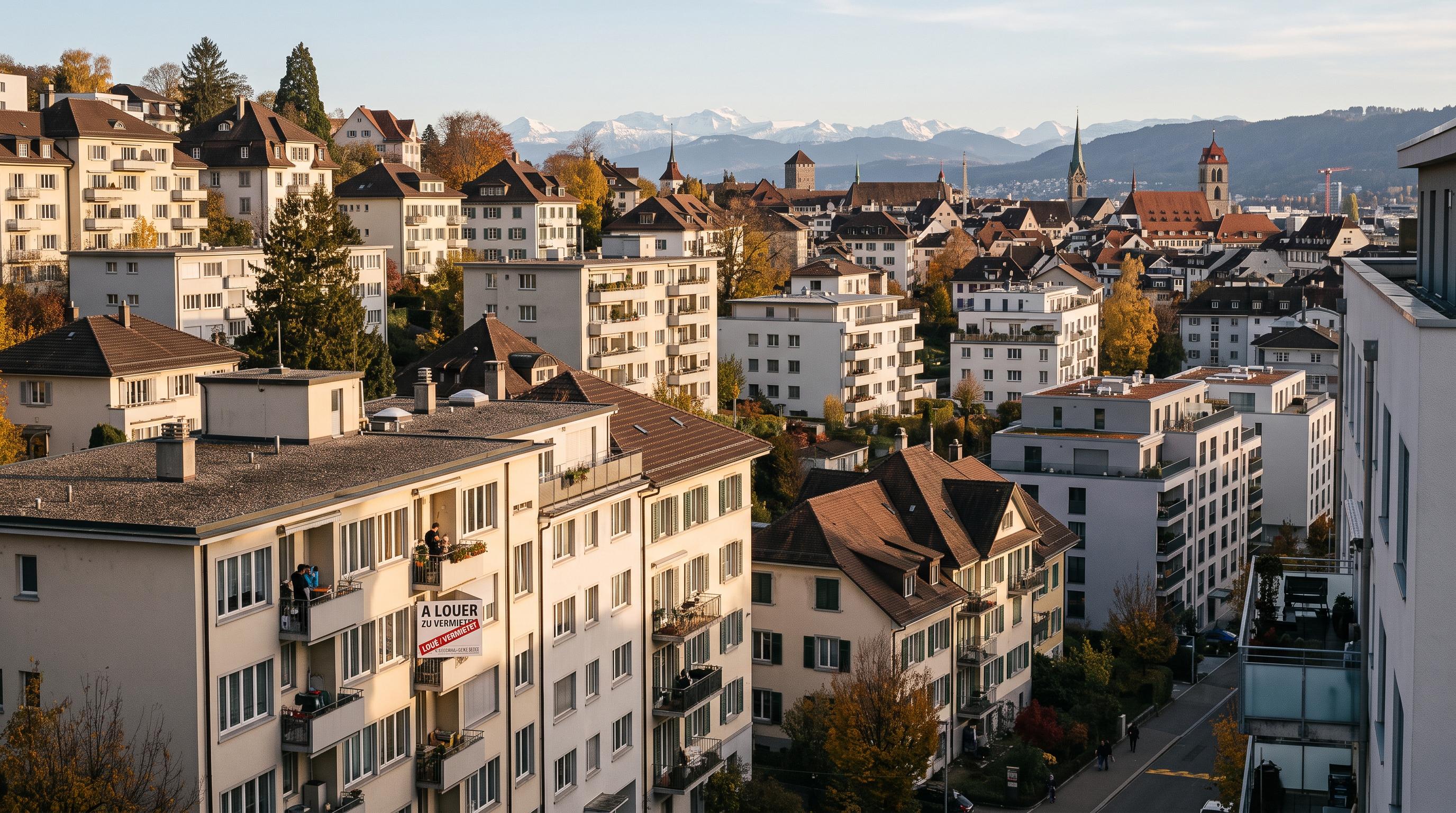
Switzerland’s Empty Homes Fall Below 1%
Switzerland had 45,493 empty homes on 1 June 2026, and fewer than one in every 100 homes was available. The Federal Statistical Office recorded a national vacancy rate of 0.93%, down 0.07 percentage points from a year earlier. It is the first sub-1% reading since 2013 and the sixth consecutive annual decline.
The contraction is visible across the market. Empty homes fell by 2,962, or 6.1%, in twelve months. The supply of properties available to rent dropped even faster, by 6.7%, leaving 34,690 rental homes vacant. Another 10,803 homes were on the market for sale.
For households searching in tight urban and employment centres, the figures point to fewer alternatives, more competition and less room to negotiate. Tenants who need to move for work, family or affordability may face longer searches and a narrower choice of locations. The effect extends beyond Switzerland’s largest cities because vacancy rates declined in six of the country’s seven major regions.
The national figure conceals sharp regional differences, but it establishes the direction of travel: available homes are becoming scarcer while demand continues to absorb new supply.
Cantons Pull Apart on Housing Supply
Fifteen cantons now have vacancy rates below 1%, placing the sharpest pressure in central Switzerland and the Geneva region. Zug recorded the country’s lowest rate at 0.20%, followed by Geneva at 0.31% and Obwalden at 0.38%. Vaud reached 0.87%, making it the only French-speaking canton apart from Geneva to fall below the 1% threshold.
The shortage is less severe in parts of the northwest and west. Jura had the highest vacancy rate at 3.35%, followed by Solothurn at 1.91%, Ticino at 1.78% and Neuchâtel at 1.64%. These figures do not erase local pressure, but they show how unevenly housing demand is distributed across Switzerland.
Greater Zurich was the sole major region to record a small increase, with its rate edging up to 0.52%. Even there, available homes remain limited by national standards. The sharpest regional falls came in eastern Switzerland, northwestern Switzerland and Ticino.
That geography reinforces the link between housing and access to jobs, transport and services. A home may be available in one canton while remaining impractical for a worker whose income depends on another.
Rents Rise as Affordable Stock Shrinks
Rents are rising as the homes most households need become harder to find. The Federal Statistical Office recorded falling vacancies across every home size, with the steepest percentage decline among two-room flats. That matters for single adults, young couples and people entering Swiss cities for work, groups that often rely on smaller rental units.
The available stock is also changing hands. Institutional investors, including pension funds, insurers and property companies, owned about 44% of rental housing in 2023, up from roughly 31% in 2000. Private and non-profit landlords lost share over the same period. The shift does not by itself establish the rent charged for any individual property, but it describes a housing market increasingly managed by large professional owners.
The Swiss Tenants’ Association says the shortage is allowing some landlords to demand excessive rents and breach legal limits on returns. It has also warned that new construction is often concentrated at the expensive end of the market, while cheaper homes steadily disappear.
For tenants, mobility now carries a financial penalty. Moving closer to a job, changing household size or leaving an overcrowded flat can mean accepting a higher rent, a longer commute or both.
Construction Misses the Affordable Market
New construction is not replenishing the parts of the market where demand is strongest. On 1 June, 3,910 homes built within the previous two years were empty, yet the overall number of vacant homes still fell sharply. Vacancies also declined among detached houses and across every home size, showing that the squeeze reaches beyond older apartment blocks.
The pattern suggests a mismatch between what is being built and what households can afford. The Swiss Tenants’ Association says much new construction is aimed at the expensive end of the market, while lower-cost homes are disappearing. A larger housing stock therefore does not automatically create relief for tenants competing for moderately priced flats.
The ownership structure adds another layer. Institutional landlords held 44% of rental housing in 2023, according to the figures cited by Le News, compared with about 31% in 2000. Decisions about redevelopment, renovation and rent levels increasingly sit with organisations managing large portfolios.
The vacancy data gives policymakers a clear warning about supply. Building activity must produce homes in the regions where jobs and population demand are concentrated, and in sizes and price bands that households can actually access. Otherwise, new units may coexist with a worsening search for affordable accommodation.
A Housing Shortage That Limits Mobility
The next phase of Switzerland’s housing squeeze will be measured in lost mobility as much as in higher rents. The vacancy rate has already fallen 0.79 percentage points since 2021, and the latest decline covers rental properties, homes for sale, new builds and detached houses. Without a stronger flow of suitable homes, households may remain in flats that no longer fit their needs because moving has become too costly or uncertain.
Regional policy will matter. Zug, Geneva and Obwalden have almost no spare stock, while Jura, Solothurn, Ticino and Neuchâtel retain higher vacancy rates. Those differences could support more balanced development, but only if employment, transport and services make lower-pressure areas realistic options for residents and workers.
The national statistics also leave a practical test for the construction sector. Of the empty homes recorded in June, 34,690 were rentals, yet that figure represented a year-on-year fall of 6.7%. New projects are reaching the market, but they are not replacing affordable supply quickly enough.
Switzerland enters the next year with a housing market below the 1% vacancy line and little evidence of broad relief. The pressure will remain concentrated where economic opportunity and available homes are furthest apart.