AI
Written with AI assistance•21. Mai 2025•
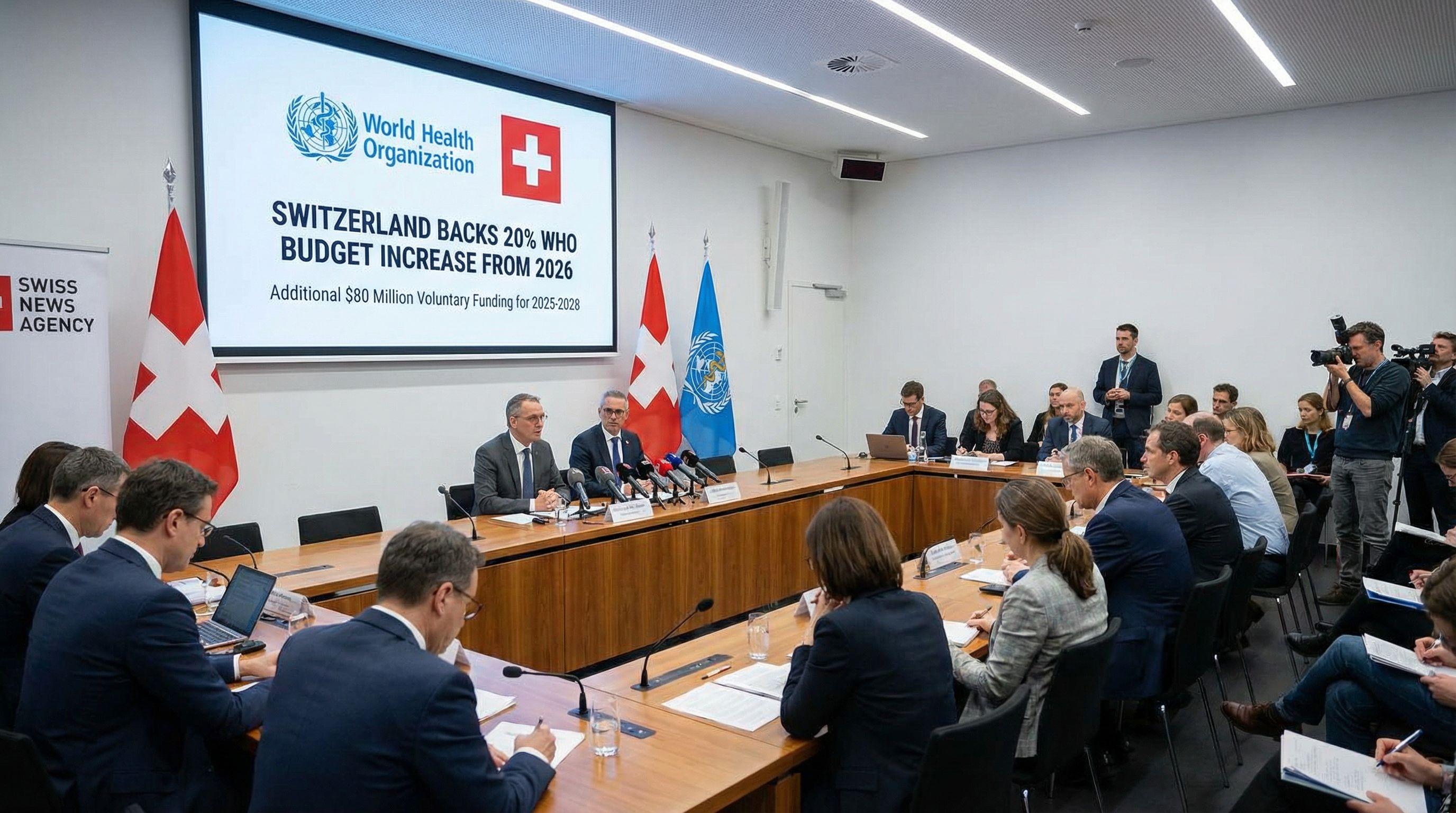
Swiss government supports World Health Organization's budget increase and pledges additional voluntary funding of $80 million for 2025-2028, reinforcing Switzerland's role in global health governance.
"Either we reduce what this organisation is and what it does, or we give it more money."
"The WHO should focus on its core responsibilities, setting global health standards and supporting countries on the ground."
In a decisive move to salvage the future of international health governance, World Health Organization (WHO) member states have agreed to a critical 20% surge in mandatory contributions starting in 2026. This is not merely a budgetary adjustment; it is a survival strategy. If ratified in the plenary session, the organization’s budget for the 2026-2027 cycle will climb to a staggering $5.1 billion (CHF 4.2 billion). This agreement marks a pivotal step toward the ambitious goal of having member states cover 50% of the WHO’s core budget by the turn of the decade.
WHO Director-General Tedros Adhanom Ghebreyesus did not mince words, thanking nations for backing a plan that provides an immediate interim boost of nearly $90 million. The message from Geneva is crystal clear: the era of relying on precarious, voluntary donations for essential operations is ending. The organization is pivoting toward sustainable financing, a move essential for maintaining its autonomy and operational capacity in a world increasingly prone to health crises. This 20% hike represents a collective acknowledgment that global health security cannot be bought on the cheap.
Switzerland is putting its money where its mouth is, reinforcing its status as the host state and a pillar of global diplomacy. While other nations hesitate, Bern is doubling down. The Swiss government is set to raise its mandatory contribution from CHF 6.5 million to approximately CHF 7 million next year. But the real headline lies in the voluntary commitment: Swiss Interior Minister Elisabeth Baume-Schneider has boldly pledged an additional $80 million for the 2025-2028 period.
This financial injection is a strategic maneuver to stabilize the Geneva-based agency during turbulent times. Barbara Schedler Fischer, Switzerland’s ambassador for global health, reaffirmed the nation's unwavering support for Dr. Tedros’s reform agenda. By securing this funding, Switzerland is not just writing a check; it is actively shaping the mandate of the WHO, demanding that the agency focus on its core responsibilities—setting rigorous global health standards and delivering tangible support on the ground. In the high-stakes arena of international diplomacy, Switzerland is proving that it remains a heavyweight player committed to multilateralism.
A looming shadow hangs over these financial negotiations: the imminent departure of the United States. With Donald Trump’s administration poised to withdraw from the WHO in January 2026, the agency confronts a gaping financial hole that threatens to destabilize global health security. The US exit is not just a diplomatic snub; it is a fiscal earthquake that forces remaining member states to scramble for stability.
While Washington retreats, other powers are stepping into the vacuum. In a dramatic geopolitical countermove, China announced a massive $500 million pledge over five years just hours before the general pledging session. This juxtaposition creates a stark contrast: as the traditional western superpower pulls back, Switzerland and other nations are left to hold the line alongside emerging powers. The dynamic in Geneva is shifting rapidly, and the burden of leadership is being redistributed in real-time. Switzerland’s steadfast support serves as a critical anchor, preventing the organization from drifting into total insolvency amidst this transatlantic fracture.
Facing a stark financial reality, Dr. Tedros has initiated a brutal but necessary culling of the WHO's bureaucracy. The agency is undertaking a radical restructuring, slashing its senior management team by 50%—reducing the headcount from 14 to just 7. Furthermore, the number of departments is being more than halved, dropping from 76 to a streamlined 34. This is not a cosmetic change; it is a complete overhaul designed to make the organization leaner, faster, and more responsive.
"Either we reduce what this organisation is and what it does, or we give it more money," Tedros warned, presenting a binary choice to the world. The draft budget for 2026-2027 has already been cut from an initial $5.3 billion to $4.2 billion, forcing the agency to scale back activities. These austerity measures demonstrate that the WHO is taking its fiscal crisis seriously, responding to Swiss and international demands for greater efficiency. The era of bloat is over; the WHO is fighting for its relevance and its economic survival.
Despite the new pledges and budget hikes, the numbers remain alarming. The WHO is grappling with a severe immediate funding gap, needing to raise approximately $600 million by the end of this year alone. Looking further ahead, the shortfall for the 2026-2027 period stands at a daunting $1.6 billion. The recent pledges of at least $170 million from Switzerland and other allies are a lifeline, but they are not a cure-all.
Dr. Tedros has labeled the current funding levels as "extremely modest" relative to the global challenges the agency faces—from pandemics to climate-related health crises. The clock is ticking. Without a sustained influx of capital to plug these billion-dollar holes, the WHO risks being unable to execute its mandate. The commitment from Switzerland provides a crucial buffer, but the pressure is now on the private sector, foundations, and other member states to bridge the chasm between ambition and reality before the next global health emergency strikes.