railways
Swiss rail travel reaches a third consecutive record
Passenger rail travel reached a third consecutive record in 2025, with journeys totalling almost 24 billion passenger-kilometres. Investigate what is driving the increase, whether capacity and punctuality are keeping pace, and how the shift affects Switzerland’s transport and climate goals.
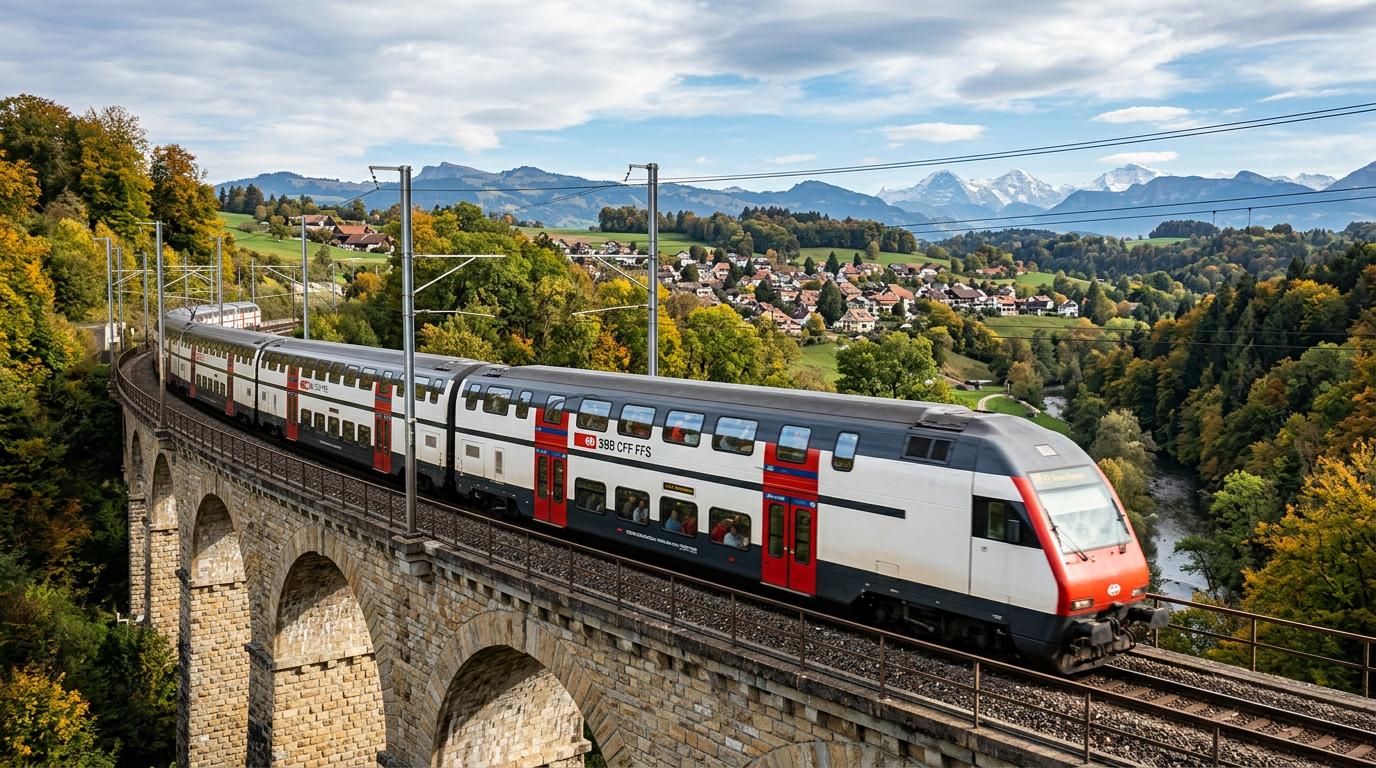
Swiss rail breaks records again
Swiss passengers travelled almost 24 billion passenger-kilometres in 2025, according to federal public transport statistics, setting a third consecutive annual record. The figure represents the distance covered by passengers, rather than the kilometres operated by trains. It shows how strongly rail use has recovered since the sharp fall during the Covid-19 pandemic.
The increase also reached everyday travel. Passengers made 675 million rail journeys, a rise of 4% in one year. Total passenger-kilometres increased by 3%, which means the growth came primarily from more journeys, with the average trip length rising by about 1%.
That pattern matters for Switzerland’s transport system. More passengers are using existing links for commuting, regional travel and longer journeys across the country. The figures cover public transport activity nationwide and place rail at the centre of a broader mobility network that includes trams, buses, cable cars, funiculars and passenger ships.
The record arrives as Swiss authorities pursue policies that encourage public transport and seek to limit transport emissions. The data show a clear shift in use. They do not, by themselves, explain which routes gained the most passengers or how much additional service operators provided.
Passengers outpace population growth
Rail journeys grew four times faster than Switzerland’s population in 2025. The population increased by almost 1%, reaching 9.1 million, while the number of rail trips rose by 4%.
That comparison points to a larger change than demographic growth alone. More residents are choosing or needing public transport, and existing passengers are travelling more often. The passenger-kilometre increase was slightly lower than the rise in journeys because average trip distance advanced by only about 1%.
The pattern suggests that frequent, shorter trips made a substantial contribution to the record. A commuter making additional weekly journeys affects the national total just as directly as a visitor crossing several cantons, although the official figures provided do not identify the purpose of each trip. They also do not break the result down by canton, route or operator.
Switzerland’s dense rail network gives passengers alternatives to private cars on many corridors. Urban trams and buses connect to mainline stations, while regional trains link smaller communities to employment and education centres. The federal statistics combine these modes in their wider public transport coverage, but the passenger-kilometre total is not complete for every form of transport.
The strongest confirmed signal is therefore frequency. Switzerland added passengers faster than it added people.
Demand rises, scrutiny follows
The 2025 figures measure demand, not the full quality of the service passengers received. Federal data record almost 24 billion passenger-kilometres and 675 million journeys, but the source material does not provide a national punctuality rate, cancellation total or capacity assessment for the year.
That distinction is important as passenger numbers climb. A record can reflect successful transport policy and strong customer confidence, while also placing greater pressure on crowded trains, stations and heavily used railway corridors. Operators must carry more people through the same infrastructure unless they add trains, extend carriages, improve timetables or expand capacity at bottlenecks.
The available data cannot establish whether service supply kept pace with demand. They do not say how many additional train kilometres were operated, how full trains were at peak times or whether delays changed from 2024. Nor do they identify the routes that generated the greatest increase.
Those gaps should guide the next round of scrutiny. Swiss transport authorities and operators can pair passenger totals with punctuality, crowding and service frequency data. That would show whether the network is absorbing growth comfortably or whether the record is exposing constraints.
For now, the facts establish a stronger appetite for rail. They do not provide a verdict on reliability or capacity.
A boost for climate ambitions
Rail’s recovery has now extended well beyond the immediate post-pandemic rebound. Switzerland recorded a third consecutive annual passenger record in 2025, after rail travel fell sharply during the Covid-19 pandemic. The latest increase confirms that public transport has regained a central place in Swiss mobility.
The recovery has practical and political significance. Every additional rail journey can support the transport system’s shift toward shared mobility, especially when it replaces a car trip. The source data do not measure such substitutions, so they cannot quantify the effect on fuel use, congestion or emissions. A rise in rail passengers alone does not prove that total transport emissions have fallen.
The result nevertheless strengthens the case for reliable public transport in Swiss climate policy. Rail is already embedded in daily life through coordinated connections with trams, buses and regional services. Higher use gives policymakers evidence that residents will use public transport at scale when it meets their travel needs.
To convert that demand into climate progress, authorities need more than headline passenger totals. They need information on the journeys shifted from cars, the energy used by services, occupancy levels and the availability of connections in less densely populated areas. The 2025 record provides a strong demand signal. Measuring its emissions impact requires a broader dataset.
Plan for the next record
Switzerland’s rail network enters its next phase with demand still moving upward. Passenger journeys rose 4% in 2025, passenger-kilometres rose 3%, and the average journey length increased by about 1%. The figures give transport planners a clear task: understand where growth is happening and prepare the network for continued use.
That work will require closer regional detail. The national statistics show the scale of travel across Switzerland, but the published information supplied here does not distinguish between major intercity corridors, regional lines, mountain railways or urban systems. It also does not show whether growth was spread evenly or concentrated around the largest cities and employment centres.
Future policy decisions will depend on those answers. Capacity upgrades, station improvements, timetable changes and connections with buses and trams all cost money and take years to deliver. Punctuality data will also matter, particularly as trains carry more passengers during peak periods.
The record does offer one firm conclusion. Switzerland’s population reached 9.1 million, yet rail use grew several times faster. The country is relying more heavily on public transport, and its transport system must now match that reliance with transparent reporting on capacity, reliability and environmental results.