Society
Swiss conference examines risks associated with the manosphere
A national conference in Bern is examining the risks associated with the ‘manosphere’ after a study found that one in five men surveyed in Switzerland endorsed a form of masculinity based on domination. The study also found particularly high scores among young men.
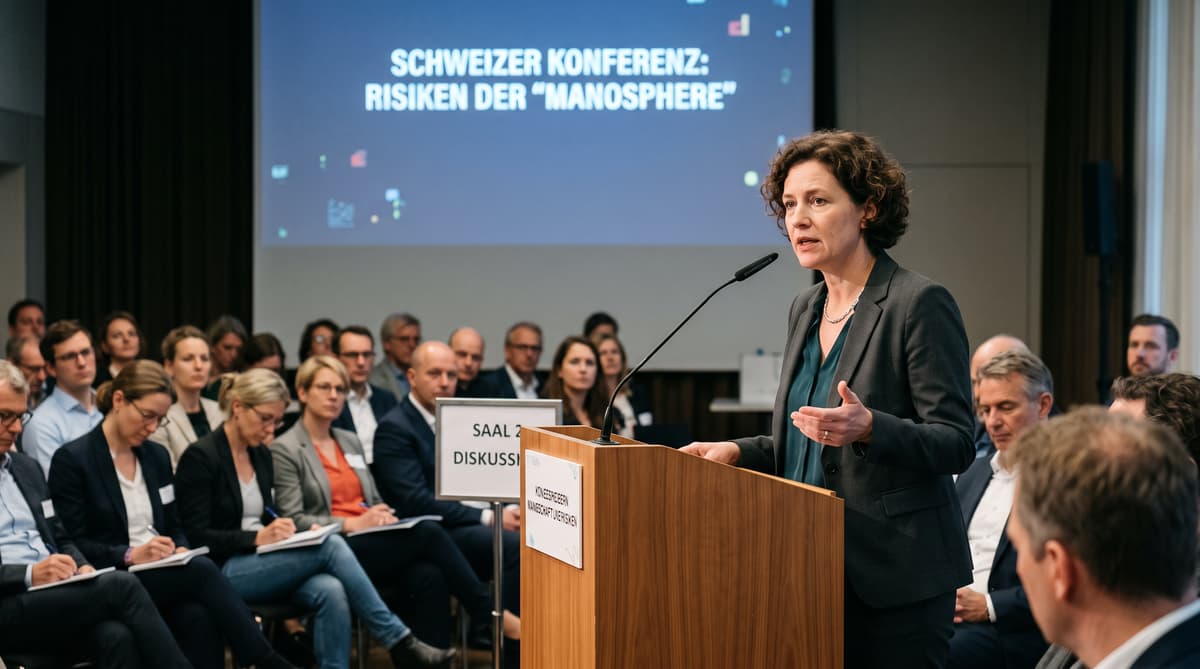
One in five men surveyed in Switzerland endorsed a model of masculinity built around domination, according to a study that has prompted a national conference on the risks associated with the manosphere. Specialists and representatives from across the country met in Bern on Monday, November 2, to build a shared understanding of male-centred violence and radicalisation.
The study, published in June by the University of Zurich and the mencare/männer.ch association, measured what it calls the “M-factor”. The measure covers restrictive ideas about masculinity and gender relations. Seven per cent of women surveyed also endorsed the concept.
Federal Justice and Police Minister Beat Jans opened the conference alongside Zurich parliamentarians and Geneva government official Nathalie Fontanet. Practitioners, experts, and representatives from the federal government, cantons and municipalities gathered to exchange experience. Their task is to strengthen understanding of how these attitudes develop and to coordinate responses across Switzerland.
Track the strongest scores among young men
Young men recorded the strongest scores in the study. Nearly one in three men aged 18 to 24 fell into the group with the highest M-factor scores. Half of men in that age group said they were concerned about the growing marginalisation of “real men” in society.
The study links the concept of domination with claims of male superiority, a propensity for violence, misogyny, contempt for sexual minorities and rejection of equality. Those attitudes give the conference its focus on the risks of male-centred violence and radicalisation, as well as on prevention.
Gilles Crettenand, who heads mencare/männer.ch in French-speaking Switzerland, said young people can be especially affected while shaping their identities. “A young person in the process of forming their identity will be affected, destabilised and influenced by this worldview,” he told Keystone-ATS. The findings point to a challenge for people working with young people, including educators and health and social-care professionals, who are among those the conference aims to connect.
Connect prevention, schools and security
Swiss officials and practitioners are seeking a coordinated response across prevention, health promotion and security. The Bern conference aimed to establish a shared knowledge base and circulate information about the scale and dynamics of male-centred violence and radicalisation.
Participants from government, cantons and municipalities were invited to pool their expertise. Crettenand stressed that changing gender norms requires work on several fronts at once. “Changing social gender norms involves many factors. We need to work on all levels simultaneously,” he said.
He identified prevention and health promotion, particularly in schools, alongside security work carried out with police. “These areas are complementary, so we need to forge links and develop a network of expertise,” he said. The approach puts cooperation between institutions at the centre of the effort, with the conference bringing together people whose work touches on education, public safety and support services. Crettenand said national collaboration is essential to building that network.
Equip schools and families to prevent abuse
Training and school-based prevention are already taking shape in several parts of Switzerland. The Men and Masculinities Centre of Expertise runs courses for professionals in health, social care, education and security. The canton of Zurich has been particularly active, while Geneva and other French-speaking cantons are beginning to fund programmes, including in Vaud.
Crettenand said parents, teachers and pupils of all genders need tools to assess information and build psychosocial and interpersonal skills. He said interventions in schools for young people are becoming more common, and argued that the work needs to reach as many cantons as possible to be effective.
The conference's practical focus is on sharing experience and linking existing expertise across jurisdictions. That places schools alongside health and social services, while keeping cooperation with police in view. For Swiss professionals working with young people, the next step Crettenand outlined is to extend the school-based work and strengthen links between those involved in prevention and security.