Switzerland
Personalised cancer vaccines make breakthrough as Swiss pharma weighs its position
The first successful Phase III trial of a personalised mRNA cancer vaccine has renewed hopes for treatments tailored to individual tumours. Swiss researchers and pharmaceutical companies are assessing whether the country can compete in the rapidly advancing field.
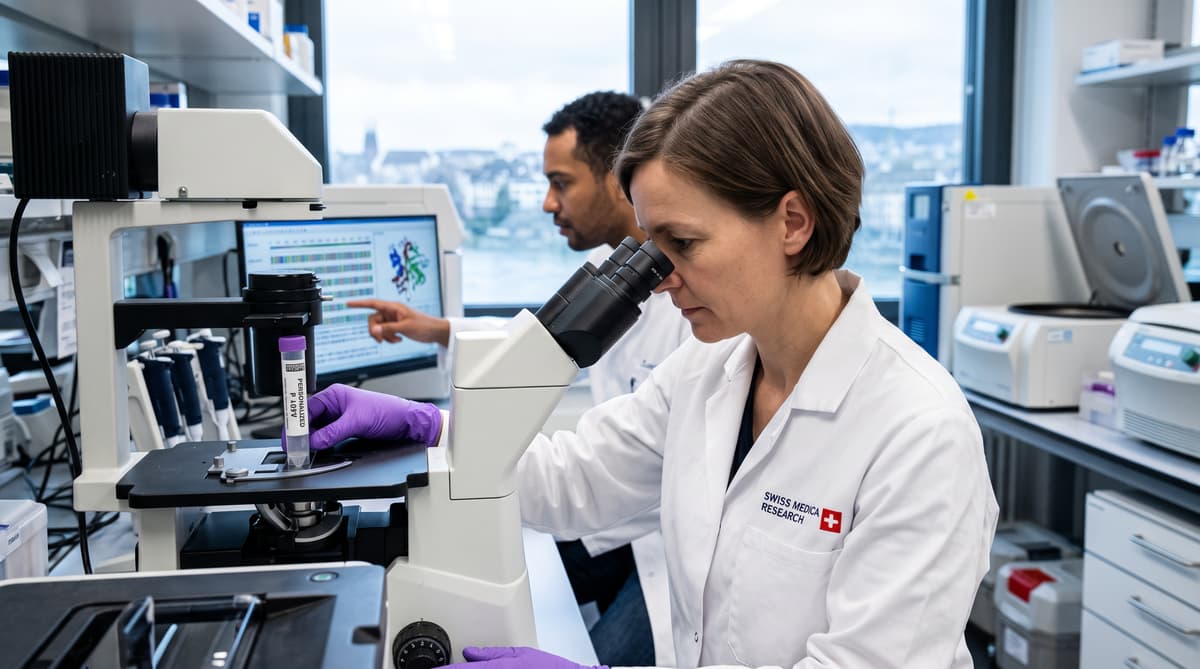
A Phase III success has moved personalised cancer vaccines closer to routine oncology. Moderna and MSD said this summer that their mRNA vaccine, intismeran autogene, met key endpoints in patients with melanoma that had been surgically removed. Given alongside pembrolizumab, sold as Keytruda, the vaccine significantly delayed the cancer’s return or spread compared with Keytruda alone.
The result matters because therapeutic cancer vaccines have spent decades promising more than they delivered. Unlike preventive vaccines against HPV or hepatitis B, these treatments are given to people who already have cancer or have undergone treatment. They aim to teach the immune system to recognise tumour-specific mutations and destroy remaining cancer cells.
The trial tested several ideas in one package: personalised treatment, mRNA delivery and mutation-based targeting. The companies have not yet said whether the combination helps patients live longer. Full Phase III results are due to be presented at the end of October.
For Swiss oncology, the development has immediate relevance. Olivier Michielin, head of oncology at Geneva University Hospitals, has worked on therapeutic cancer vaccines for more than 20 years. He said the findings could represent a breakthrough, particularly because Keytruda alone already works well.
Build the vaccine around each tumour
The vaccine is built from the genetic signature of one tumour at a time. Intismeran autogene uses mRNA technology, the platform that powered Covid vaccines, to carry instructions designed around mutations identified in an individual patient’s cancer. Every dose is therefore manufactured for a specific person rather than produced as a uniform product for a broad population.
That process begins with tumour analysis. Researchers identify mutations that may distinguish malignant cells from healthy tissue, then select targets that could trigger an immune response. The resulting vaccine is administered with pembrolizumab, an immunotherapy that helps immune cells attack cancer. In the melanoma trial, the relevant comparison was not an inactive placebo. It was Keytruda alone, already an established treatment.
An earlier, smaller study of the combination nearly halved the risk of melanoma returning. The Phase III result now provides a larger test of whether that signal can translate into a meaningful clinical benefit. The companies reported delayed recurrence or spread, while the effect on overall survival remains undisclosed.
The distinction matters for patients and regulators. Preventing or postponing relapse can spare people further surgery, chemotherapy or immunotherapy, but the eventual regulatory assessment will weigh the size and durability of the benefit against the complexity of making a separate product for every patient.
Test the promise across cancer types
The same technology produced a setback in colorectal cancer just nine days later. BioNTech and Genentech, a Roche subsidiary, stopped a Phase II trial of their personalised mRNA vaccine after it failed in colorectal cancer. The companies continue to test the vaccine in pancreatic cancer, showing that the field has not abandoned the platform after one disappointing result.
The opposing announcements caution against treating personalised vaccination as a single treatment category. A vaccine that works after surgery in melanoma may not produce the same response in advanced or biologically different cancers. Tumour mutations vary between cancer types and between patients. The immune environment surrounding a tumour can also affect whether activated immune cells reach and control the disease.
The colorectal result has not invalidated the melanoma findings. It does, however, make the full data important. Moderna and MSD have so far released headline results rather than the complete Phase III dataset. Specialists will want to examine recurrence patterns, follow-up time, adverse effects and the characteristics of patients who benefited.
Michielin said the melanoma trial could validate several propositions at once, including mRNA as a cancer treatment, tumour-specific mutations as targets and the manufacture of therapies for individual patients. The colorectal failure shows that each proposition still needs to be tested across diseases.