Switzerland
Swiss rollercoaster maker investigates fatal US accident
A Swiss rollercoaster manufacturer is investigating a fatal accident involving its Goliath ride at Six Flags Over Georgia near Atlanta. A 42-year-old man died after being thrown from the ride, while police and US regulators investigate the cause.
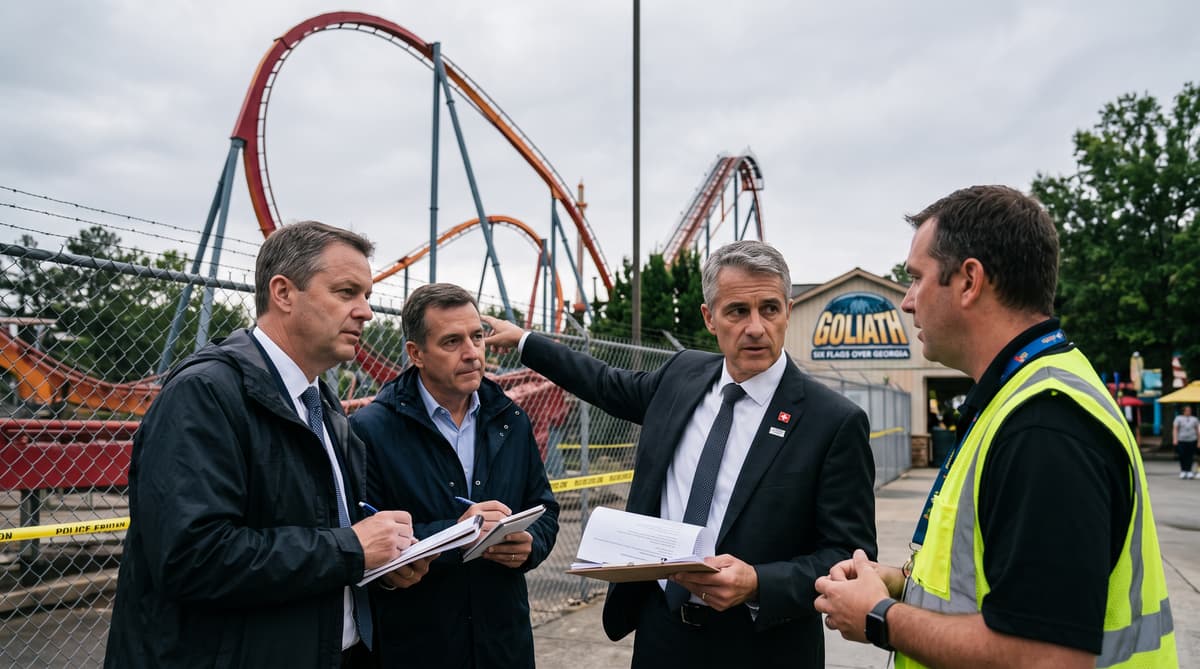
A 42-year-old man died on Monday after being thrown from Goliath at Six Flags Over Georgia near Atlanta. Police said several other visitors were injured, while the cause remained unclear. The incident has placed a Swiss engineering company at the centre of investigations in the United States.
Bolliger & Mabillard, based in Valais, confirmed that it was examining the accident. Olivier Bolliger told ABC News that the company was “deeply saddened” and that its thoughts were with the victim’s family and others affected. In a statement to the Associated Press, the manufacturer said it would not comment further until investigators clarify what happened.
US police and the relevant regulatory authority are conducting separate inquiries. Their work is expected to examine the ride, its restraints, operating procedures and the circumstances leading to the passenger being ejected. The available information does not establish whether a mechanical fault, an operational issue or another factor caused the death.
The case matters in Switzerland because Bolliger & Mabillard is one of the country’s best-known specialist manufacturers. Its rides operate internationally, making the findings relevant well beyond one park in Georgia.
Examine the Ride and Its Restraints
Goliath rises about 61 metres and reaches speeds of up to 113 kilometres per hour. The Bolliger & Mabillard ride opened at Six Flags Over Georgia in 2006 and carries passengers through a high-speed steel track.
Passengers are secured by safety bars across the thighs and hips. Investigators will need to establish how those restraints functioned during the ride and whether the equipment operated as designed. The source report does not identify a confirmed failure or explain how the man was ejected.
The distinction matters because a major rollercoaster combines several layers of responsibility. The manufacturer designs and builds the ride, while the park operates it, maintains it and checks passengers before dispatch. Police and regulators will assess those layers as they reconstruct the event.
Six Flags said the accident also injured several other visitors, although the source did not provide a number or details about their condition. The park’s decision to suspend comparable attractions indicates that operators are treating the incident as a potential issue requiring wider review. Until authorities release technical findings, claims about the cause remain unverified.
Track the Nine-Ride Shutdown
Six Flags closed nine similar rollercoasters across six parks in the United States and Canada as a precaution. Eight of those rides were also built by Bolliger & Mabillard. The operator has not said when the attractions will reopen.
The shutdown extends the consequences of the Georgia accident across the company’s North American network. It also creates a practical test for park operators, who must weigh inspections, business disruption and public confidence while authorities investigate the original ride.
The closures do not show that every affected ride has a defect. They show that Six Flags is applying a common response to rides it considers sufficiently similar to warrant additional checks. The source report does not identify the parks or the names of the eight Bolliger & Mabillard attractions.
For the Swiss manufacturer, the broad precautionary action places its engineering and support systems under scrutiny. Bolliger & Mabillard has built more than 130 rollercoasters worldwide, according to the specialist database RCDB. Any technical finding from Georgia could therefore influence inspection priorities at other parks operating its equipment, although no wider fault has been established.