Agriculture
Saved from Extinction: Black Alpine Pig Recognised as Native Swiss Breed
The Swiss Federal Office for Agriculture has officially recognised the Black Alpine pig, which was on the verge of extinction. This recognition for Switzerland's only surviving ancient pig breed is the result of dedicated breeding efforts since 2013.
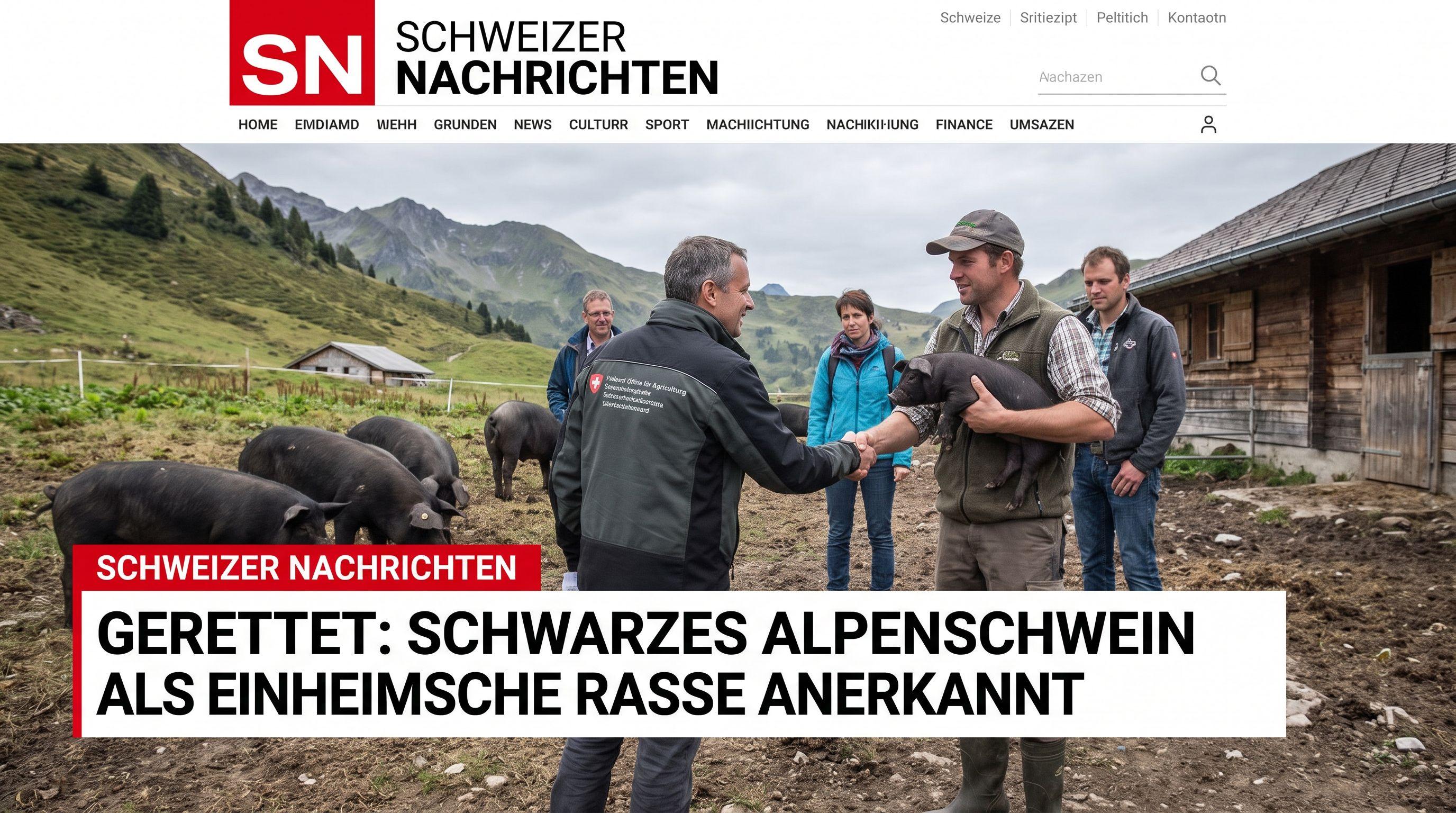
Switzerland Reclaims Its Porcine Heritage
Switzerland has officially snatched a piece of its living history back from the brink of total erasure. The Federal Office for Agriculture has formally recognized the Black Alpine pig as a native Swiss breed, a move that cements its status as the nation's only surviving ancient pig variety. This is not merely a bureaucratic checkbox; it is a victory for national identity. For decades, industrial farming favored high-yield, pink-skinned breeds, pushing our rugged, dark-coated ancestors into the shadows of the past. Now, the tide is turning. This recognition acts as a powerful catalyst, unlocking critical support measures and financial subsidies that will ensure these animals are no longer a footnote in agricultural textbooks. The Patrimont breeding organization confirms that this status change is the definitive shield the breed needs to survive in a modern economy. While other ancient breeds have vanished into history, the Black Alpine pig stands alone as a testament to Swiss resilience and the refusal to let our genetic heritage die out.
Resurrecting a Ghost from the Splügen Pass
The survival of this breed is nothing short of a biological miracle, considering it was nearly extinct just decades ago. By 1980, the Black Alpine pig had dwindled to a few scattered individuals near the Lukmanier and Splügen Passes, forgotten by the mainstream agricultural industry. It took until 2013 for a dedicated coalition of breeders to launch a desperate rescue mission. They re-established the entire population from just three remaining bloodlines—a genetic bottleneck that required precision and passion to overcome. Today, the success of that mission is undeniable. The population has surged from those final few to a network of 25 breeding farms and 12 fattening farms across the country. This isn't just a recovery; it's a strategic reoccupation of the Swiss landscape. These pigs are no longer confined to the history books; they are now visible to the public in exhibition enclosures at Ballenberg, Goldau Wildlife Park, and Zoolino Zurich, serving as a living reminder of what was almost lost forever.
Engineering the Ultimate Mountain Survivor
Make no mistake: the Black Alpine pig is a masterpiece of natural selection, purpose-built for the brutal conditions of the high Alps. Unlike their pink, sun-sensitive cousins who struggle in the thin atmosphere, these animals possess a shorter torso and longer legs, allowing them to navigate steep, rocky terrain with the agility of a mountain goat. Their most striking feature—a deep, dark pigmentation—is a critical evolutionary armor. This coloring provides total immunity to sunburn, a lethal threat at high altitudes where UV radiation is intense. Because of these hyper-specific adaptations, the breed is exclusively supplied to farms in mountainous areas. They are not designed for the pampered life of lowland industrial sheds; they are built for the wind, the cold, and the verticality of the peaks. By preserving this breed, Switzerland is preserving a specific set of genetic tools that are perfectly synchronized with the Alpine environment, ensuring that our mountain agriculture remains authentic and sustainable.
Securing the Future of Swiss Biodiversity
The recognition of the Black Alpine pig sends a clear, thunderous message: Switzerland will not sacrifice its biodiversity on the altar of industrial efficiency. This victory follows a period of intense scrutiny regarding Swiss livestock, as even our iconic cows grapple for survival in their own homeland. By securing the Black Alpine pig's status, the Federal Government is drawing a line in the sand. This move ensures that the genetic diversity of our livestock remains robust, providing a buffer against future diseases and climate shifts that might devastate less hardy, homogenized breeds. Looking ahead, the focus shifts from mere survival to expansion. With 37 dedicated farms already in operation, the infrastructure for growth is in place. This is a call to action for mountain farmers and consumers alike to support a breed that is uniquely, unapologetically Swiss. The Black Alpine pig is back, and it is here to stay, reclaiming its rightful place as a cornerstone of the Swiss Alpine ecosystem.