civil protection
Switzerland to host European earthquake-response exercise
Switzerland will host a major European civil-protection exercise simulating an earthquake in French-speaking Switzerland from October 6 to 9. The drill will involve 500 participants and comes as the country considers closer involvement in the EU Civil Protection Mechanism.
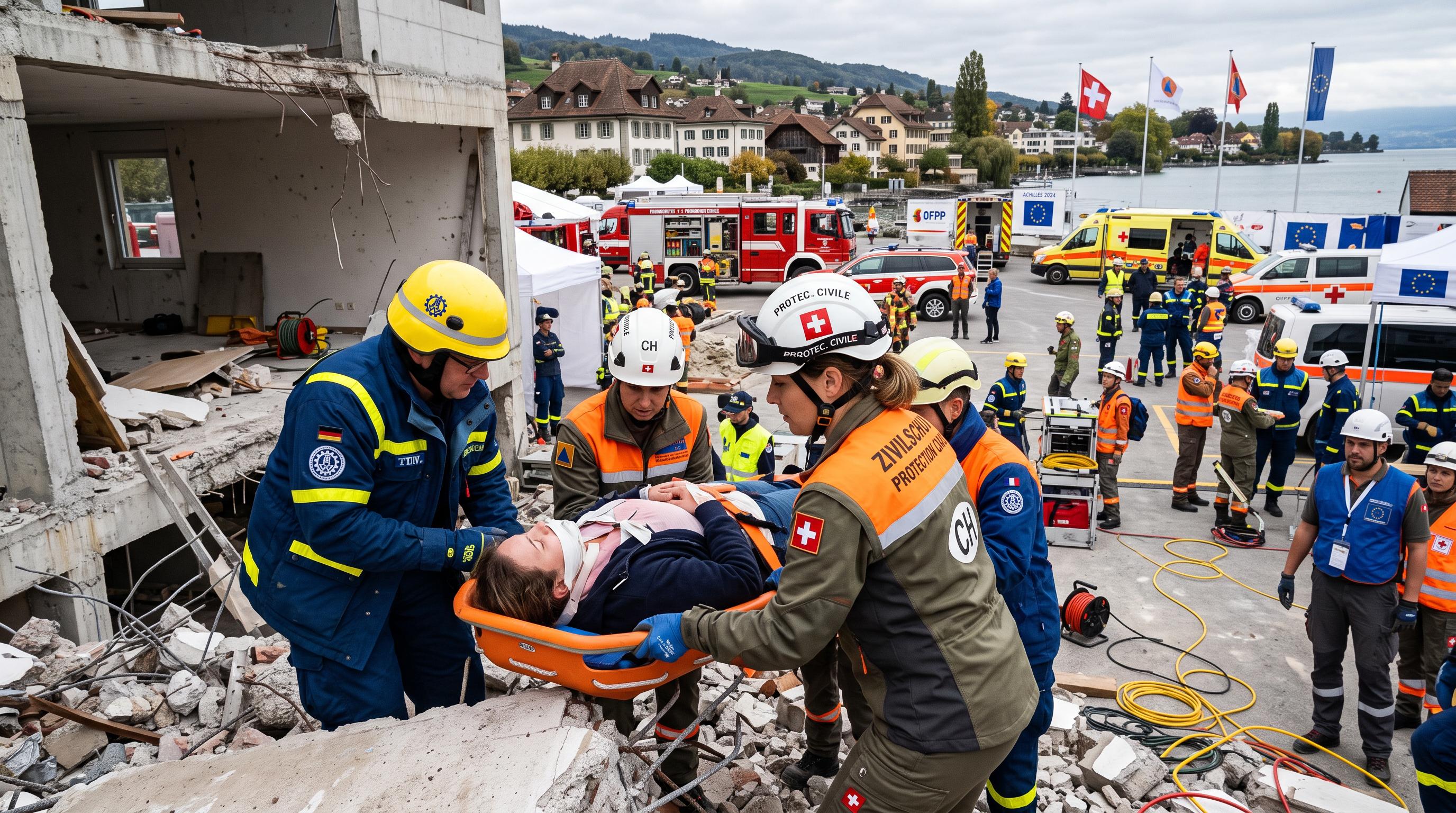
Switzerland stages a cross border earthquake drill
500 emergency specialists will converge on western Switzerland from October 6 to 9, 2026. The teams will respond to a simulated major earthquake affecting Geneva, Vaud and Fribourg, in one of the country’s largest tests of cross border disaster coordination.
The exercise, known as EU MODEX Switzerland 2026, will involve more than half of its participants from abroad. Switzerland will manage the arrival of foreign teams, their movement into operational areas and their eventual return home. That logistical task will test procedures that become critical when roads, rail links, airports and communications systems are damaged by a real disaster.
The drill will unfold at Epeisses in the canton of Geneva, close to the Rhône and the French border, in Geneva itself and at the military airfield in Payerne, canton Vaud. The locations bring together urban response, transport coordination and military infrastructure.
The Federal Office for Civil Protection, the army’s Defence Group and the General Secretariat of the Federal Department of Defence, Civil Protection and Sport are organising the exercise. The Federal Office for Civil Protection will coordinate the operation, with cantonal authorities, civil defence and the armed forces involved.
Three cantons test the response network
Three cantons will carry the weight of the simulated disaster. The exercise will imagine widespread earthquake damage in Geneva, Vaud and Fribourg, forcing authorities to coordinate across linguistic, administrative and operational boundaries.
Epeisses, near the Rhône in Geneva, will provide a setting close to the French border. Geneva will host activity in an urban environment, while Payerne’s military airfield will support the movement and deployment of teams. The exercise sites reflect the practical demands of receiving international assistance, moving specialist equipment and assigning foreign units to Swiss operations.
Switzerland will be responsible for the full chain of cooperation. That includes border crossings, transport to operational zones, integration into the response structure and repatriation after the drill. Federal offices and cantonal authorities will have to maintain a common operating picture while managing local priorities.
The scenario also places a spotlight on the country’s federal structure. Geneva and Vaud will be particularly prominent, but the planned response depends on clear links between cantonal services, federal agencies, civil defence and the armed forces. A major earthquake would quickly test those links through simultaneous demands for rescue, medical care, shelter and infrastructure assessment.
The drill advances a European cooperation bid
The drill comes as Bern weighs closer ties with the EU Civil Protection Mechanism. Switzerland is not currently a member of the mechanism, formally known as the UCPM, yet the country has already seen the value of European civil protection cooperation in a crisis.
The UCPM became more familiar to the Swiss public after the New Year’s Eve fire at the Le Constellation bar in Crans Montana, canton Valais. The mechanism helped transfer dozens of burn victims to specialist hospitals abroad. That cross border medical support saved lives and demonstrated how international assistance can supplement Swiss capacity when specialist treatment is urgently needed.
In March 2026, the Federal Council instructed the DDPS to prepare a draft accession proposal, following a request from Parliament. The proposal is due to go out for consultation by the end of this year. The government had postponed implementation of the relevant parliamentary motion in November 2025.
The coming exercise gives Swiss authorities a practical setting in which to work with European partners while the political and legal process continues. It also allows officials to identify gaps before any future membership decision takes effect.
Switzerland builds long term response capacity
Swiss membership remains years away under the current legal timetable. EU rules do not yet allow a third country such as Switzerland to join the Civil Protection Mechanism. In July 2025, the European Commission proposed changes to the regulations that would create the conditions for Swiss participation, but the provisions are not expected to enter into force before 2028.
Those legal limits do not block operational cooperation. EU MODEX Switzerland 2026 will allow Swiss institutions and foreign teams to practise the procedures needed during a large scale emergency. The country will handle border movements, deployments and returns, while the Federal Office for Civil Protection coordinates the Swiss side.
For residents of Geneva, Vaud and nearby regions, the exercise will offer a visible test of how authorities prepare for a low frequency, high impact hazard. Earthquakes are difficult to predict, and damage could cross canton and national borders within minutes. Response depends on trained personnel, interoperable communications and reliable access routes.
The October exercise will therefore serve two purposes: it will test immediate civil protection arrangements and provide experience relevant to Switzerland’s longer term relationship with the European response system.