influenza
Flu vaccine delivery delays raise concern ahead of winter
Almost half of Switzerland’s flu vaccine supply for the 2026–27 season is facing delivery delays. Assess whether the disruption could affect seasonal vaccination campaigns, which groups are most exposed and what health authorities are advising.
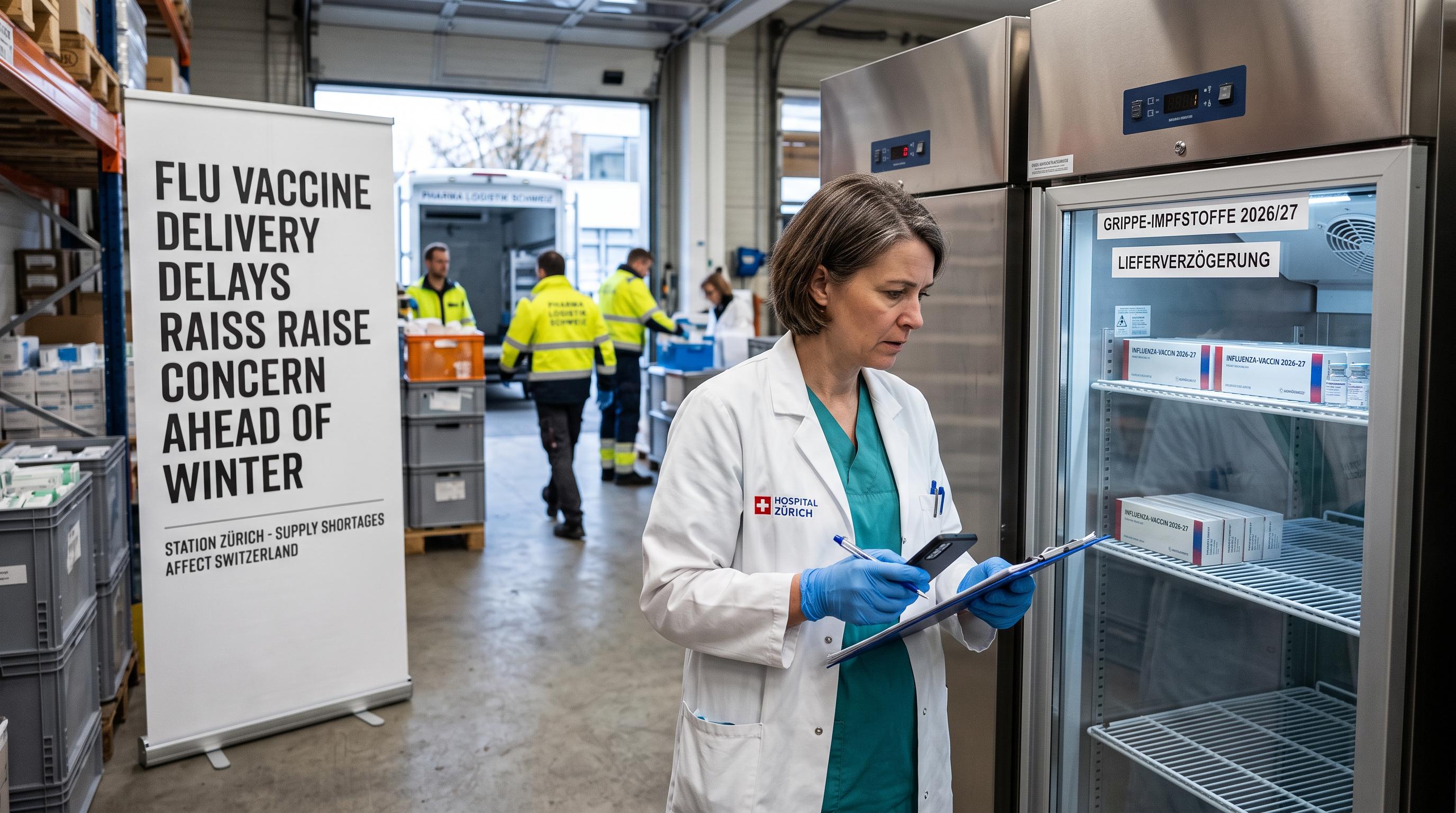
Delays put the November campaign under pressure
Around 40% of Switzerland’s government ordered flu vaccine doses are delayed for the 2026/27 season, putting pressure on pharmacies, doctors and vaccination campaigns as winter approaches. The Federal Office of Public Health has confirmed delays affecting certain batches, while saying that the remaining 60% will arrive on schedule.\n\nThe figures point to a disrupted delivery timetable rather than a confirmed national shortage. Manufacturers have told the FOPH that enough doses should become available, particularly for people most vulnerable to serious influenza illness. The uncertainty concerns timing. Some delayed batches may reach Switzerland after the period when vaccination offers the strongest protection against an early outbreak.\n\nSwitzerland usually reaches its flu peak between December and February. The FOPH and health providers therefore plan vaccination in November, allowing approximately two weeks for immunity to develop. That schedule leaves pharmacies and medical practices dependent on deliveries arriving in sequence. People seeking a vaccine may face different availability depending on the product and the provider they contact, although the source material does not identify specific cantonal shortages.\n\nThe FOPH’s assessment gives priority to supply security for high risk patients while leaving the broader campaign’s exact timing under review.
High risk patients get first protection
People aged 75 and older remain the clearest priority in Switzerland’s supply planning. The FOPH expects sufficient quantities of the high dose vaccine for this group, along with adequate supply for high risk people aged 65 and older. These patients face the greatest concern from a delayed appointment because influenza can lead to serious complications in older adults and people with underlying health risks.\n\nThe federal assessment also covers the rest of the population. Manufacturers have indicated that availability should be guaranteed, but the FOPH cannot yet confirm whether every delayed batch will arrive early enough to provide protection before seasonal transmission rises. The distinction matters for people who schedule a vaccination in November and for providers preparing public campaigns.\n\nThe available information does not identify a shortage in a particular canton, pharmacy chain or medical network. It does show a supply system with less timing flexibility than usual. High risk patients are expected to receive attention first if providers need to manage appointments or stock. Other residents may need to check availability with a pharmacy, GP practice or vaccination centre before travelling.\n\nPeople with questions about eligibility or the recommended product should follow advice from their healthcare provider. Product availability can change as manufacturers release the delayed batches.
A late virus decision slows production
The delay begins before the vaccine reaches a Swiss supplier. Manufacturers reformulate influenza vaccines every year to match the viruses expected to circulate during the coming winter. Health authorities base that assessment partly on surveillance data from Asia and the Southern Hemisphere, where flu seasons begin earlier and offer an important warning about what may spread in Europe.\n\nThe annual production cycle leaves limited room for changes. According to Enea Martinelli, vice president of the PharmaSuisse umbrella association, the World Health Organization determined the vaccine composition relatively late this year. Production then started later for some products, creating delivery delays in several European countries, not only Switzerland.\n\nThis process reflects the biology of influenza. The virus evolves, and vaccine manufacturers must select components months before the European season reaches its peak. A later composition decision can improve the match between the vaccine and circulating strains, while also compressing manufacturing and distribution schedules. The source material does not say which manufacturers or individual batches are delayed.\n\nFor Swiss providers, the immediate task is coordinating stock that arrives at different times. For the public, the practical consequence is uncertainty over appointment timing rather than evidence that the country will run out of every flu vaccine.
November appointments matter most
November remains the recommended month for vaccination, even though influenza does not follow a fixed calendar. The usual Swiss peak comes between December and February, and immunity takes roughly two weeks to develop after the injection. That makes an early winter appointment important for people who face a higher risk of severe disease.\n\nThe timing can shift. Switzerland experienced an earlier and stronger flu season in 2025, according to reporting cited by The Local. A similar start would reduce the protection window for anyone waiting for a delayed batch. The source does not predict whether the 2026/27 season will begin early, so the effect of the current supply disruption cannot yet be measured.\n\nHealth providers will need to track deliveries closely and communicate which vaccines are available. Patients should check with their pharmacy, doctor or vaccination centre before booking or attending an appointment, particularly if they need a high dose product or belong to an age based priority group.\n\nFor people outside the priority groups, a delayed appointment does not automatically mean the vaccine will be ineffective. The concern is whether protection begins before exposure rises. The FOPH’s current position is that supplies should be adequate, while the delivery timetable remains the unresolved issue.
Watch the timetable, not just the stock
Switzerland is heading into winter with enough expected supply for priority groups, but less certainty around the wider campaign’s timetable. The FOPH says manufacturers expect to deliver sufficient doses, including the high dose vaccine for people aged 75 and older and vaccines for high risk groups aged 65 and older. It also expects availability for the rest of the population.\n\nThe unresolved point is when delayed batches will arrive. If they reach providers within the vaccination window, the disruption may remain a logistical problem. If influenza activity rises early, people waiting for those batches could receive protection later than recommended. Switzerland’s 2025 experience shows that an early season is possible, although no forecast for 2026/27 is provided in the available information.\n\nThe next stage will depend on manufacturer deliveries, FOPH updates and the ability of pharmacies and medical practices to direct priority patients to available stock. Residents should seek current availability information rather than assume every provider has the same product.\n\nFor now, the evidence supports a cautious conclusion: Switzerland does not face a confirmed nationwide vaccine shortage, but the 40% delivery delay creates a real scheduling risk ahead of November. The coming weeks will show whether suppliers can restore the normal protection timetable.