Public health
Swiss researchers find widespread mpox test contamination in DRC
A University of Geneva-led analysis indicates that almost 35% of mpox samples tested in the Democratic Republic of the Congo contained viral DNA from environmental contamination rather than a genuine infection, with implications for outbreak surveillance.
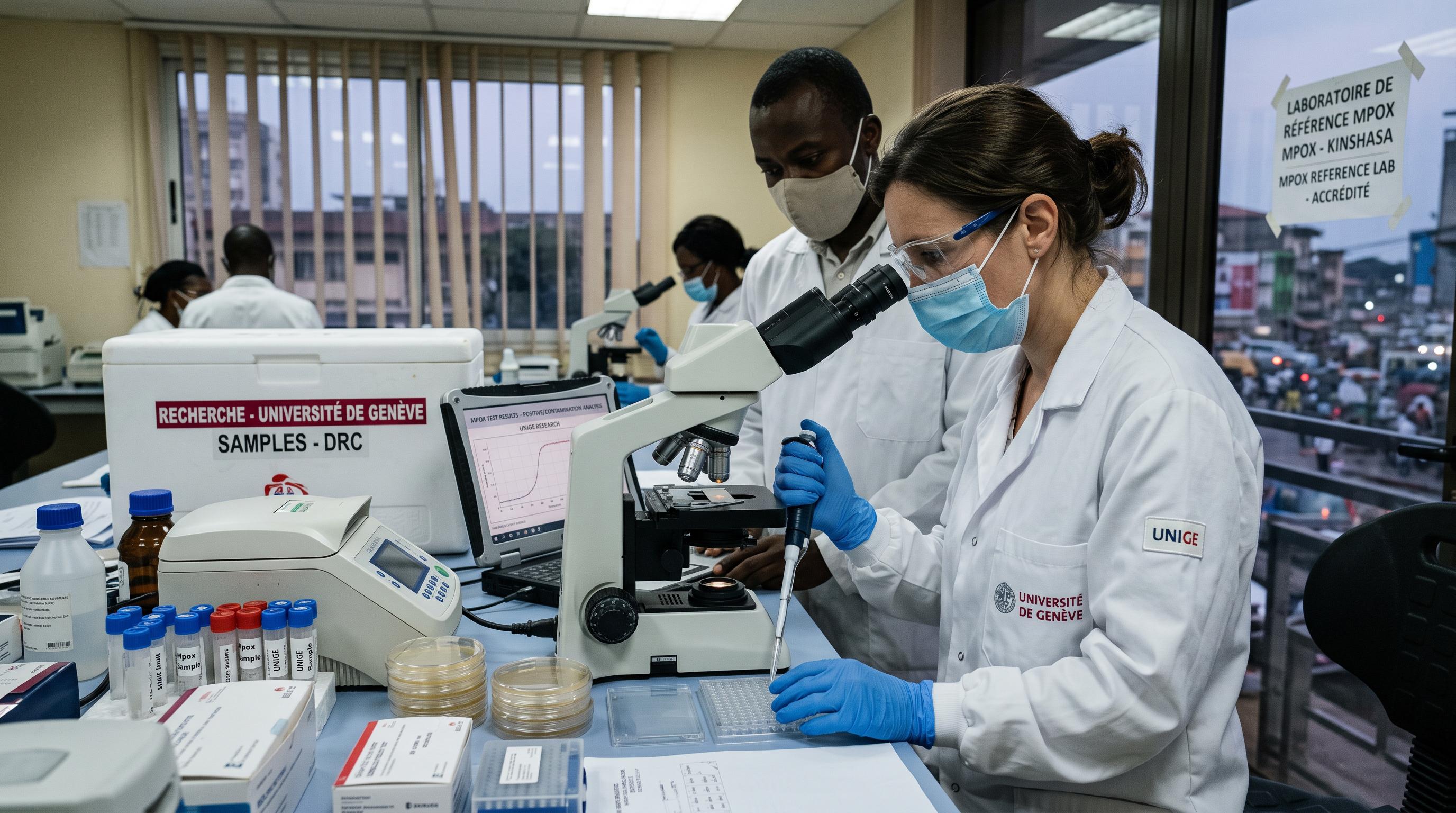
Swiss study challenges mpox case counts in the DRC
Nearly 35% of more than 2,700 mpox samples may have carried contamination rather than infection, according to an international study led in part by the University of Geneva. The tests were collected between April 2024 and April 2026 in Goma, Kamituga, Kinshasa and Uvira, four locations central to the Democratic Republic of the Congo’s outbreak response.
The finding could force health authorities to reassess how they count cases and direct scarce resources. A positive molecular test normally triggers clinical follow-up, isolation advice and, in some circumstances, contact tracing. If viral DNA from a contaminated surface or clinical environment enters a specimen, those measures can reach people who were never infected.
The study, published in The Lancet Infectious Diseases, identified two distinct groups of positive results. One group showed higher viral levels, consistent with active infection. The other barely crossed the detection threshold, raising suspicion that the result reflected residual traces rather than virus inside the patient.
The researchers’ conclusion does not erase the DRC’s mpox outbreak. It points to a surveillance system that needs more precise laboratory safeguards, particularly where testing takes place under pressure.
Researchers trace weak positives to clinic environments
Surface samples from two healthcare centres frequently tested positive for mpox DNA. The result offered a possible explanation for the low-level signals found in many patient tests. According to the University of Geneva, mpox DNA can remain on surfaces or in the air for several weeks, allowing traces to reach collection areas, equipment or specimens handled later.
The pattern mattered. Researchers saw one cluster of results with low cycle thresholds, indicating a larger amount of viral material, and another that only just met the laboratory’s detection limit. That second group was more consistent with residual environmental DNA than with a high viral load in a newly infected patient.
Contamination can occur without anyone deliberately mishandling a sample. Busy clinics may process many suspected cases in confined spaces, while staff move between examination, sampling and laboratory areas. The study highlights the need for strict separation between clean and contaminated zones, careful surface management and quality controls that can identify weak signals.
The researchers are working with the World Health Organization to improve detection methods in several countries. Their findings give laboratories a practical warning: a positive result close to the threshold deserves closer scrutiny and, where possible, confirmation through clinical and serological evidence.
Antibody tests expose the limits of a single positive result
Around 89% of people classified as false positives had no antibodies against mpox. The serological evidence strengthened the researchers’ assessment that these individuals had not been infected, even though their initial molecular tests detected viral DNA.
The team also examined suspected cases for other viruses that cause skin rashes. Most of the people tested carried other infections, while only a small proportion had mpox. That result matters because fever, lesions and painful rashes do not identify mpox on their own. Other pathogens can produce similar symptoms, particularly in communities where several infections circulate at the same time.
A laboratory result therefore sits within a wider diagnostic process. Clinicians need to consider symptoms, exposure history, the amount of viral material detected and, where appropriate, antibody results. Weak positive signals can become especially difficult to interpret when clinics face large numbers of patients and limited capacity for repeat testing.
The study does not establish that every disputed result was caused by contamination. It shows that environmental DNA and other infections must be considered when surveillance data appear inconsistent with clinical or immunological evidence. Better confirmation could give Congolese health authorities a clearer picture of where transmission is active and where resources are most urgently needed.
Wrong results can redirect care, vaccines and surveillance
False diagnoses carried consequences for patients and public health programmes. People who did not have mpox received unnecessary treatment and faced quarantine measures, according to the University of Geneva. Isolation can disrupt work, schooling and family life, while a mistaken case can also trigger contact investigations that consume staff time and supplies.
The impact extends to outbreak statistics. Authorities use testing data to decide where to send vaccines, protective equipment and clinical teams. They also use case counts to assess whether transmission is rising or falling. If contaminated specimens inflate the number of infections, officials may misjudge the geography and scale of the response. If efforts are redirected towards false clusters, communities with active transmission could receive less attention.
The DRC’s experience sits within a wider African health emergency. More than 120,000 cases and around 1,500 deaths were recorded across Africa between 2024 and 2026. The World Health Organization declared mpox a public health emergency of international concern in August 2024 and lifted the alert in September 2025.
Accurate testing remains essential even after an international alert ends. Vaccination campaigns, clinical care and local surveillance still depend on knowing who is infected, where transmission occurs and which symptoms require urgent attention.
Geneva researchers push for cleaner global surveillance
The University of Geneva team is calling for changes to PCR interpretation and laboratory practice. The researchers said the positivity threshold should be lowered to reduce false positives without substantially increasing false negatives. The recommendation will require careful validation, since changing a diagnostic threshold can affect how many genuine infections are missed or detected.
For laboratories, the response will involve more than a revised number. Staff need procedures that limit environmental carryover, controls that flag contamination and a clear pathway for repeat testing when viral levels sit near the detection limit. Epidemiologists also need to compare laboratory findings with symptoms, antibody data and results from tests for other rash-causing viruses.
The implications reach Switzerland. Geneva researchers are helping the WHO improve mpox detection in several countries, and Switzerland has followed the global outbreak through its own surveillance and vaccination debates. A clearer understanding of case numbers in the DRC can improve international planning, including decisions on vaccine supply, technical support and research partnerships.
The next phase will depend on implementation. If clinics can distinguish active infection from residual DNA more reliably, health authorities will have stronger evidence for targeting interventions and patients will face fewer unnecessary restrictions.