Switzerland
China’s high-tech rise creates a deeper challenge for Swiss industry
UBS economists warn that China’s shift from low-cost manufacturing to high-tech production poses a growing competitive challenge to Swiss companies. Chinese firms are increasingly competing in machinery, chemicals, electrical engineering and medical technology, while US tariff effects may prove more temporary.
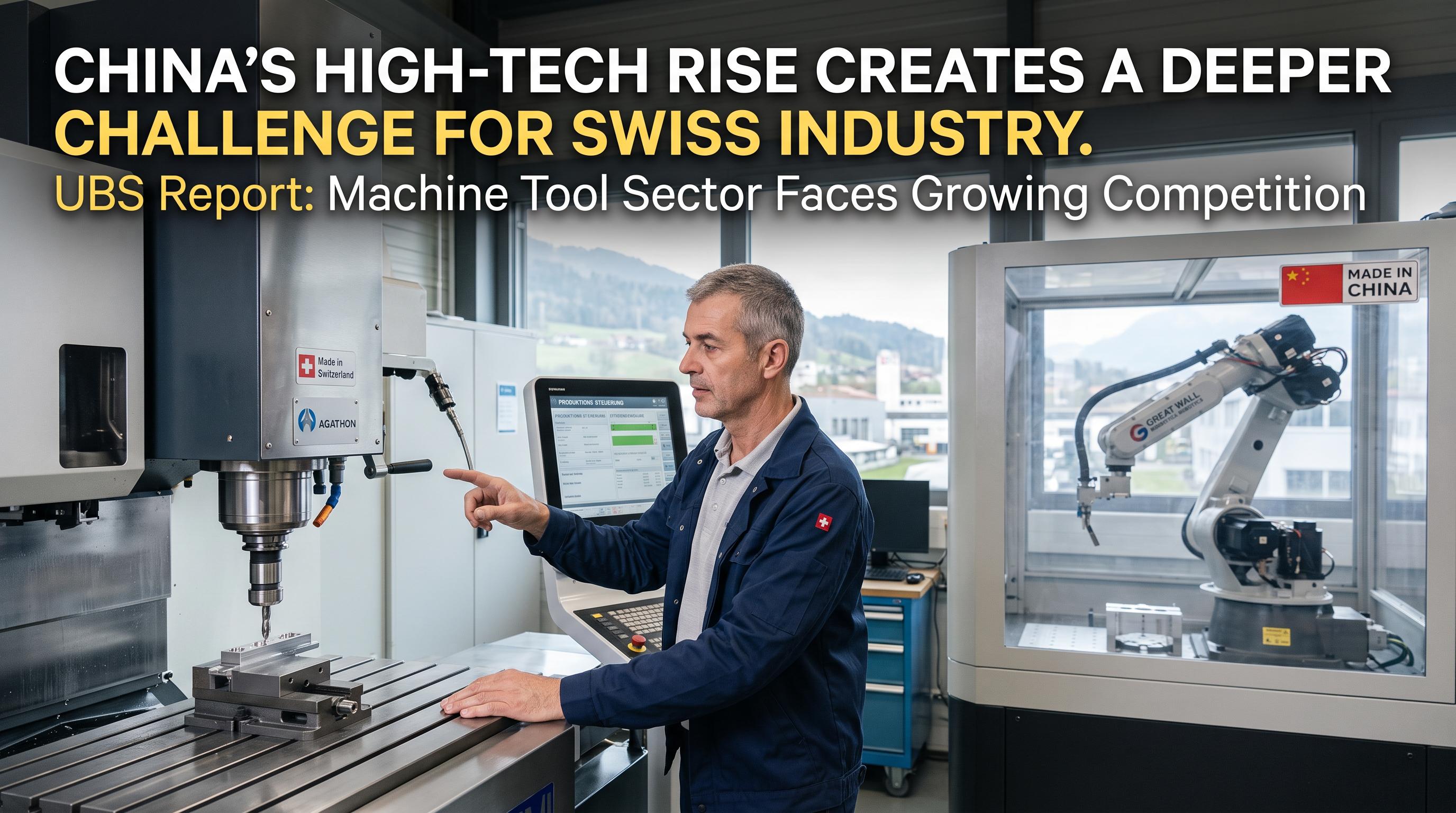
China targets Switzerland's industrial strongholds
China is moving into the industries Switzerland has relied on for decades. UBS economists say the country's transformation from low cost manufacturing base to high technology producer presents a deeper and more durable challenge for Swiss companies than the current US tariff dispute.
China has developed its own chip industry and has caught up with Western suppliers in the automotive sector, according to the UBS outlook published on Thursday. Chinese companies are also gaining ground in mechanical engineering, electrical engineering, chemicals and medical technology.
That expansion matters in Switzerland because these fields overlap with the country's industrial strengths. Swiss companies have built their reputation on specialised machinery, precision instruments, advanced chemicals and medical products. Their advantage has traditionally rested on engineering expertise, reliability and complex production capabilities.
UBS describes the pressure as one that is approaching “the very core of the Swiss industrial model”. The bank's assessment gives the debate a longer horizon. Swiss manufacturers are dealing with a competitor that is improving its technology, scaling production and looking for customers abroad.
Chinese exporters widen the pressure
Chinese firms are exporting more as domestic demand weakens and industrial overcapacity grows. That combination is increasing pressure on international markets and forcing competitors to respond to a broader range of Chinese products.
The shift is visible across sectors that once appeared protected by technical complexity. UBS economist Meret Mügeli identified mechanical engineering, precision technology and medical technology as areas where Chinese suppliers are making inroads. Those sectors require specialised knowledge, quality control and close relationships with customers, all areas where Swiss producers have long held an advantage.
Chinese companies are also building capabilities in chips and automobiles. Their progress gives them a stronger technological base for adjacent industries, while large production volumes can support aggressive export strategies.
For Swiss firms, the challenge is therefore broader than price competition. They face pressure on product development, delivery capacity and international market access. A Chinese supplier does not need to match every Swiss product to affect the market. Gaining ground in selected components, machines or devices can put pressure on established suppliers and their margins.
Swiss strengths buy time, not immunity
Switzerland still holds a relatively favourable position in Europe. UBS points to the country's concentration in high value added exports, including pharmaceuticals, precision instruments, watches and specialised machinery. Chinese exporters are not yet particularly active across all of these fields.
That position offers protection, but it does not remove the risk. Chinese suppliers are increasingly entering precision and medical technology, both of which have been regarded as particular Swiss strengths. Swiss firms also operate in a high cost environment, making productivity, innovation and product quality central to their competitiveness.
The Swiss industrial base is spread across companies with different levels of exposure. A pharmaceutical exporter may face a different competitive landscape from a machinery manufacturer selling into Asia. The UBS analysis does not suggest that every Swiss company will experience the same effect. It does show that the areas once viewed as safest from Chinese competition are becoming more contested.
The pressure will be felt through international tenders, supply chains and pricing decisions. Swiss companies that sell complex equipment or components must defend their value while continuing to invest in research, manufacturing expertise and customer support.
Tariffs fade faster than technological rivalry
UBS expects US tariffs to cause a more manageable and likely temporary shock. The average tariff rate affecting Swiss industry is around 6%, while the tariff difference between Switzerland and the European Union is now minimal.
Swiss pharmaceuticals provide an important buffer. The sector accounts for a significant share of Swiss exports and benefits from exemptions, according to UBS economist Maxime Botteron. That reduces the direct effect of US trade measures on the national industrial picture, although individual companies and products may still face disruption.
The comparison with China is central to the UBS assessment. Tariffs can alter trading conditions quickly, but China's industrial and technological rise is a structural development. Chinese companies are improving capabilities, building export capacity and competing in more sophisticated product categories.
For Swiss policymakers and business leaders, the distinction affects priorities. Managing tariff exposure remains necessary, particularly for firms with concentrated US sales. The longer task is preserving Switzerland's technological edge as competition reaches machinery, medical devices, chemicals and electrical engineering.
Switzerland must keep its edge
Swiss industry must compete where technology and trust still command a premium. The UBS outlook leaves Switzerland with a favourable starting point, but it also narrows the margin for complacency. High value added exports remain important because Chinese suppliers have not yet become equally active across every Swiss speciality.
That gap can close as Chinese companies gain experience, scale and access to international customers. Swiss manufacturers will need to keep developing products that are difficult to replicate, while improving production efficiency and maintaining close links with clients. Service, certification and long term reliability may become as important as the machine or device itself.
The challenge also extends beyond individual companies. Switzerland's research institutions, vocational training system and industrial suppliers all contribute to the capabilities that support export businesses. Preserving those capabilities will matter as competition moves into more technical markets.
UBS does not forecast an immediate collapse in Swiss competitiveness. Its warning is more specific: China's rise is reaching the sectors that have supported Swiss industry for generations. The response will be measured through investment, innovation and the ability to turn specialised expertise into products that global buyers continue to choose.