economy
German Car Industry Crisis Hits Swiss Manufacturing, Forcing Factory Closure
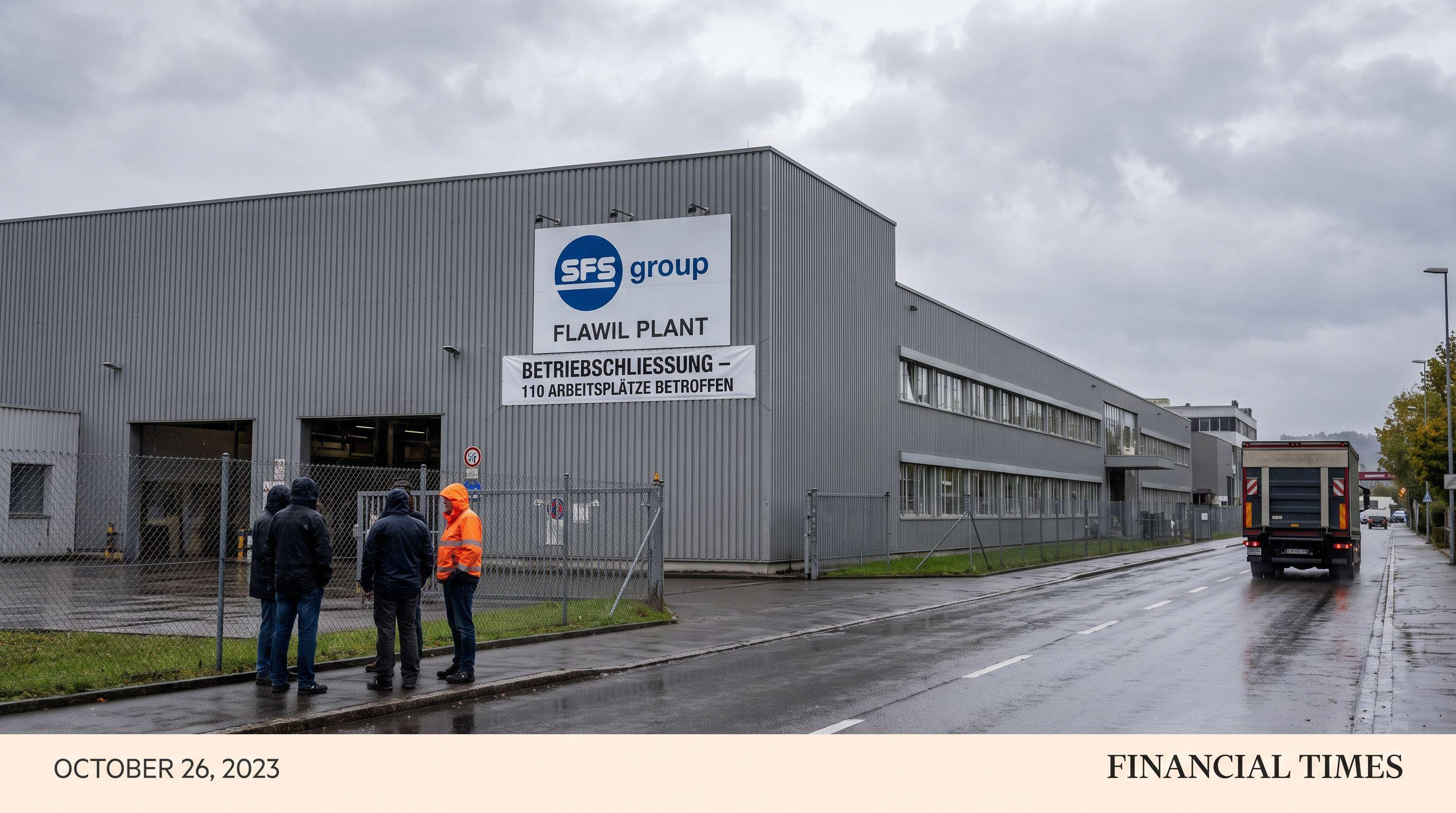
The slump in Germany's automotive sector is causing a direct fallout in Switzerland, exemplified by the SFS group's decision to close its Flawil plant, resulting in 110 job losses and highlighting the Swiss supply chain's vulnerability.
The German Engine Stalls and Switzerland Feels the Shudder
A staggering 32,000 Swiss workers are currently tethered to the fate of the German automotive industry, and that tether is fraying at an alarming rate. When Volkswagen sneezes, the Swiss manufacturing sector catches a terminal cold. The crisis currently engulfing Germany’s automotive titans is no longer a distant threat; it is an immediate economic contagion crossing the Rhine. As Volkswagen confronts a potential 120,000 job cuts and massive overcapacity in Europe, the invisible Swiss components hidden beneath the hoods of millions of cars are suddenly without a home. This isn't just a market dip—it is a fundamental shift in the European industrial landscape. Switzerland’s high-tech suppliers, once the silent engines of German engineering excellence, now find themselves vulnerable to a slump in Chinese demand and a chaotic transition to electric vehicles. The precision that defined Swiss manufacturing for decades is facing its most critical test as the German giants struggle to redefine their very existence.
Flawil Factory Falls as 110 Jobs Evaporate
One hundred and ten families in Flawil just received the news they feared most: their livelihoods are the latest collateral damage in the global automotive war. The SFS Group’s decision to shutter its Flawil plant by 2027 sent shockwaves through the Canton of St. Gallen, catching the workforce entirely off guard. This facility, a bastion of Swiss precision, manufactures the intricate components that make German cars synonymous with quality. However, as production lines in Germany grind to a halt or pivot away from traditional combustion technology, the demand for these specialized parts has plummeted. SFS is not merely trimming the fat; it is amputating a limb to survive a market that no longer values its current output at the volumes required to sustain a domestic Swiss plant. This closure serves as a grim harbinger for other specialized manufacturing sites across the plateau, highlighting a brutal reality: Swiss quality cannot protect you if your primary customer is in a tailspin.
Swiss Suppliers Grapple with Predatory Pricing
Swissmem President Martin Hirzel has laid bare a painful truth: Swiss manufacturers have effectively been subsidizing Volkswagen’s inefficiencies for years. As German carmakers watch their profits evaporate, they have turned their sights on their suppliers, squeezing margins to the breaking point. It is a David versus Goliath struggle where David is losing his sling. Swiss companies are being forced to accept 'predatory' terms just to keep their production lines moving, resulting in a dangerous erosion of capital and innovation potential. Anja Schulze of the Swiss Centre for Automotive Research confirms that the 32,000-strong workforce has already begun to shrink as suppliers endure 'extremely difficult years.' The power dynamic has shifted violently; where there was once a partnership of excellence, there is now a desperate scramble for survival. Swiss firms are being asked to do more with less, even as the cost of energy and labor in Switzerland remains among the highest in the world.
Restructuring the Future: From Crisis to Opportunity
While the current outlook remains gloomy, a radical restructuring of the German industry may be the 'long overdue' shock that Swiss manufacturing needs to evolve. Martin Hirzel argues that if Volkswagen and its peers can successfully navigate this crisis and return to profitability, they may finally be able to pay 'appropriate prices' for the premium components Switzerland provides. The era of Swiss suppliers funding German inefficiency must end. Forward-thinking Swiss firms are already looking beyond the automotive horizon, diversifying into medical technology, aerospace, and green energy sectors where Swiss precision remains an undisputed gold standard. The closure in Flawil is a tragedy for the 110 affected, but it is also a wake-up call for the entire nation. Switzerland must pivot. The future of Swiss manufacturing lies not in being a subservient cog in the German machine, but in leading the next industrial revolution through diversification and technological independence. The crisis is here, but the response will define the Swiss economy for the next half-century.