Law
Geneva Court Provisionally Suspends Burkini Ban, Reopening Public Pool Access Debate
In a significant ruling, the Geneva Court of Justice has provisionally suspended a municipal ban on burkinis and other full-body swimwear in public pools. The decision, which cites potential infringement of fundamental rights, reignites a nationwide conversation on religious freedom, secularism, and public space.
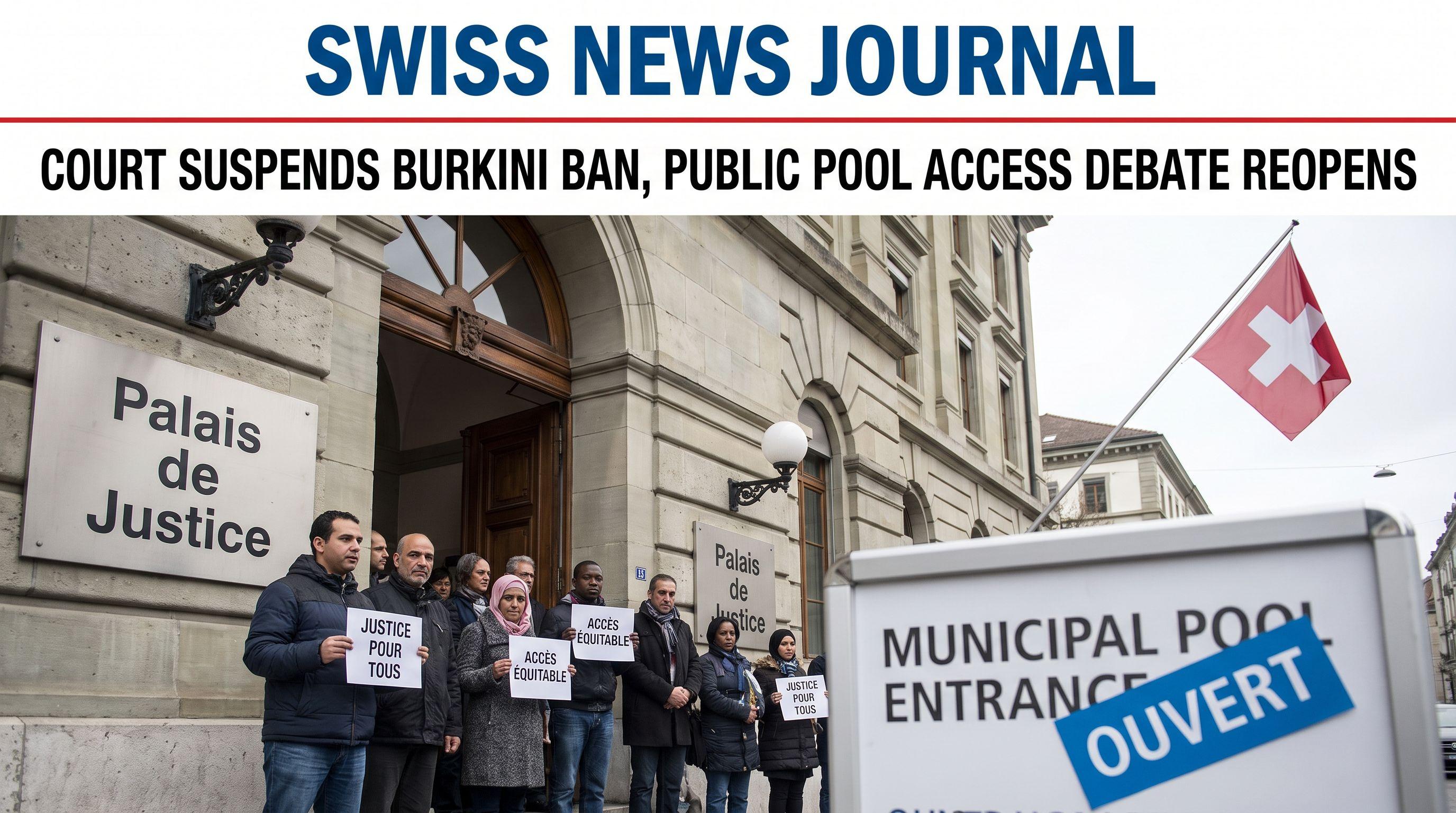
Geneva Shatters Swimwear Restrictions
Geneva’s legal landscape just shifted under the summer sun. In a move that reverberates across the Swiss Confederation, the Geneva Court of Justice has provisionally suspended a controversial ban on burkinis and full-body swimwear in public pools. This isn't just a minor regulatory tweak; it is a direct judicial intervention against a law that sought to mandate swimwear ending above the knees and leaving arms bare. The Constitutional Chamber’s ruling effectively halts the enforcement of these restrictions, ensuring that for now, the pools remain open to all, regardless of their attire. This decision strikes a blow to the legislation passed by the cantonal parliament in May, which many viewed as a targeted strike against religious expression under the guise of 'standardization.'
Municipalities Revolt Against Cantonal Mandates
A staggering coalition of five major municipalities—Vernier, Meyrin, Carouge, Lancy, and the City of Geneva—has risen in open defiance of the cantonal law. These local governments are not merely protesting; they have lodged formal appeals to protect their local autonomy and the personal freedoms of their residents. They argue that the cantonal parliament failed to provide any clear public interest for the ban, relying instead on a vague desire for 'uniformity.' This internal political warfare highlights a deep fracture between right-wing cantonal legislators and local administrators who grapple daily with the realities of diverse urban populations. The Geneva cantonal government itself had previously warned that this legislative amendment was a violation of personal freedom, a warning the court is now taking very seriously.
Fundamental Rights Clash with Secular Uniformity
The court’s ruling cuts to the heart of the Swiss identity crisis: the tension between secular mandates and individual liberty. The Constitutional Chamber noted that the 'Coordination for Inclusive Swimming'—a powerful alliance of 12 distinct organizations—raised valid objections regarding the infringement of fundamental rights. The law, originally sparked by a motion from the right-wing Swiss People’s Party (SVP), was designed to restrict the burkini but was later broadened to include all long swimwear to avoid the appearance of religious targeting. However, the court recognized that excluding individuals who cover up for religious reasons, modesty, or health concerns creates a 'disadvantage' that cannot be easily remedied once the summer season passes. This sets a critical precedent for how Swiss courts weigh 'standardized rules' against the lived reality of religious minorities.
Heatwaves Heighten the Human Stakes
As temperatures soar across the Lemanic region, the denial of pool access becomes more than a legal debate—it becomes a public health issue. Meriam Mastour, the driving force behind the appeal, emphasized that the court’s decision is vital for ensuring access during the current heatwave. When the mercury rises, public pools are essential infrastructure for urban cooling. By provisionally suspending the ban, the court ensures that vulnerable populations, including those who require UV-protective clothing for health reasons or those who adhere to religious dress codes, are not barred from relief. The court specifically highlighted that the cantonal parliament put forward no specific reason for 'immediate application' of the ban, making the exclusion of citizens during a period of extreme heat particularly difficult to justify.
A Nation Divided on the Edge of the Water
This Geneva showdown is the latest flashpoint in a broader Swiss struggle over visibility and religion. It follows the national 'burka ban' that took effect on January 1, 2025, signaling a country deeply divided on the limits of secularism. While the Geneva court’s decision is only provisional, it signals a potential shift in the judicial tide. The appeal will now be examined on its full merits, a process that will likely drag into the colder months, but the immediate impact is clear: Geneva has chosen, for now, to prioritize inclusion over strict uniformity. As other cantons watch closely, the outcome of this case could redefine the boundaries of personal freedom in public spaces across all of Switzerland. The battle for the soul of Swiss public life is currently being fought at the water's edge.