Politics
Divided Nation: Switzerland Debates Tightening Foreign Property Ownership Laws
A government proposal to reform the 'Lex Koller' law restricting property purchases by foreigners has sparked a major political debate. The proposed changes have exposed a sharp divide, pitting left and right parties against business groups and centrists.
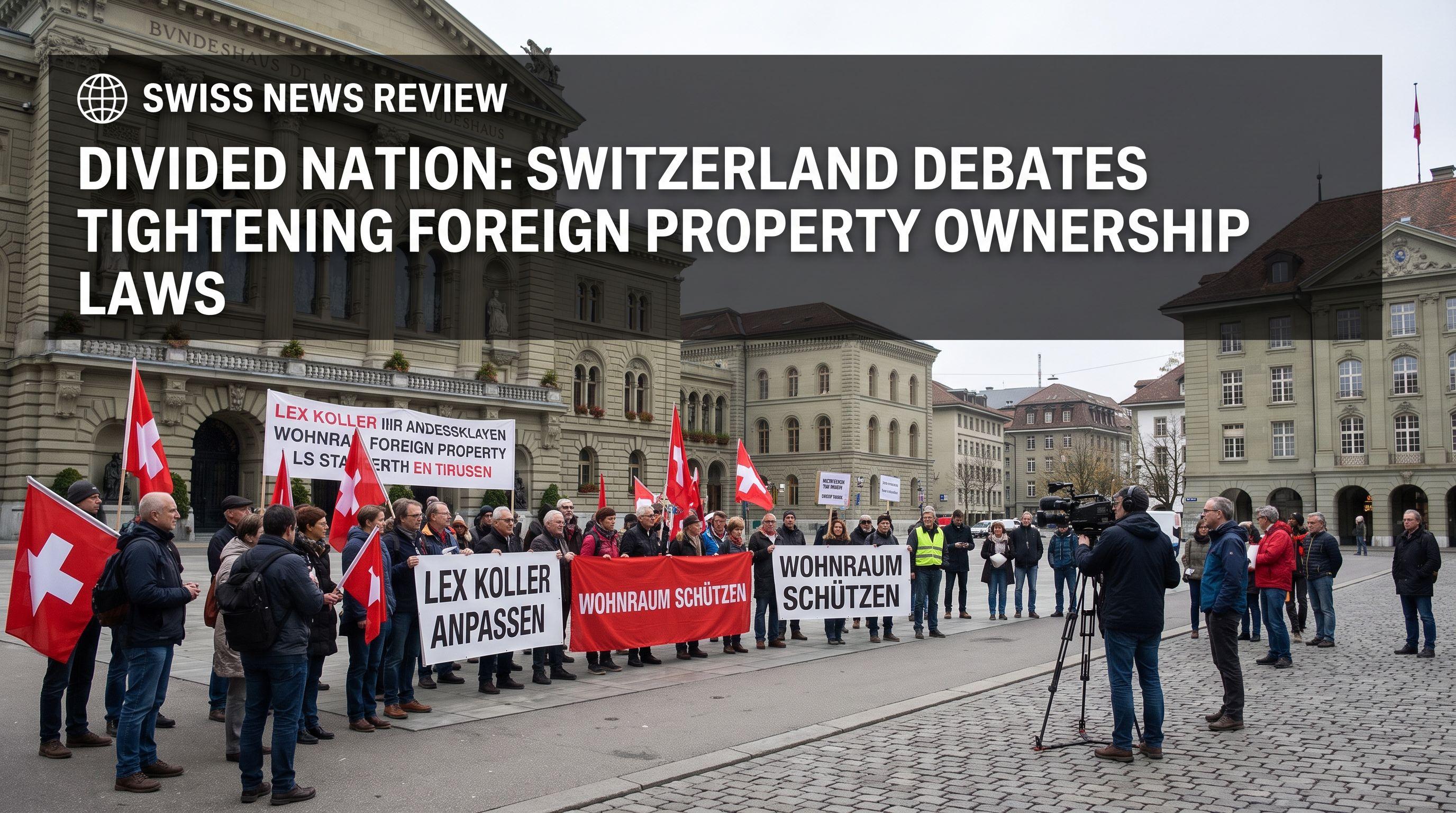
Closing the Backdoor on Global Capital
Switzerland confronts a housing crisis so acute that the national rental vacancy rate has plummeted to a staggering 1% in 2025. For a nation where two-thirds of the population are renters, this isn't just a statistic—it is a social emergency. The Federal Council is now moving to weaponize the 'Lex Koller' law, aiming to slam shut the financial loopholes that have allowed foreign investors to pour billions into the Swiss market through the 'backdoor' of real estate funds and listed companies. Under the new proposal, individuals domiciled abroad would be strictly prohibited from acquiring units in regularly traded real-estate funds or shares in listed residential firms. This is a bold, protectionist pivot designed to decouple Swiss living costs from global speculative capital. The government insists these measures are essential to ease the suffocating pressure on the domestic housing market, ensuring that Swiss homes remain for Swiss residents rather than becoming assets in a global portfolio.
Market Panic Grips Property Giants
The reaction from the financial sector has been nothing short of explosive, with major property firms threatening to delist from the Swiss stock exchange entirely. These industry titans argue that the reform would trigger a massive exodus of capital, potentially destabilizing the very companies that fund new construction. By restricting foreign buyers from commercial property unless used for their own business, the government risks freezing the commercial sector. Critics warn that the proposal fails to address the root cause of the crisis: a lack of supply. The Centre Party and business groups contend that the real culprits are agonizingly slow planning procedures and overly restrictive building regulations that stifle growth. While the government targets foreign buyers, the industry warns that these 'draconian' measures could backfire, drying up the investment needed to build the thousands of new apartments Switzerland desperately requires to meet demand.
A Nation Divided by Brick and Mortar
Political battle lines are drawn with unprecedented clarity as the public consultation period concludes. In a rare alignment, the Socialist Party (SP) and the right-wing Swiss People’s Party (SVP) have united to champion the crackdown. Jacqueline Badran, a powerhouse in the Socialist Party, asserts that overseas capital has directly fueled the surge in land values, making homeownership an impossible dream for many. The SVP echoes this sentiment, viewing the reform as a necessary step to protect national sovereignty and domestic stability. However, this populist front faces fierce resistance from the Green Liberals and the Centre, who argue the proposal is a blunt instrument that lacks sufficient justification. They question how restricting commercial property ownership will magically create more residential apartments. This ideological clash highlights a fundamental tension in Swiss society: the desire to remain a global financial hub versus the urgent need to protect the local population from the volatility of international markets.
The High Cost of Alpine Protectionism
The implications for Switzerland’s iconic mountain regions are particularly dire, according to local authorities. The Swiss Working Group for Mountain Regions (SAB) warns that the measures could cripple alpine economies without providing a single extra bed for locals. These regions rely heavily on external investment to maintain infrastructure and tourism appeal. By tightening the screws on third-country nationals seeking primary residences, the law could deter the high-net-worth individuals who contribute significantly to local tax bases. As the debate moves to Parliament, the stakes could not be higher. If the government refuses to water down the proposal, Switzerland may see a fundamental shift in its economic DNA. The coming months will determine whether the nation chooses to remain an open, attractive destination for international investment or retreats into a new era of property protectionism. One thing is certain: the status quo is no longer an option as the housing shortage continues to haunt the Swiss middle class.