education
Why Swiss schools are struggling with basic skills
Swiss pupils still perform above the OECD average, but recent results point to deterioration in basic skills. This analysis should investigate the causes of the decline and the implications for schools, teachers and education policy.
Swiss Schools Lose Ground on the Basics
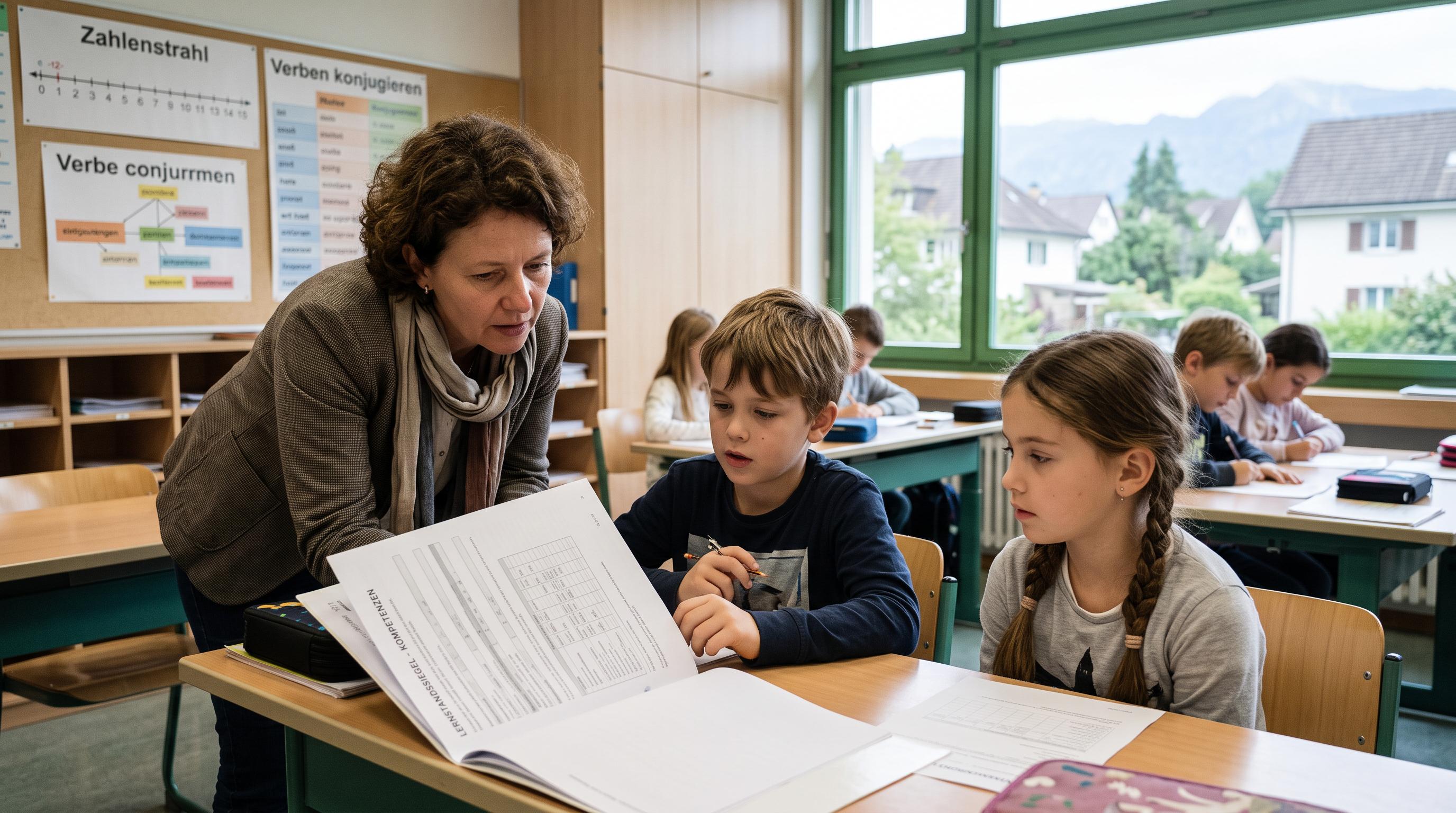
Swiss pupils remain above the OECD average, yet basic skills are moving in the wrong direction. The latest PISA results place Switzerland among the stronger education systems in the wealthy world, while exposing a decline in the abilities schools are expected to build first. Fifteen-year-olds recorded 499 points in mathematics, compared with 521 in 2015. Reading fell to 470 points, from 492. Science held almost steady at 501, down from 503.\n\nThe country still ranked 9th in mathematics, 14th in science and around 18th in reading among 91 participating countries and economies. Those rankings provide reassurance, but they also obscure the pupils being left behind. Twenty-nine percent failed to reach the required reading level, while 23% fell below the benchmark in mathematics and 21% in science.\n\nThe deterioration matters beyond league tables. Reading affects a pupil's ability to follow instructions, learn science and solve mathematical problems. Weak numeracy follows young people into vocational training and the workplace. Switzerland's results remain comparatively strong, but the direction of travel has forced cantons, teachers and employers to examine what compulsory schooling is prioritising.
The Skills Gap Reaches the Apprenticeship Door
The weakest results are concentrated at the bottom of the distribution. Nearly one in three Swiss teenagers did not reach the required reading level in the latest assessment. That figure points to a practical problem inside classrooms: pupils who struggle to understand a complex passage will also find it harder to interpret a word problem, assess evidence in science or complete written instructions in an apprenticeship.\n\nThe results also expose the limits of celebrating Switzerland's international position. A country can rank highly while carrying a large group of pupils who lack the skills needed for further education, vocational training and everyday independence. Employers and trade unions have made that connection explicit. Travail.Suisse describes literacy and numeracy as a matter of equal opportunity and employability. The Swiss Union of Arts and Crafts wants reading, writing and mathematics to regain a stronger place in compulsory schooling.\n\nEconomiesuisse has reported weaknesses in reading and arithmetic among some young people entering vocational education. Its survey was not representative, so it cannot measure the whole population. It does, however, echo the PISA findings and the experience of employers who must provide additional support when trainees arrive without secure foundations.\n\nFor teachers, the challenge is immediate: identify gaps earlier, provide sustained practice and protect lesson time for core knowledge.
Language, Poverty and the Unequal Starting Line
Swiss pupils do not enter the classroom with equal advantages. Social background, migration history and the language spoken at home remain closely linked to attainment. Christophe Darbellay, Valais's education minister and president of the Swiss Conference of Cantonal Ministers of Education, has singled out pupils who do not speak the language of instruction at home and children from poorer families.\n\nThe latest figures contain a warning about how inequality is measured. The gap between advantaged and disadvantaged pupils has narrowed since 2022, but part of that change reflects weaker results among better-off pupils. A smaller difference produced by levelling down does not give schools a stronger foundation. It makes targeted language support, early intervention and help for disadvantaged families more urgent.\n\nThe pandemic may still be affecting this cohort. The teenagers who sat the latest tests were children when Covid disrupted lessons, routines and attendance. Absenteeism has remained high across many wealthy countries, making it harder for schools to rebuild study habits and maintain continuity. The data cannot assign a precise share of the decline to the pandemic.\n\nSwiss education is also divided among cantons, with different policies, curricula and resources. That structure allows local adaptation, but it complicates a national response. Cantonal authorities will need reliable comparisons that distinguish language needs, poverty and school context from teaching quality alone.
Screens, AI and the Cost of Lost Attention
Digital distraction is changing how pupils read, study and make mistakes. Andreas Schleicher, the OECD's education director, has pointed to smartphones and social media as possible reasons pupils spend less time concentrating on demanding texts. He has also identified more “hasty readers”, pupils who rush through assessments and make avoidable errors.\n\nSwiss teenagers use artificial intelligence for schoolwork more than many of their OECD peers. The comparison does not prove that AI damages learning. It does place pressure on schools to set clear boundaries and teach pupils how to use digital tools without outsourcing basic thinking. A system that rewards a polished answer without checking the reasoning behind it may conceal weak reading and writing.\n\nTeaching methods are part of the debate. Over the past two decades, many Western systems have expanded pupil-led, project-based and discovery learning. Critics argue that these approaches can reduce time for explicit instruction, deliberate practice and the systematic acquisition of knowledge. Supporters reject a single explanation for a decline affecting countries with very different curricula and school cultures.\n\nFinland's fall in PISA offers a caution. It moved from first in science and second in reading and mathematics in 2006 to 12th, 16th and 22nd respectively in the latest comparisons. The shift does not prove that one curriculum caused the decline. It does show why Swiss policymakers should test reforms against evidence rather than follow educational fashions.
Put Foundations Back at the Centre
Swiss education leaders are being pushed back towards a narrower definition of school success. Darbellay told RTS that schools may have taken on too many priorities: “Perhaps we have spread ourselves a little too thin.” His remarks reflect growing pressure from employers, trade unions and cantonal authorities to give reading, writing and mathematics more protected time.\n\nThat shift will require more than a slogan about fundamentals. Teachers need high-quality materials, time for assessment and practical support for pupils who arrive with language or numeracy gaps. Schools also need to decide which digital tasks deepen understanding and which simply produce finished work. The evidence so far does not justify one universal teaching model, a ban on technology or a promise that smaller classes alone will reverse the trend.\n\nThe new problem-solving assessment offers one reason for measured confidence. Switzerland scored 520 points and ranked 13th in the digital test, suggesting that pupils can perform strongly when asked to analyse data and develop solutions. The task for policymakers is to connect that capacity to secure foundations in reading and mathematics.\n\nThe next phase should focus on early diagnosis, language support, explicit teaching and sustained practice, while giving cantons room to adapt. Switzerland has the resources and institutional capacity to respond. The PISA results show that its schools now need to use them more precisely.