Swiss National Day
What Defines Switzerland? Poll Reveals Modern Identity Ahead of National Day
As August 1st approaches, a new poll shows a majority of Swiss associate the nation's birth with the 1848 federal state, rather than the 1291 pact. This evolving sense of identity comes as the Swiss president's annual address emphasizes enduring values during times of crisis.
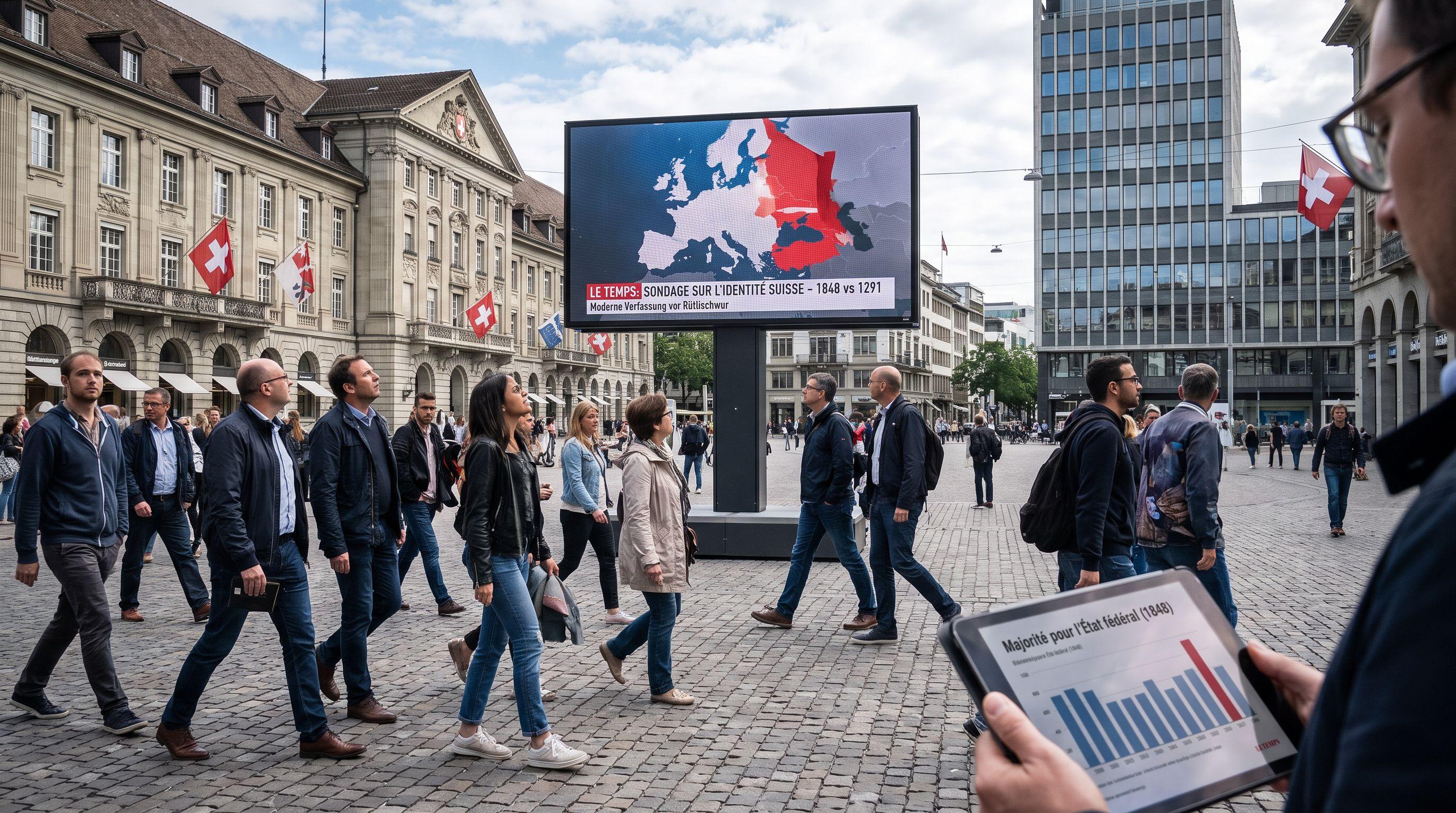
Redefining the Republic: 1848 Overtakes 1291
A staggering 52% of Swiss citizens now believe the true birth of their nation occurred in 1848, effectively dethroning the traditional 1291 Rütli oath in the collective consciousness. This seismic shift in identity, revealed by the Sotomo Institute, signifies a nation moving away from medieval myths toward a modern, constitutional reality. While the 1291 pact remains a cornerstone of folklore, only 21% of the population still views it as the primary founding event. This transition is most aggressive in German-speaking regions, where the 1848 federal state is overwhelmingly favored as the catalyst for modern Switzerland. In contrast, French-speaking Switzerland and Ticino remain more divided, clinging to a more nuanced historical narrative. This evolution suggests that as August 1st approaches, the Swiss are not just celebrating a date, but a functional, democratic achievement that transformed a loose confederation into a global powerhouse. The data proves that contemporary concerns are actively reinterpreting the past, placing the rule of law and federal structure above ancient alliances.
The Myth of the Archer: Tell Faces Reality
Nearly two-thirds of the Swiss population now regard William Tell as a figure of fiction rather than a historical hero. Specifically, 37% see him as a purely legendary figure, while 28% view him through the lens of Friedrich Schiller’s literature. Only a minority—27%—still champion him as the defiant freedom fighter who stood against the Habsburgs. This erosion of mythic belief is most pronounced among the elderly, whereas younger generations and supporters of the right-wing Swiss People’s Party remain more likely to defend Tell’s historical validity. This skepticism extends to the nation's wartime history; a dominant 56% of respondents dismiss the 'National Redoubt' strategy as the primary reason Switzerland escaped World War II unscathed. Instead, they point to the cold reality of economic self-interest, suggesting that Nazi Germany preserved the nation solely for its role as a neutral financial hub. These figures confront the romanticized version of Swiss history, replacing it with a pragmatic, almost cynical understanding of how the nation survived the 20th century's darkest hours.
The Price of Purity: Protecting the Swiss Brand
The 'Swiss-made' label is not just a mark of origin; it is a financial juggernaut that can skyrocket the sale price of luxury goods by a massive 50%. To protect this lucrative asset, the Swiss government enforces some of the world's most stringent 'Swissness' legislation. For any foodstuff to bear the white cross, at least 80% of its raw materials must be sourced domestically—a figure that surges to 100% for milk and dairy products. Industrial products face a 60% cost-price threshold to qualify. These rules are non-negotiable, ensuring that the 'Swiss' brand remains synonymous with premium quality. However, the law allows for fascinating anomalies: cows grazing on French grass in the customs union areas still produce 'Swiss' milk, provided the farms are Swiss-managed. This obsession with purity serves a critical economic purpose, shielding the nation's exports from global dilution. As companies grapple with rising production costs, the pressure to maintain these standards intensifies, yet the value of the brand remains an unparalleled competitive advantage in the global marketplace.
Unity in Crisis: A President’s Call to Action
President Guy Parmelin has issued a powerful directive to the 840,000 Swiss citizens living abroad, asserting that 'Switzerland draws its strength from maintaining continuity in the midst of change.' In an address marked by the shadows of international conflict and domestic tragedies like the Crans-Montana fire, Parmelin’s message is one of defiant optimism. He argues that the very pressures threatening the international rules-based order are, paradoxically, forging a renewed sense of global cohesion. By invoking the humanism of the late Peter Ustinov, Parmelin challenges the Swiss diaspora to remain optimists who confront problems without losing heart. This call for solidarity is not merely rhetorical; it reflects a nation that views its democratic and liberal values as an anchor in a volatile world. As the Swiss National Day celebrations commence, the focus is squarely on the future. The President’s message serves as a reminder that while historical definitions may shift, the core values of steadfastness and international cooperation remain the bedrock of the Swiss identity. The nation stands ready to confront long-term challenges with the same continuity that has defined its past.