Stadler Rail
Stadler Rail wins contract for eight locomotives in Italy
Stadler Rail will supply eight dual-mode locomotives to Italy’s Mercitalia Shunting & Terminal. The article would examine the Swiss manufacturer’s bi-mode technology, why Italy is investing in flexible rail freight and what the contract means for Stadler’s international business.
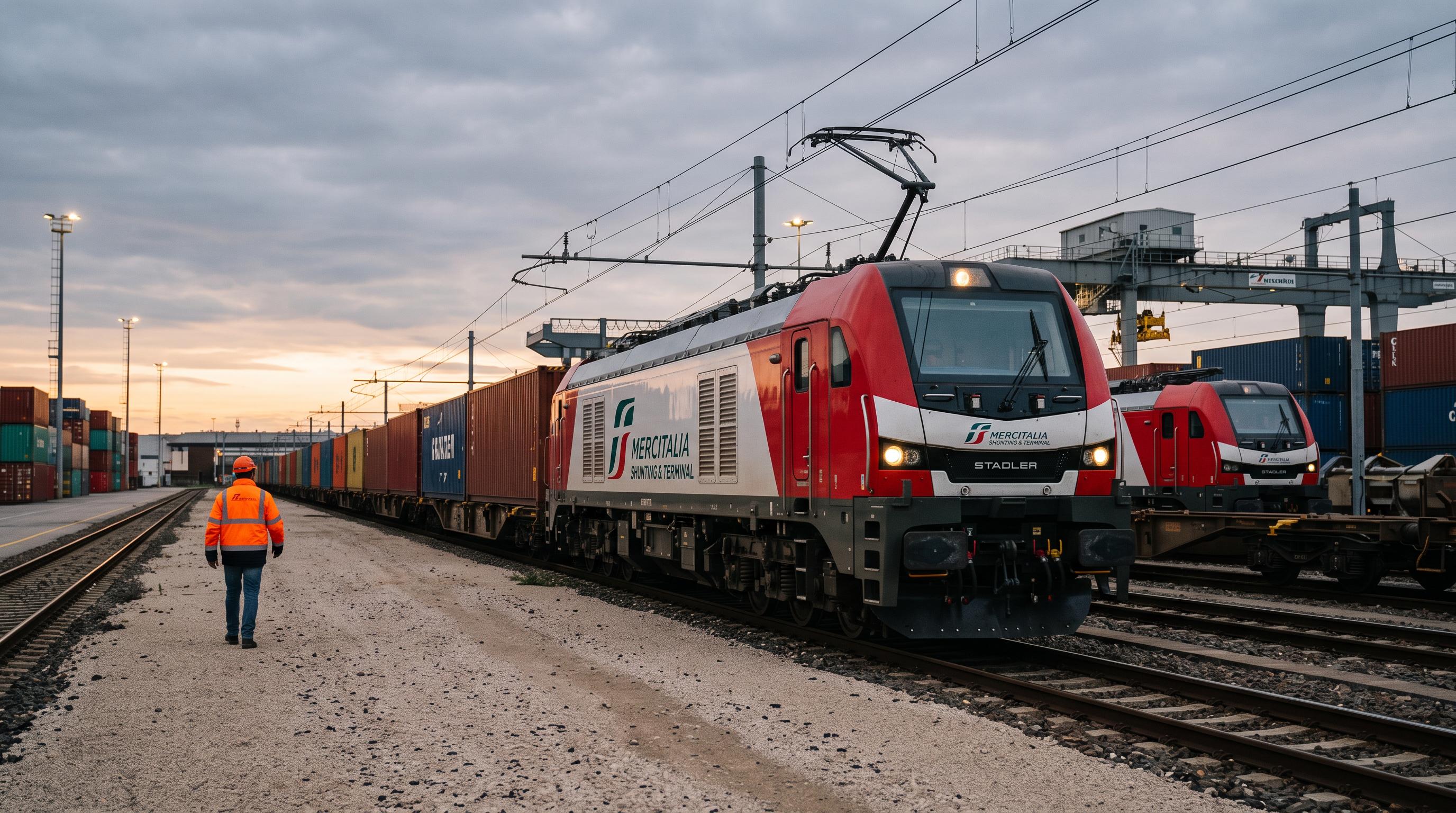
Stadler Secures Italian Freight Order
Eight new locomotives will link Italy’s electrified and non-electrified rail lines. Stadler Rail has won a contract to supply eight Eurolight Dual locomotives to Mercitalia Shunting & Terminal, the Italian freight and terminal operator controlled by FS Logistix within the Ferrovie dello Stato group. The Thurgau-based manufacturer announced the order on September 16, 2026, presenting it as a step towards more efficient, flexible and sustainable freight operations.
The deal gives Stadler another foothold in a major European rail market while Italy upgrades the assets used to move goods across its national network. Mercitalia’s locomotives will be designed for the specific conditions of Italian railways, including routes where overhead electrification is unavailable.
The timing also puts the technology in front of the industry’s international audience. Stadler plans to unveil the locomotive on September 22 at InnoTrans, the biennial rail trade fair in Berlin. For Switzerland’s largest rail manufacturer, the contract provides a visible demonstration of how its engineering capabilities in eastern Switzerland are being adapted for cross-border freight operations.
Showcase Bi-Mode Technology
The Eurolight Dual can change traction modes without interrupting a journey. The locomotive combines 3 kV DC electric traction with a diesel engine. That configuration allows it to draw power from electrified lines and continue under diesel power when a route, terminal or industrial spur lacks overhead equipment.
For freight operators, the arrangement can reduce the need to change locomotives at the boundary between electrified and non-electrified sections. It also gives Mercitalia greater freedom to deploy the same class of locomotive on different parts of the Italian network. The joint announcement describes the model as high-performing and lightweight, with an axle load of only 20 tonnes.
That figure matters for network access. A lower axle load can help a locomotive serve both major corridors and secondary lines, which often have different infrastructure constraints. Stadler says the model is suitable for use across Italy, including main and secondary routes.
The company’s Inigo Parra said the order shows the value of bi-mode technology for operators seeking to maximise operational performance while reducing their environmental footprint. The press release does not quantify projected emissions savings or fuel reductions.
Build Flexibility Across Italy
Italy is buying flexibility for a rail network with different operating conditions. The eight-locomotive order is part of an investment programme worth approximately €1 billion, according to Sabrina De Filippis, managing director of FS Logistix. The programme aims to expand the availability of modern, efficient and flexible assets across the Italian network.
Freight trains do not travel only on fully electrified main corridors. They also serve terminals, logistics centres and industrial connections, where overhead power may be absent. A bi-mode locomotive can cover more of that journey with one vehicle, giving operators an option for routes that combine different infrastructure types.
The Eurolight Dual’s 20-tonne axle load is also central to its intended role. The specification allows the locomotive to operate on main and secondary lines across Italy, according to the joint press release. That broad operating profile supports Mercitalia’s effort to manage freight movements across a varied national network.
The announcement does not provide a delivery timetable, contract value for the eight locomotives or a breakdown of the wider investment programme. Those details will determine how quickly the order affects day-to-day freight capacity.
Extend Swiss Rail Manufacturing Abroad
The contract extends Stadler Rail’s international business beyond passenger trains. Based in the canton of Thurgau, Stadler has built a global portfolio that includes locomotives as well as regional, urban and intercity trains. The Italian order adds eight specialised freight locomotives to that export record and ties the company to FS Logistix, part of Italy’s state railway group.
The order also illustrates the commercial appeal of tailoring equipment to a national network. Stadler developed this Eurolight Dual version specifically for Italian railway conditions, combining the country’s 3 kV DC electric system with diesel capability and a low axle load. Such adaptations can help manufacturers compete for fleet investments where a standard locomotive may not meet local requirements.
Stadler executive Inigo Parra framed the deal around performance and environmental impact. Those benefits will depend on how Mercitalia deploys the locomotives, how much time they spend under electric power and the condition of the routes they serve.
For the Swiss manufacturer, the public unveiling at InnoTrans offers a chance to market the platform to other operators seeking a single locomotive for mixed infrastructure. The Italian contract provides the immediate customer and operating environment for that pitch.
Take the Italian Platform to Berlin
September 22 will put Stadler’s Italian freight locomotive before the global rail industry. The company will present the Eurolight Dual at InnoTrans in Berlin, four days after announcing the contract. The event gives potential customers a first look at a locomotive designed to operate across electrified and non-electrified sections of track.
The immediate commitment is limited to eight units, yet the order sits inside FS Logistix’s approximately €1 billion investment programme. Its longer-term significance will depend on fleet deployment, delivery performance and whether the bi-mode format meets Mercitalia’s operational and environmental goals.
For Switzerland, the deal highlights how a manufacturer headquartered in Thurgau competes through specialised engineering and adaptation to foreign rail systems. The company must serve an Italian operator, meet Italian network requirements and position the product for an international audience at the same time.
The announcement provides no information on production locations, delivery dates or the contract’s price. Those missing details will be important for assessing the order’s effect on Stadler’s factories, suppliers and financial results. The confirmed step is clear: eight locomotives will join an Italian programme focused on more flexible rail freight assets.