plane crash
Three people killed in plane crash in the Swiss Alps
Three people have died after a small single-engine aircraft crashed in the Swiss Alps in southwestern Switzerland. The article would report the confirmed facts, identify the response by cantonal authorities and distinguish what is known about the crash from what remains under investigation.
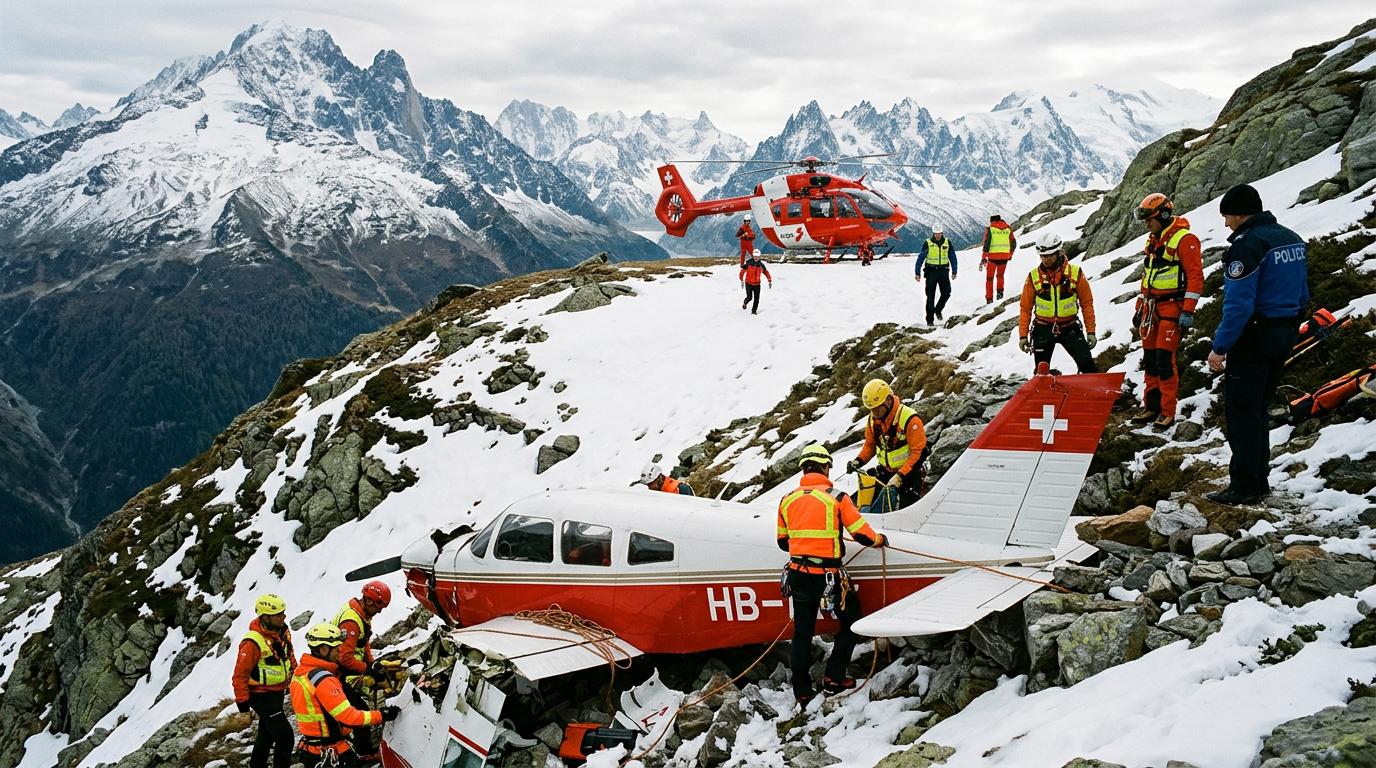
Three Die as Small Aircraft Crashes in the Alps
Three people died on Wednesday, 16 September 2026, after a small single engine aircraft crashed in the Swiss Alps in southwestern Switzerland, according to the cantonal police. The confirmation places the incident among the latest fatal aviation accidents to confront authorities in Switzerland’s mountainous terrain.
The initial report provides only the essential facts. A light aircraft went down in the Alpine region, and all three people aboard, or involved in the flight, were reported dead. The source does not give the exact location, the aircraft’s registration, its operator, or the identities of those killed.
The incident was reported by AFP and published by The Local Switzerland. Cantonal police made the death toll public, establishing the first confirmed account while investigators begin to determine what happened. No details were released about the aircraft’s departure point, destination, flight path, or the time of the crash.
The Alpine setting can complicate emergency operations and evidence gathering because steep terrain, changing visibility, and limited access may affect how investigators reach a site. Those factors, however, have not been identified as causes in this case. Until authorities publish further findings, the confirmed account remains limited to the crash, the aircraft type, the location in southwestern Switzerland, and the three fatalities.
Cantonal Police Lead the Initial Response
Cantonal police confirmed the deaths, but the available account does not name the canton responsible for the response. That distinction matters in Switzerland, where cantonal authorities play a central role in policing, emergency coordination, and public communication within their territory.
The police statement, as reported by AFP, confirms the fatal outcome without supplying operational details. There is no verified information in the source about the number of responders, the use of helicopters, the condition of the wreckage, or whether anyone on the ground was affected. Reports of those details should be treated cautiously until released by the authorities handling the case.
The same applies to the victims. Police have not publicly identified the three people, and no information is available about their nationalities, ages, relationship to the aircraft, or whether they were passengers or crew. Swiss authorities typically coordinate the release of identities with relatives, so further announcements may follow only after formal notification.
The response will also involve aviation investigators, although the source does not identify the agency or confirm its presence at the site. Investigators will need to document the wreckage, establish the aircraft’s flight history, and gather technical and witness evidence. None of those steps has yet produced a public explanation for the crash.
Investigators Search for Answers
The cause of the crash is unknown. The report offers no evidence that weather, terrain, engine trouble, fuel, pilot error, or any other factor played a role. Establishing that cause will require a formal investigation rather than early speculation.
The aircraft was described only as a small single engine aeroplane. That description does not establish its model, age, maintenance history, ownership, or flight purpose. It also does not indicate whether the plane was operating privately, commercially, or as part of a training flight. The source gives no information about its route or the conditions before the impact.
Investigators will normally examine the wreckage and any available records, including flight planning information, maintenance documentation, communications, and weather data. They may also seek testimony from witnesses or other pilots. These are standard investigative avenues, not findings in this crash, and no preliminary conclusions have been published.
The Alpine environment can make a crash investigation especially demanding. Wreckage may be scattered across difficult ground, while access and visibility can affect the recovery of evidence. Still, the current facts do not support a specific explanation. The only confirmed sequence is that a small aircraft crashed in southwestern Switzerland on Wednesday and three people died.
Authorities Prepare the Next Findings
The next confirmed information will come from the investigation and the responsible cantonal authorities. For families and communities affected by the crash, the immediate priorities are identification, notification, recovery, and a reliable account of what happened.
The available report does not say when authorities will release the victims’ names, identify the crash location more precisely, or publish details about the aircraft and its flight. It also does not state whether investigators have issued an initial assessment. Those gaps are significant, but they are normal in the early hours of a fatal aviation accident, when officials must secure the site and verify information before making public statements.
For people in Switzerland, the incident is a reminder that the country’s aviation network includes remote mountain routes as well as busy airports and regional airfields. That broader context should not be used to draw conclusions about this aircraft or the safety of a particular route. No wider safety trend is established by the facts currently available.
The confirmed toll remains three dead. Further reporting should focus on official findings, the identities of the victims once authorities release them, and any evidence that explains why the aircraft went down. Until then, the circumstances remain under investigation by the relevant Swiss authorities.