Defense
Pentagon 'Blocks' Critical F-35 Report Amid Swiss Purchase Concerns
The US Pentagon has prevented the public release of a critical Government Accountability Office (GAO) report on the F-35 fighter jet, an aircraft Switzerland has ordered, fueling speculation about a cover-up of production and modernization problems.
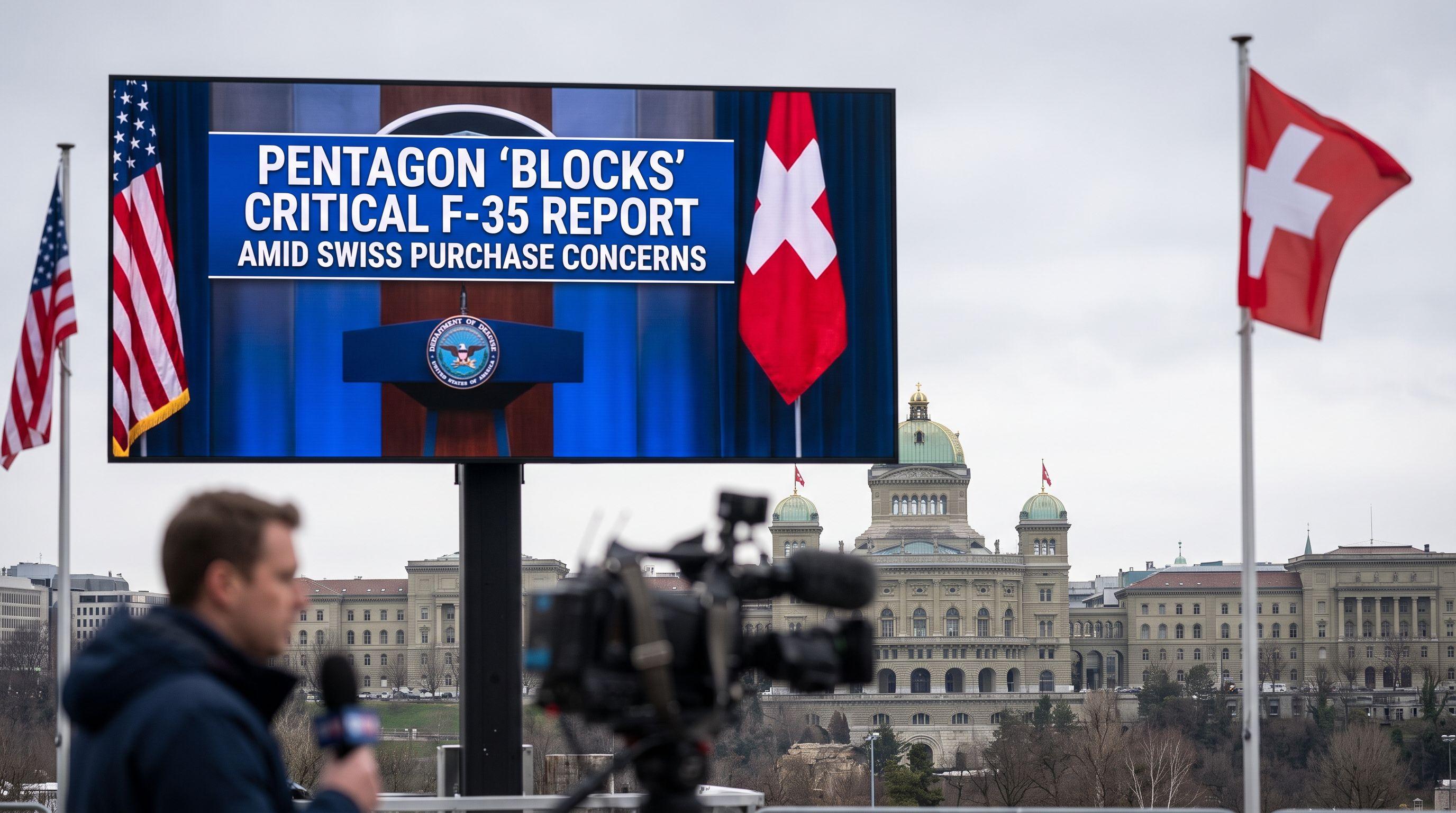
Pentagon Imposes Unprecedented Blackout on F-35 Data
A wall of silence has descended over the world’s most expensive weapons program. For the first time in history, the Pentagon has banned the public release of a critical Government Accountability Office (GAO) report detailing the F-35 fighter jet’s production failures. This unprecedented move, confirmed by RTS investigative units, has sent shockwaves through Bern. While the US Department of Defense labels the data 'Controlled Unclassified Information' to protect operational security, critics see a blatant cover-up. The report was designed to expose the fiscal year 2025 challenges for the stealth aircraft—the very same fleet Switzerland has bet its national security on. This censorship creates an alarming transparency vacuum just as Swiss assembly begins.
Modernization Meltdown: Schedules Plummet into Uncertainty
Schedules are not just slipping; they are collapsing. Aviation expert Bill Sweetman, a former Northrop Grumman executive, asserts that the suppressed report would reveal a cascade of postponed completion dates. The F-35 program is currently grappling with severe hardware bottlenecks in its onboard computers and chronic overheating in its propulsion systems. These are not minor glitches; they are fundamental engineering hurdles that threaten the aircraft's viability. As the Pentagon hides the timeline, Switzerland is left wondering if the 2028 delivery date is a realistic promise or a political fiction. The contrast between official US optimism and the GAO’s forced silence has never been more jarring.
Readiness Crisis: A Staggering 44% Mission Capability
The numbers tell a devastating story: the F-35 is currently failing to meet its most basic performance benchmarks. When Switzerland signed the deal in 2021, the US promised an aircraft capable of operating 67% of the time. Today, that figure has plummeted to a staggering 44%, according to the US Federal Audit Office. This means more than half the fleet could be grounded at any given moment. A chronic shortage of spare parts and logistical nightmares have turned the 'stealth marvel' into a maintenance liability. Instead of performance improving over time, the latest data suggests that Switzerland will need to invest significantly more in aircraft support just to keep the jets in the air. The foundation of the program—that costs would fall while reliability rose—is effectively dead.
Swiss Defenses Grapple with a High-Stakes Gamble
Despite the mounting evidence of a program in distress, the Swiss Air Force remains publicly defiant. Crédric Aufranc, head of Swiss F-35 operations, insists that Bern has prepared for the worst by ordering an 'extra package' of spare parts to ensure independence from the manufacturer. However, this 'Fortress Switzerland' strategy faces a reality check: no amount of spare parts can fix a jet that is fundamentally overheating or running on obsolete hardware. As the first Swiss models began assembly this spring, the stakes for the Federal Department of Defence, Civil Protection and Sport (DDPS) have reached a fever pitch. Switzerland is now locked into a multi-billion franc partnership with a program that the US government is no longer willing to let the public see. The coming years will determine if this was a masterstroke of modernization or a historic strategic blunder.