Environment
Switzerland Unlikely to Meet 2030 Climate Goals, Cites Budget Constraints
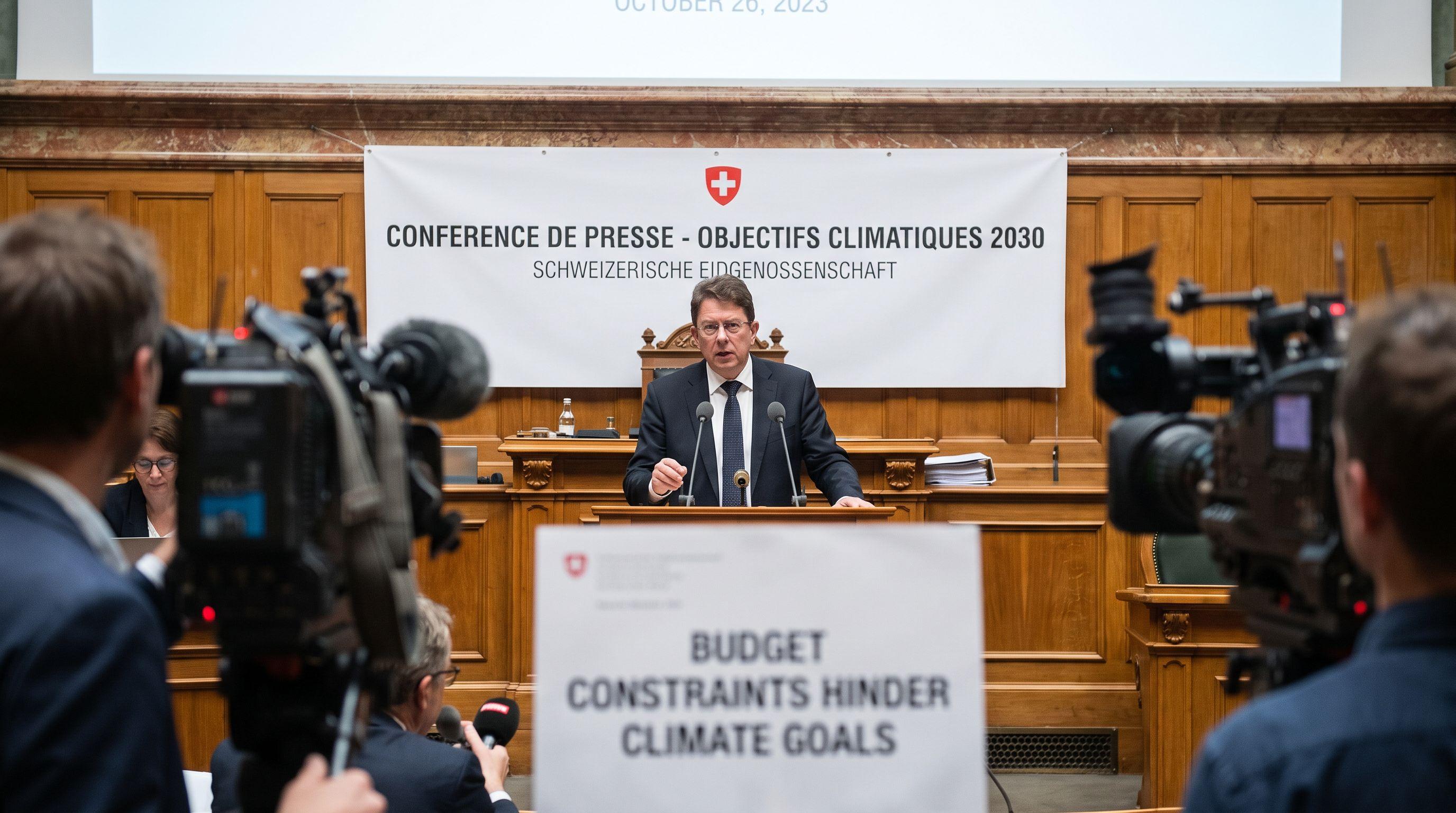
Environment Minister Albert Rösti admitted that Switzerland will struggle to meet its 2030 emissions reduction target, pointing to the high cost of purchasing foreign emissions credits in the current budgetary climate.
The 2030 Mirage: Switzerland Admits Climate Defeat
Switzerland’s ambitious climate roadmap has hit a brutal dead end. Environment Minister Albert Rösti has shattered the national consensus by admitting that the 2030 emissions reduction target is now effectively out of reach. While the nation remains legally committed to halving its 1990 greenhouse gas levels by the end of the decade, the political reality has shifted from optimism to damage control. This admission comes at a critical juncture as the country grapples with a summer of record-breaking heat and unprecedented drought. The government is now forced to confront the widening chasm between its international pledges and its domestic financial reality. While the 2050 net-zero target remains the ultimate 'will of the people,' the immediate milestone of 2030 is crumbling under the weight of fiscal pragmatism. This failure signals a significant pivot in Swiss environmental policy, moving from aggressive mitigation to a defensive posture of adaptation.
The Price of Virtue: A 400 Million Franc Wall
A staggering CHF 400 million stands between Switzerland and its climate promises. Minister Rösti has been blunt: in the current budgetary climate, the federal government simply cannot find the additional 300 to 400 million francs required to bridge the emissions gap. This financial shortfall isn't just a rounding error; it is a structural barrier that threatens to derail the nation's green reputation. Switzerland contributes only one-thousandth of global CO2 emissions, yet the cost of maintaining its lead is soaring. The government is currently prioritizing fiscal discipline over environmental acceleration, a move that has sparked intense debate across the political spectrum. As the federal treasury tightens its belt, the climate budget is the first to feel the squeeze. This fiscal paralysis suggests that without a radical shift in how environmental goals are funded, the 2030 targets will remain a costly fantasy.
Outsourcing Emissions: The Carbon Credit Trap
Switzerland’s strategy relies heavily on the controversial practice of purchasing international carbon credits—essentially paying other nations to do the 'dirty work' of emissions reduction. A significant portion of the 2030 goal depends on these certificates, which are becoming increasingly expensive as global demand surges. By financing cookstove projects or renewable energy in developing nations, Switzerland attempts to offset its domestic excess. However, this reliance on foreign markets has created a dangerous dependency. If the price of these credits continues to climb, or if the supply dries up, the Swiss climate strategy collapses. Critics argue that this 'pioneer' approach to international offsetting is merely a way to delay necessary domestic reforms in transport and heating. Now, with the budget exhausted, the ability to buy our way to a cleaner future has vanished, leaving the government to face the reality of its own internal emissions.
Adapting to the Heat: A Nation Running Dry
While the government retreats from its 2030 targets, the climate is not waiting. This summer, a shocking 151 municipalities across Switzerland were forced to ration water, banning residents from filling swimming pools or watering gardens. Switzerland, often called the 'water tower of Europe,' is facing a thirsty future. In response, Rösti is pivoting the national strategy toward adaptation. A new national water strategy is headed to the Federal Council, aiming to fix the fractured inter-cantonal coordination that has left some regions parched while others remain liquid-rich. The Federal Office for the Environment’s adaptation fund, currently at CHF 30 million, is slated for a significant increase. The message is clear: if we cannot stop the heat, we must learn to live with it. This shift represents a pragmatic, if somber, admission that the consequences of global warming are already at our doorstep.
The Road to 2050: Doubling Down on the Next Decade
The failure of 2030 does not mean the end of Swiss climate ambition; it means the 2030s will be a decade of unprecedented pressure. Minister Rösti is already preparing a new CO2 Act for the 2030–2040 period, which will soon be put out for consultation. One radical option on the table is extending the emissions trading scheme to include buildings and transport—a move that would generate massive revenue but likely face stiff political resistance. If we miss the 2030 mark, the following decade will require a 'doubling down' of measures to ensure the 2050 net-zero target remains viable. The government is betting on a global roadmap at the upcoming COP summit in Turkey, but domestic action will be the true test. Switzerland stands at a crossroads: it must either find a way to fund its green transition or accept a permanent retreat from its role as a global climate leader. The next few years will determine if the 2050 goal is a promise or a prayer.