Zurich
Zurich's Public Drug Scene Re-emerges, Testing City's Acclaimed Policies
Zurich is witnessing a concerning resurgence of open drug use and dealing in its city center, prompting increased police patrols and social work intervention. This article investigates the reasons behind this trend and what it means for Switzerland's long-standing 'four-pillar' drug strategy.
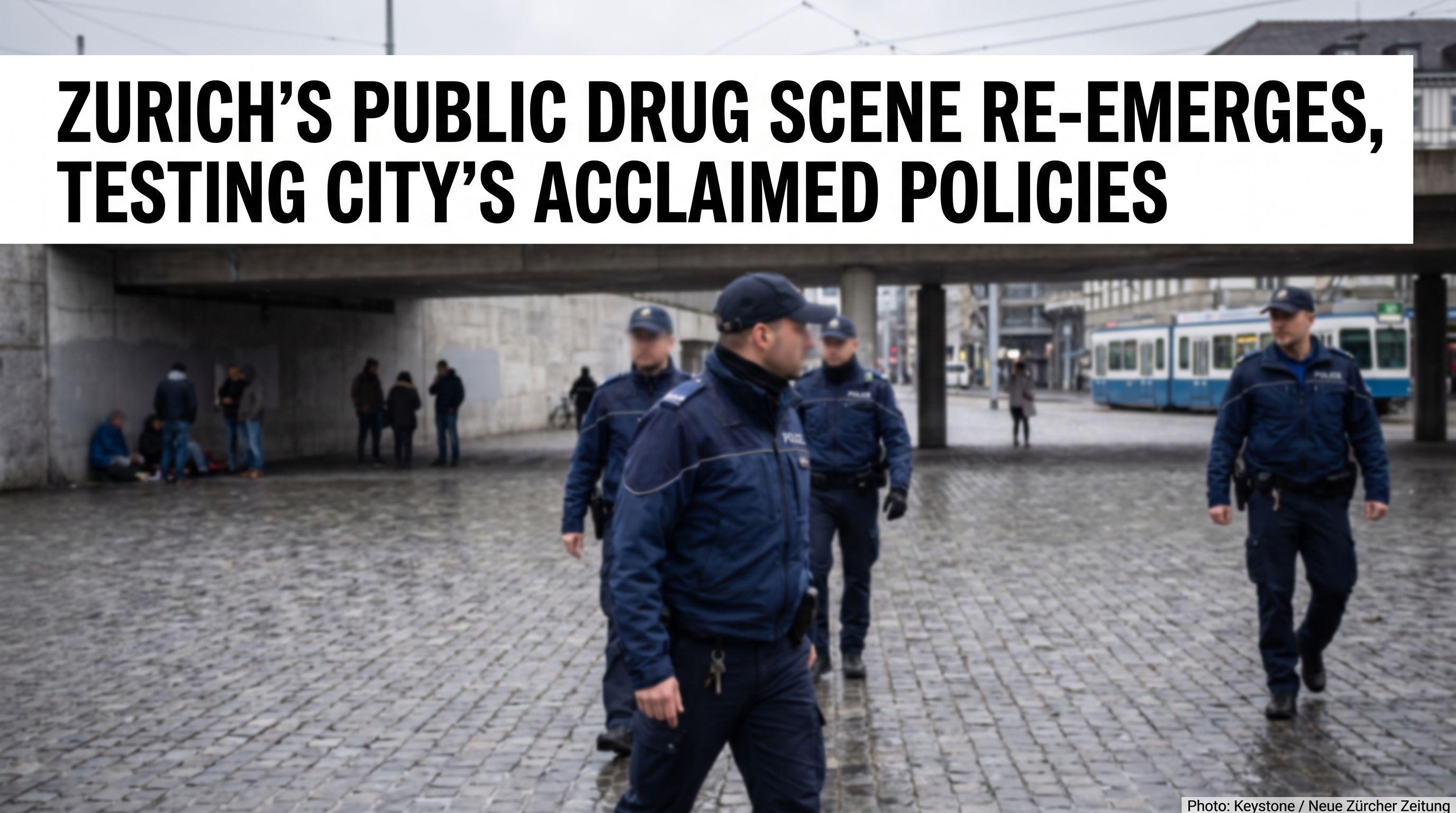
Zurich Confronts a Visible Crisis
Zurich’s pristine reputation is grappling with a gritty new reality as open drug use surges across five major city zones. For the past month, the city police have declared Districts 1 and 4 as critical hotspots, flooding the streets with increased patrols and identity checks. The shift is undeniable: drug users are no longer hiding in the shadows but are congregating in high-traffic areas like Platform 3 of the Main Station, the Schanzengraben, and the historic Kasernenareal. This is not a slow drift; it is an aggressive reclamation of public space that has left residents and commuters feeling sidelined. The city’s response is a dual-track offensive of enforcement and social intervention, yet the sheer visibility of the trade and consumption suggests that the 'four-pillar' strategy is facing its most significant stress test in decades. Authorities are issuing removal orders at an unprecedented rate to prevent the establishment of a permanent, fixed scene reminiscent of the 1990s. As large groups gather and conflicts ignite, the city is racing to revitalize these spaces through summer events and constant maintenance, desperately trying to maintain the delicate social mix that defines Zurich’s urban life.
Crack-Cocaine Shatters Public Order
A staggering 400 crack addicts now haunt the corridors of Zurich’s city center, marking a dramatic shift in the local drug landscape. This highly addictive substance first exploded onto the scene at the Bäckeranlage three years ago, following the closure of a key drop-in center. Today, the crisis is no longer localized; it is a city-wide epidemic. Unlike the heroin era of the past, the crack scene is characterized by rapid-fire consumption and high volatility, leading to frequent public disturbances. Perhaps most alarming is the demographic shift: nearly 50% of these users do not even reside in Zurich, having migrated from surrounding regions to exploit the city's concentrated services and supply networks. This influx of 'drug tourists' is placing an enormous burden on local taxpayers and infrastructure. The city has responded by distributing specialized pipes at CHF4 each to encourage use within safe facilities, but the sheer volume of addicts is overwhelming the streets. The presence of these groups is not just a health issue; it is a direct challenge to the safety and accessibility of Zurich's most cherished public parks and waterways.
Support Systems Reach Breaking Point
Zurich’s acclaimed social safety net is currently operating at 100% capacity, struggling to absorb the shock of the crack-cocaine wave. The three primary drop-in centers—located in Oerlikon, Selnau, and the Kasernenwiese container village—are perpetually full. These facilities are the front lines of the city’s harm reduction strategy, allowing users to smoke in a supervised environment to prevent overdose and public nuisance. To keep the peace on the streets, authorities are even tolerating small-scale drug dealing within these centers, a pragmatic but controversial move designed to contain the chaos. However, the pressure is mounting. A dedicated facility on Bederstrasse has been established specifically to handle the 200-plus addicts who come from outside the city, aiming to refer them back to their home authorities. Despite these efforts, the outreach programs for young adults are stretched thin as they confront a rise in poly-drug use. The city is essentially running a high-stakes triage operation, attempting to provide medical and psychological support while the sheer number of those in need threatens to capsize the entire system. If capacity is not expanded soon, the overflow will inevitably spill back into the public squares.
The Political Battle for the Streets
The resurgence of open drug use has ignited a fierce political firestorm within the Zurich City Council, pitting traditional Swiss pragmatism against calls for a 'law and order' crackdown. Residents are demanding tougher enforcement, weary of the noise, litter, and perceived danger in their neighborhoods. In contrast, the legislative body remains deadlocked. Several motions proposed by the Swiss People’s Party (SVP) calling for rigorous checks and the systematic expulsion of users from public spaces have recently failed to gain a majority. The council remains committed to the 'four-pillar' strategy—prevention, therapy, harm reduction, and repression—but the balance is shifting. While the city maintains that 'drug use and trafficking will not be tolerated,' the reality on the ground suggests a difficult stalemate. Looking ahead, the success of Zurich’s model depends on its ability to evolve. The city is currently betting on 'revitalization'—using summer events and social mixing to reclaim the Bäckeranlage—but if the visible drug scene continues to grow, the pressure for more radical, punitive measures may become irresistible. Zurich stands at a crossroads: it must either reinforce its social pillars or prepare for a much harsher era of urban policing.