Drought
Switzerland Battles Severe Drought and Braces for Fourth Heatwave
With reservoir levels at a two-decade low and no relief in sight, Swiss authorities and farmers are grappling with severe water shortages. As another major heatwave approaches, the country is restricting water use and deploying firefighters to assist with blazes in France.
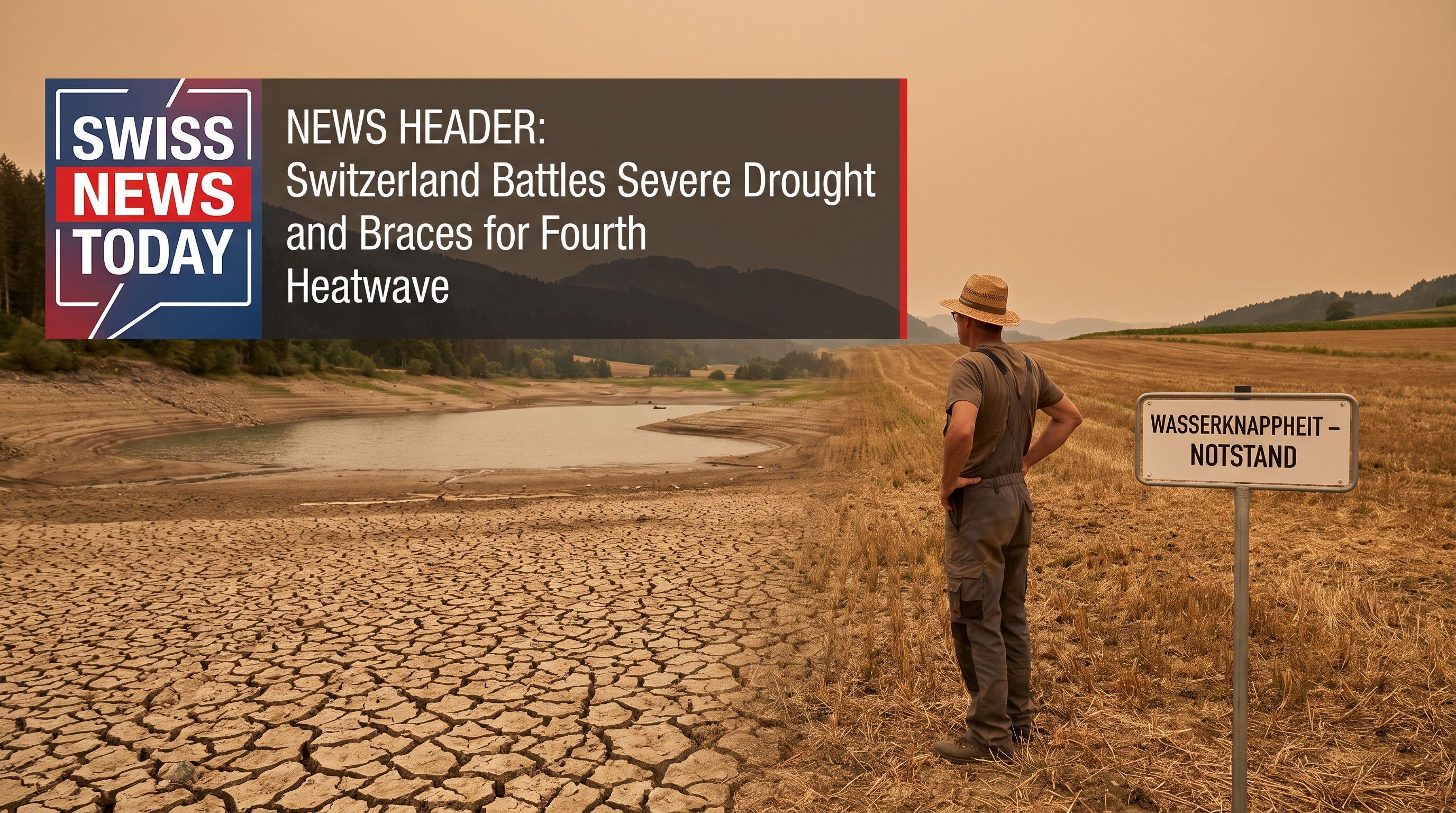
Switzerland Parches Under Historic Water Deficit
Switzerland’s reputation as Europe’s water tower is under siege as reservoir levels plummet to a staggering 20-year low. Current data from the Federal Office of Energy reveals that reservoirs are a mere 46% full—crashing 16.4 percentage points below the two-decade average. This isn't just a seasonal dip; it is a systemic failure of supply following the driest spring since records began in 1864. While the federal government maintains that the immediate electricity supply remains secure, the visual reality is jarring. In Lake Maggiore, water levels have retreated by over a meter since mid-June, leaving docks stranded and ecosystems gasping. The Federal Office for the Environment (FOEN) warns that the drought is particularly acute from the Jura to the Basel region, where rainfall has vanished, leaving a 70% deficit compared to normal values. As the ground hardens and rivers thin, the nation confronts a reality where its most abundant resource is suddenly, alarmingly finite.
Agriculture Grapples with a Fodder Famine
The Swiss agricultural heartland is screaming for relief as the grass literally stops growing. For the nation’s 1.5 million cows, the situation has turned from difficult to desperate. In Basel-Country, farmers Sandra and Philippe Rosset were forced to launch a crowdfunding campaign to save their 30 dairy cows from the slaughterhouse, raising over 12,700 francs to import hay. They are not alone; the Solothurn Farmers’ Union reports that grass growth has stalled entirely, forcing many to dip into winter reserves months ahead of schedule. Agroscope, the federal research body, has issued a chilling forecast: if this dry spell persists through August, the crisis will surpass the devastating droughts of 2003 and 2018. While drinking water remains available for now, the conflict between human consumption and agricultural necessity is intensifying. As rivers hit critical lows, the recharge of vital aquifers is at risk, potentially turning a regional shortage into a national emergency.
Swiss Firefighters Join the Continental Frontline
Even as Switzerland battles its own internal dry spell, it has stepped up to confront the wildfire infernos ravaging its neighbors. On Saturday, a convoy of 34 firefighters and 11 specialized vehicles from Geneva, Vaud, and Neuchâtel surged toward Bordeaux to assist French forces battling the Gironde blazes. This deployment marks a significant moment of international solidarity, yet it comes with a heavy dose of domestic caution. Back in Bern, the Federal Department of Defence is locked in an urgent assessment of whether it can spare four light helicopters requested by Paris. The hesitation is calculated: with the Swiss forest fire risk at an all-time high, authorities are terrified of being caught empty-handed if a blaze ignites in the Alpine valleys. The Geneva Fire and Rescue Service (GSIS) had been planning for this since June, anticipating a summer where the entire continent would become a tinderbox. Switzerland is now operating on a knife-edge, balancing regional duty with the urgent need to protect its own parched landscapes.
Bracing for the Fourth Scorching Wave
The 'Dog Days' of summer are living up to their name with brutal efficiency. MeteoSwiss warns that a fourth heatwave—potentially the summer’s most intense—will slam into Switzerland by mid-week. Temperatures are projected to soar to a blistering 37°C in Geneva and 35°C in Zurich by Thursday. Subtropical hot air is locking the country into a cycle of 'tropical nights,' where temperatures refuse to drop below 20°C, offering no respite for the elderly or the environment. The Federal Office for the Environment confirms there is no sign of widespread rainfall through the end of August. Instead, the nation faces a relentless high-pressure system that will continue to bake the soil and evaporate what little remains in the lakes. This is no longer a temporary weather event; it is a glimpse into a hotter, drier future for the Alps. As the mercury climbs, the Swiss population is being urged to restrict water use and prepare for a long, hot August that could redefine the country's climate resilience for a generation.