Tourism
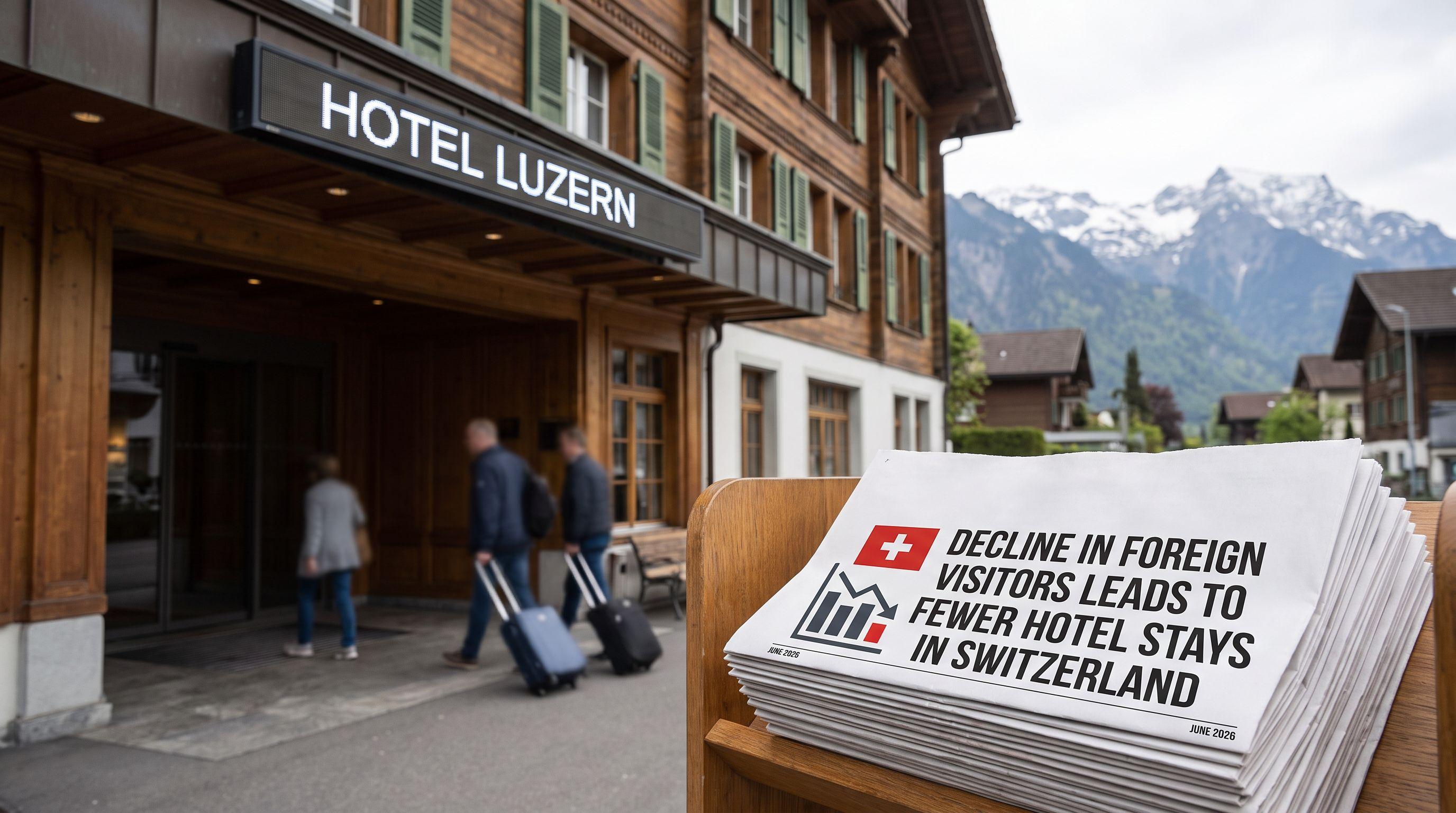
Decline in Foreign Visitors Leads to Fewer Hotel Stays in Switzerland
The Swiss hotel industry recorded a 2.2% drop in overnight stays in June compared to the previous year, primarily due to a 4.4% fall in demand from foreign guests. The first half of 2026 shows a similar trend, with total overnight stays down 0.7% year-on-year.
Swiss Hospitality Faces a Cold Summer Reality
Switzerland’s tourism engine is sputtering. A staggering 4.1 million overnight stays in June represents a sharp 2.2% decline compared to the previous year, signaling a troubling cooling of the nation's hospitality sector. This isn't just a minor fluctuation; it is a loss of 93,000 stays in a single month. The Federal Statistical Office (FSO) confirmed the grim reality on Tuesday, revealing that the momentum which propelled 2025 to record heights has vanished. The industry is now grappling with a persistent downward trend that has haunted the sector since March. While the first two months of 2026 promised a continuation of the post-pandemic boom, the narrative has shifted dramatically. The Swiss Alps, usually a magnet for global travelers, are witnessing a thinning of the crowds that hoteliers have come to rely on for their bottom line.
Foreign Demand Plummets Amid Global Turmoil
The primary culprit behind this slump is a dramatic 4.4% crash in demand from international guests. In June alone, foreign overnight stays fell to 2.2 million, exposing Switzerland’s vulnerability to external shocks. The timing is no coincidence; the decline aligns perfectly with the onset of the Iran war in March 2026. Geopolitical instability is redrawing the map of global travel, and Switzerland—long considered a safe haven—is not immune to the fallout. While American and Indian tourists had previously shown a robust rebound, the critical Chinese market remains elusive, leaving a void that other regions have failed to fill. This 2% drop in foreign stays across the first half of the year represents a loss of hundreds of thousands of high-spending visitors, placing immense pressure on luxury resorts and urban business hotels alike.
Domestic Resilience Battles Geopolitical Headwinds
In contrast to the fleeing international market, the Swiss people are stepping up to support their own. Domestic overnight stays rose by a modest but crucial 0.4% in June, reaching 1.9 million. Looking at the first half of 2026, the domestic sector grew by 0.7%, totaling 10.1 million stays. This internal loyalty is the only thing preventing a total freefall for the industry. However, the 'staycation' trend alone cannot carry the weight of an infrastructure designed for global elites. While the Swiss are exploring their own backyard—from the shores of Lake Geneva to the peaks of the Engadin—the spending power of a local guest often differs from that of a long-haul international traveler. The industry now finds itself in a delicate balancing act, trying to cater to a loyal local base while desperately beckoning the world to return.
The High-Stakes Race for a Record Recovery
The clock is ticking for the Swiss tourism sector to reclaim its crown. To surpass the 2025 record of 42.8 million overnight stays, the second half of 2026 must deliver an unprecedented performance. Currently, the year-to-date figures sit at 20.3 million stays, down 0.7% from last year's pace. This is a critical juncture. If the war persists and global economic jitters continue, the 'Golden Age' of Swiss tourism may face a prolonged winter. Industry leaders are now looking toward the autumn and winter seasons with a mixture of anxiety and determination. The message is clear: Switzerland remains open, pristine, and unparalleled, but the world’s travelers are currently looking elsewhere. Whether a surge in late-year bookings can bridge the gap remains the multi-billion-franc question facing the Confederation.