Environment
Swiss Alps in Crisis: Record Glacier Melt and Drought Worsen Mountain Dangers
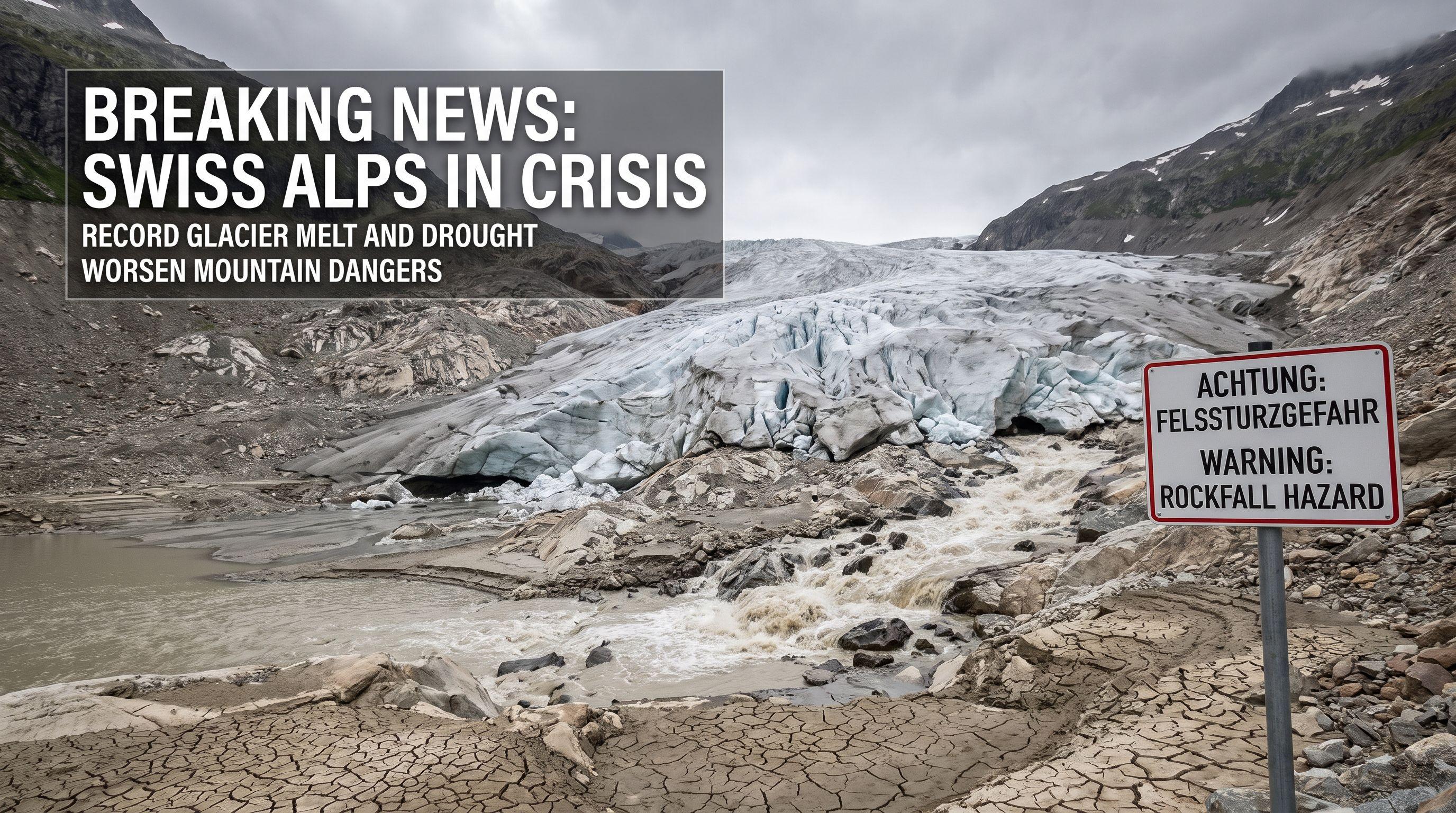
Switzerland is facing a severe environmental situation as rapid glacier melt, exemplified by the Rhône Glacier losing 1.4 meters of ice in two weeks, combines with a prolonged drought. Rivers and reservoirs are at 20-year lows, and experts warn of increasingly dangerous conditions for mountain activities like climbing due to heightened risks of rockfalls.
The Great Thaw: Glaciers Vanish at Record Speed
Ten centimetres of ice are vanishing every single day. That is the staggering reality at the Rhône Glacier, where glaciologist Matthias Huss has documented a loss of 1.4 metres in just two weeks. The Swiss Alps are not just melting; they are liquefying under the pressure of relentless heatwaves. Since mid-June, nearly four metres of ice have dissolved into the valleys, leaving behind a landscape of exposed rock and collapsed subglacial caves. This is not a slow decline; it is a rapid retreat that has seen the Rhône Glacier shrink by a full kilometre in only twenty years. While the winter provided some snow, the protection it offered was fleeting, stripped away by an early and aggressive summer heat. Experts warn that within 30 to 40 years, the glacier will vanish from its iconic viewpoint, surviving only as a remnant at the highest altitudes of the Dammastock massif. The 'Water Tower of Europe' is losing its frozen reserves at a pace that defies historical precedent, signaling a permanent shift in the Alpine ecosystem.
Dry Veins: Water Levels Plummet to 20-Year Lows
Switzerland’s 61,000 kilometers of rivers and streams are gasping for air as water levels crash to their lowest points in two decades. The Federal Office of Energy (BFE) reports that the nation’s critical reservoirs are currently sitting at a mere 46% capacity—a terrifying 16.4 percentage points below the 20-year average. This crisis is the direct result of a 'perfect storm': a winter with insufficient snowfall followed by a spring that ranks among the driest since records began in 1864. While recent thunderstorms have lashed the plateau, they have done virtually nothing to alleviate the deep-seated drought ravaging the soil and vegetation. The paradox of the current situation is that the extreme glacier melt is temporarily propping up river flows, but this is a 'false economy.' Once the ice is gone, the buffer disappears. Agriculture and household supplies are already facing potential restrictions, and the lush green image of the Swiss countryside is being replaced by the parched browns of a landscape under siege.
Crumbling Giants: The Alps Become a Death Trap
The Matterhorn is literally falling apart. As permafrost thaws and the protective snow cover vanishes, the very foundation of the Swiss Alps is becoming unstable, turning popular climbing routes into lethal corridors of falling stone. In Zermatt, guides are now advising climbers to abandon their summit dreams as the Hörnli Ridge becomes a shooting gallery of rockfall. However, the danger isn't just geological—it's human. Edith Lehner, warden of the Hörnli hut, warns that many of these rockfalls are 'man-made,' triggered by inexperienced climbers lured by social media prestige who stray from established lines. The combination of heat-weakened rock and a surge in 'tourist climbers' has created an extremely dangerous environment. The crisis isn't confined to Switzerland; in Chamonix, guides have halted ascents of Mont Blanc following multiple fatalities. The mountains are no longer the predictable playgrounds they once were; they are evolving into volatile environments where traditional knowledge is being rendered obsolete by the changing climate.
A Nation at the Brink: The Future of Swiss Energy
Switzerland confronts a fundamental threat to its energy sovereignty as the hydropower 'battery' of Europe begins to drain. Hydropower typically provides one-fifth of the nation's winter electricity, but with reservoirs at record lows, the margin for error has evaporated. While ElCom spokesperson Andreas Jöckel maintains there is no immediate threat of a blackout, he admits the outlook is 'uncertain' and entirely dependent on autumn rainfall. The current reliance on glacial meltwater to fill dams is a terminal strategy; as Matthias Huss points out, in 20 to 30 years, that tap will run dry. The Swiss government now faces a critical turning point: how to transition a power grid built on the reliability of the mountains to a future where the mountains are in constant flux. The drought of 2026 is a loud wake-up call. It is no longer a question of 'if' the landscape will change, but how quickly Switzerland can adapt its infrastructure to survive a world where its glaciers are gone and its rivers run low.