Social Policy
Campaign for Six-Month Maternity Leave Reaches Federal Chancellery
A petition with over 110,000 signatures has been submitted to federal authorities, calling for an extension of statutory maternity leave in Switzerland from the current 14 weeks to a full six months.
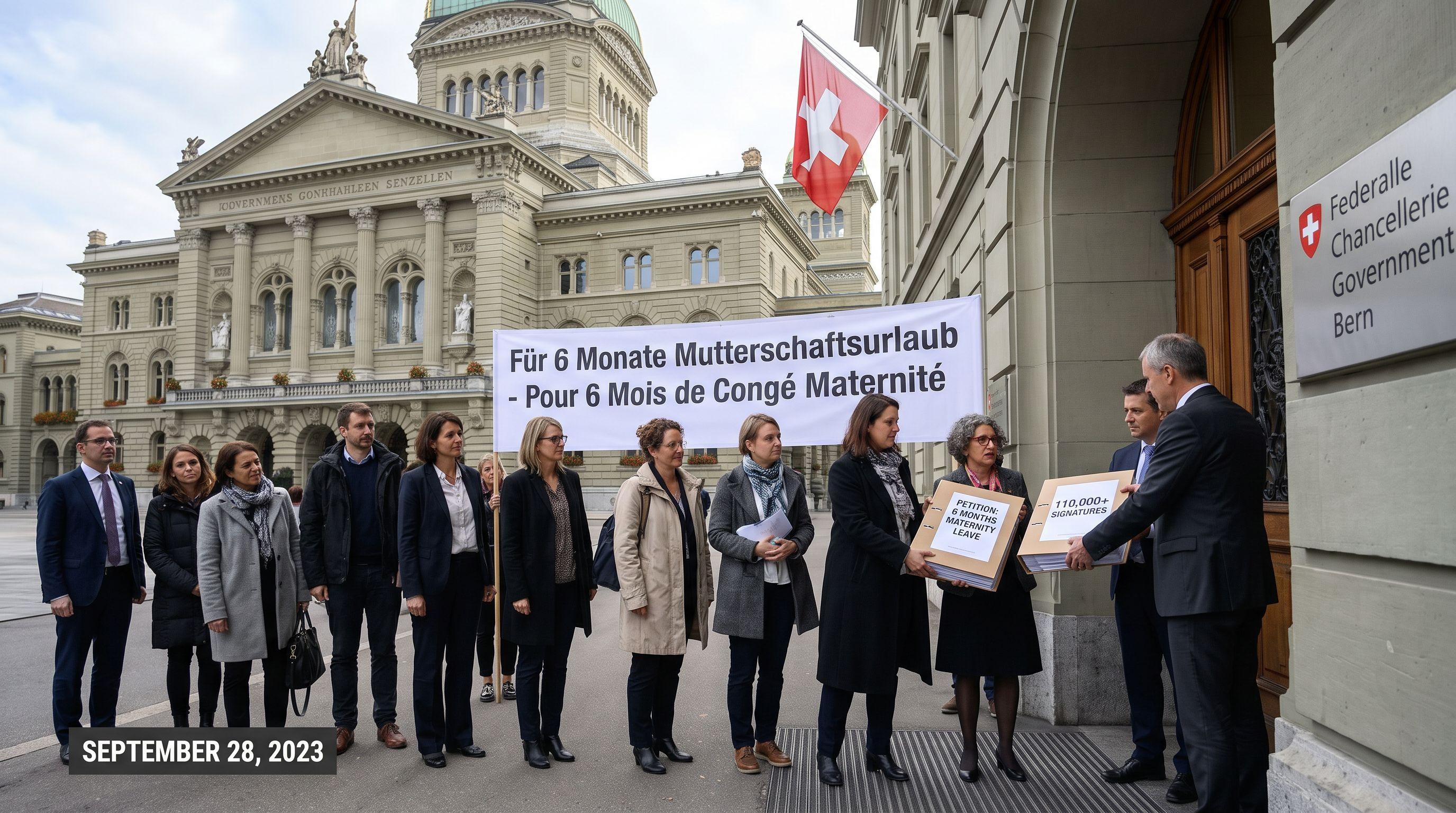
Citizens Storm the Federal Chancellery
A staggering 110,000 citizens have just delivered a thunderous wake-up call to Bern. On Monday, organizers officially submitted a petition to the Federal Chancellery, demanding an extension of maternity leave from a mere 14 weeks to a full six months. This massive surge of public support highlights a growing rift between current law and the lived reality of Swiss families. The movement argues that the existing 98-day window is fundamentally insufficient for the critical first months of an infant's life. Proponents emphasize that breastfeeding, maternal proximity, and emotional security are not luxuries—they are biological imperatives for healthy development. While the government has historically moved with caution on social reforms, this volume of signatures forces an immediate confrontation with the status quo. The message is clear: the time for incremental change has passed, and the demand for a comprehensive six-month safety net is now unavoidable.
Switzerland Trails European Standards
Switzerland is currently grappling with a stark reality: it remains a laggard in the European landscape of parental support. While Swiss mothers receive just 14 weeks of leave, their counterparts in Spain are entitled to 19 weeks. The disparity is even more alarming when considering fathers, who currently receive only two weeks of statutory leave. This gap creates a dramatic imbalance in how family responsibilities are shared from day one. Supporters of the petition argue that women need significantly more time to recover both physically and psychologically from the rigors of childbirth. By clinging to a 14-week model, Switzerland risks penalizing working mothers and hindering their reintegration into the workforce. The petition asserts that a six-month window would not only benefit the child but would also stabilize the professional lives of parents, creating a more resilient and equitable labor market.
Political Factions Ignite Policy War
The battle lines are drawn as political heavyweights propose competing visions for the future of Swiss parenting. While the petition pushes for a flat six-month maternity extension, Alliance F and the Green Party are championing a different, more flexible model. Their popular initiative proposes 18 weeks of leave for each parent, totaling 36 weeks per household. This approach seeks to dismantle the traditional 'mother-only' focus, aiming for a more equitable distribution of domestic labor. Back in 2019, the Federal Commission for Family Affairs already signaled that a shared parental-leave system would do more for mothers' employment than separate, short entitlements. This model confronts the political resistance of those who fear state coercion, offering families the freedom to decide who stays home. As these two distinct paths—extended maternity leave versus shared parental leave—converge in the halls of power, the debate over which system best serves the Swiss economy intensifies.
Redefining the Swiss Social Contract
The submission of 110,000 signatures marks a critical turning point in the Swiss social contract. This is no longer just a debate about weeks and months; it is a fundamental questioning of how Switzerland values the family unit in a modern economy. If the petition succeeds, it would represent one of the most significant expansions of the Swiss welfare state in recent decades. Critics will undoubtedly point to the costs, but proponents argue the long-term benefits—healthier children, more engaged fathers, and higher maternal workforce retention—far outweigh the initial investment. As the Federal Chancellery processes these signatures, the pressure shifts to the Parliament to respond to a public that is clearly outgrowing its current laws. The coming months will determine whether Switzerland will continue its cautious, conservative approach to family policy or finally leap into a new era of social equity that reflects the demands of its people.