History
Archaeologists Unearth Roman Wall in Windisch Linked to Emperor Tiberius
A significant archaeological find in Windisch, Aargau, has uncovered the first Roman camp wall from the early reign of Emperor Tiberius. The discovery provides new insights into the military history of the ancient settlement of Vindonissa and its expansion.
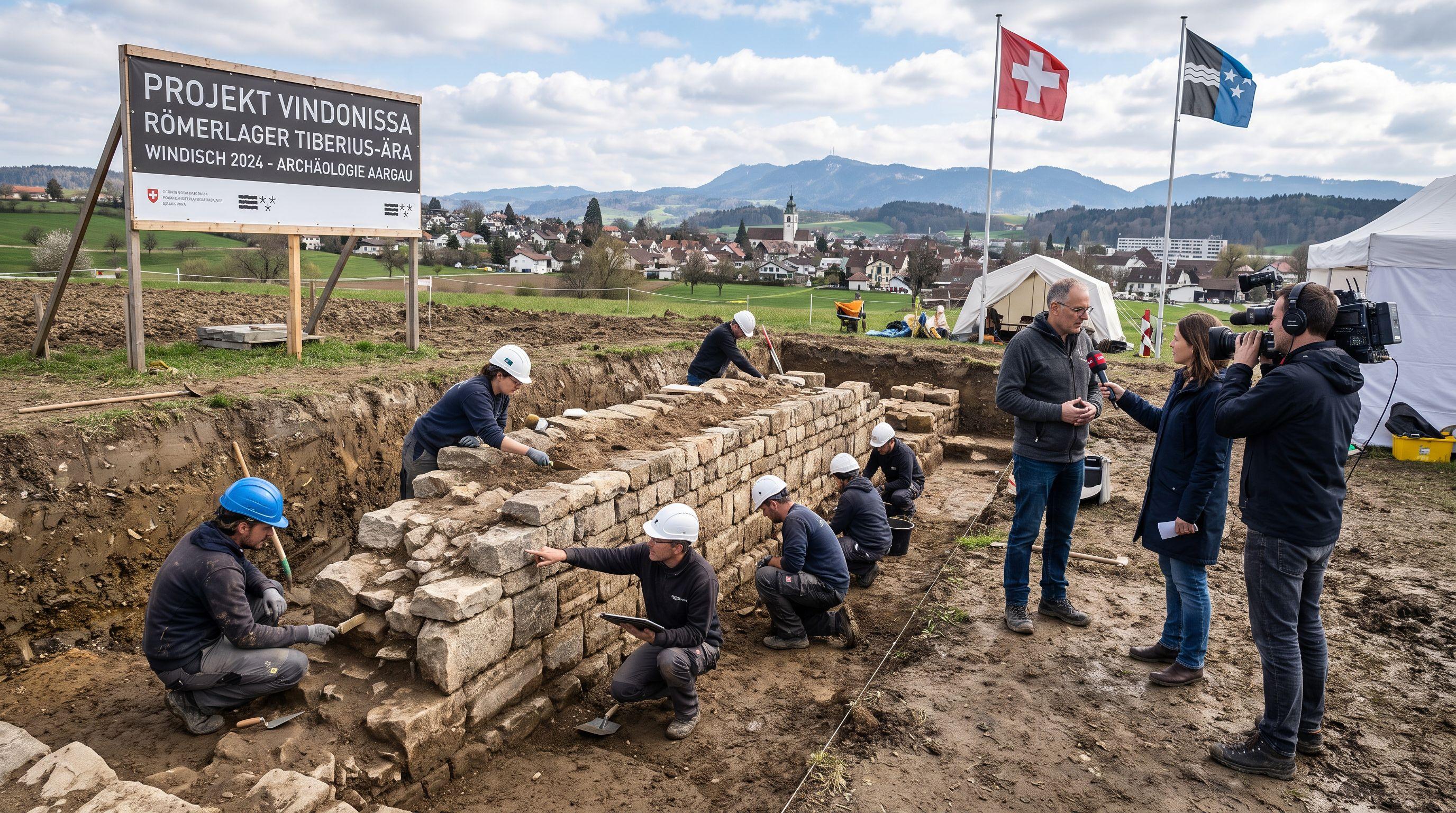
Unearthing the Empire's Edge
History is rising from the dirt in Aargau as archaeologists confirm a monumental breakthrough in our understanding of Roman Switzerland. For 11 grueling months, a team of 20 specialists has scoured the earth at Zürcherstrasse in Windisch, revealing the very foundations of the Roman military presence. They have successfully unearthed the first camp wall linked to the reign of Emperor Tiberius, who ruled from 14 to 37 AD. This is not merely a pile of debris; it is a definitive marker of the early expansion of Vindonissa. While previous excavations focused on the later stone fortifications, this timber-and-earth barrier provides a rare glimpse into the pioneering years of the Roman occupation. The discovery shatters previous assumptions about the camp's original footprint, proving that the Roman military machine was even more ambitious in its early Swiss deployment than historical records suggested.
Mapping the Tiberian Stronghold
The scale of the Tiberian-era defenses is staggering, running a full 70 metres south of the later, more famous perimeter walls. This newly documented timber-and-earth wall surges through the landscape before pivoting northwest, accompanied by the first-ever physical evidence of the associated Vindonissa moat. This layout redraws the map of the ancient legionary camp. By pinpointing these coordinates, the Aargau Cantonal Archaeology Department has secured clear evidence of how the military installation evolved from a frontier outpost into a sophisticated power center. The sheer precision of the Roman engineers is on full display, as the wall's trajectory aligns with a massive barracks building discovered nearby. This structure, measuring a substantial nine metres wide and at least 30 metres long, housed the very soldiers who enforced Roman law in the Helvetic territories. The discovery of regularly arranged rooms and anterooms offers an unprecedented look at the rigid, organized life of a legionary stationed on the Rhine frontier.
Forging the Legionary Lifestyle
Life in Vindonissa was defined by industry and survival, a fact punctuated by the discovery of a field smithy's hearth deep within the oldest layers of the site. Right next to the camp wall, archaeologists identified what appears to be a craft area, including the remains of a baking oven. These are the engines of war: the places where weapons were repaired and bread was baked to fuel the Emperor's troops. This follows the sensational find earlier this spring of a charred Roman loaf of bread—the first of its kind ever found in Switzerland. The rubble layers in front of the camp have also yielded a staggering haul of coins, spanning centuries from the Roman Republic to Late Antiquity. This suggests that while the walls were built under Tiberius, the site remained a buzzing hive of economic and military activity for over 300 years. The presence of a field smithy in the 'pioneering period' of the settlement underscores the immediate establishment of infrastructure upon the Romans' arrival.
Preserving Switzerland's Roman Legacy
As the 11-month excavation concludes, the race against modern development reaches its finish line. The work was triggered by a planned new building project on Zürcherstrasse, highlighting the constant tension between Switzerland's future and its ancient past. Thanks to a special grant, the 20-person team successfully documented every centimetre of the find before the site is reclaimed by modern construction. This 'rescue archaeology' ensures that while the physical earth may be moved, the data and artifacts are preserved for eternity. The implications are clear: Windisch remains one of the most significant archaeological hotspots in Europe. The wealth of finds from the 1st to the 4th century AD provides a continuous timeline of Roman influence in the region. As scientists begin the deep-dive analysis of the recovered coins and structures, Switzerland solidifies its reputation as a global leader in archaeological preservation and high-resolution terrain scanning. The ghosts of Tiberius’s legions have finally been given a voice.