Holcim
Holcim Sells Philippines Operations to Chinese Firm in $807 Million Deal
Swiss building materials giant Holcim is divesting its operations in the Philippines, selling them to the Chinese company Huaxin Building Materials. The transaction, valued at $807 million, is part of Holcim's broader strategy to refine its corporate portfolio.
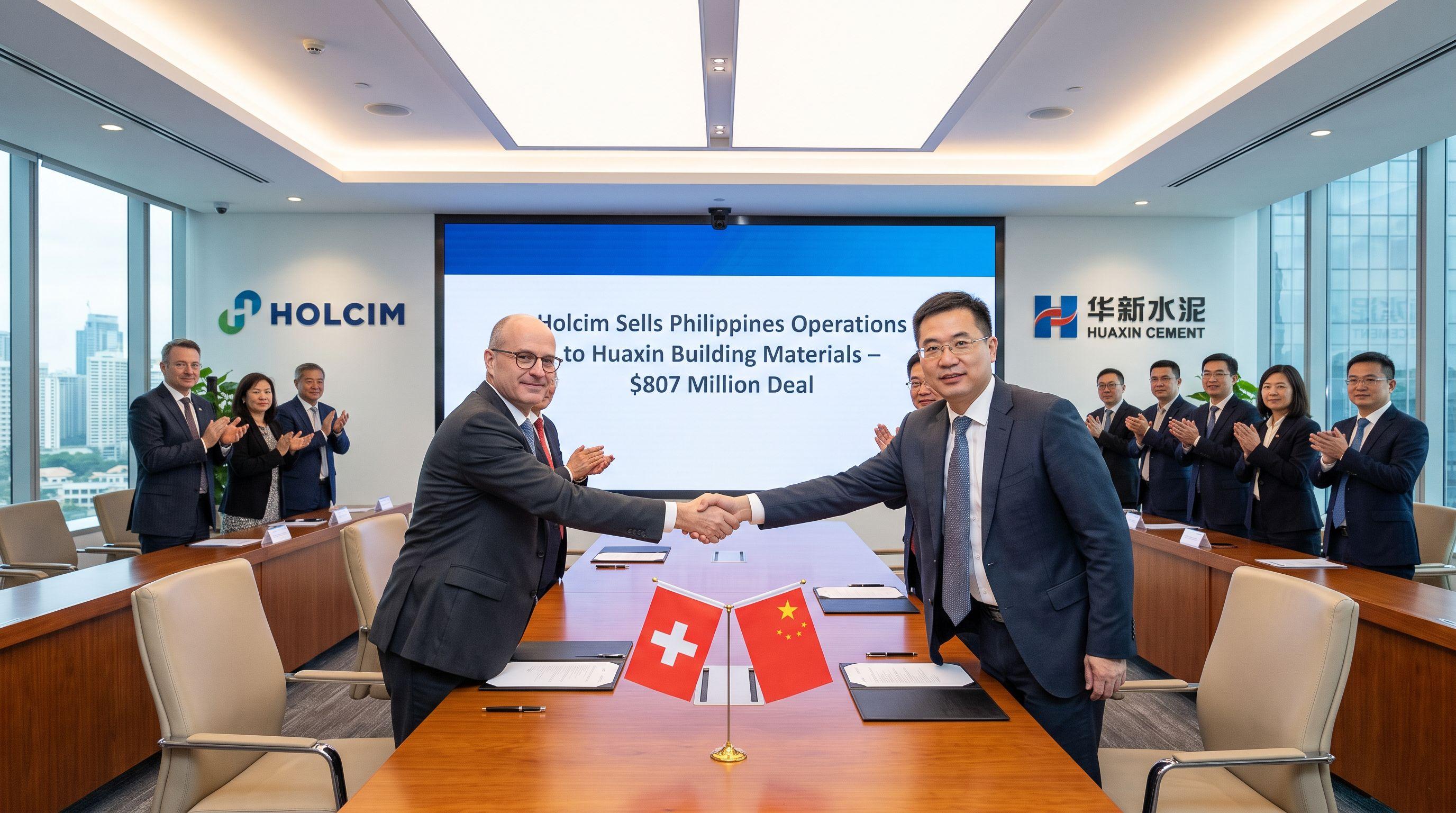
Holcim Executes Bold $807 Million Exit
A staggering $807 million deal is reshaping the global construction landscape as Zug-based giant Holcim formalizes its departure from the Philippines. This is not a mere retreat; it is a calculated, high-stakes divestment that sees the Swiss titan offloading its entire regional operation to China’s Huaxin Building Materials. The deal, valued at approximately CHF 654 million, marks a decisive pivot in Holcim's global trajectory. The first phase of this massive liquidation involves the immediate transfer of a 68% stake for a cool $527 million. While the market watched with bated breath, Holcim secured a phased disposal mechanism for the remaining shares, ensuring a guaranteed minimum price of $280 million over the next three to five years. This structured exit demonstrates Holcim’s refusal to settle for anything less than premium value for its assets. The transaction, slated for completion in the first half of 2027, signals a new era of lean, focused operations for the Swiss firm.
China’s Huaxin Seizes Strategic Foothold
Huaxin Building Materials is aggressively expanding its footprint, capturing a dominant 68% majority stake in Holcim’s Philippine business in one swift move. This acquisition represents a seismic shift in Southeast Asian industrial influence. While Holcim retreats to focus on high-margin sustainable solutions, Huaxin is doubling down on traditional infrastructure demand. The Chinese firm is not just buying factories; it is buying a market-leading position in one of Asia's most dynamic developing economies. The deal creates a fascinating contrast: a European giant prioritizing 'green' innovation versus a Chinese powerhouse hungry for raw scale. This $527 million initial investment is just the beginning, as Huaxin prepares to absorb the remaining shares by 2031. Regulatory authorities now hold the keys to this transition, but the momentum is undeniable. As the Swiss exit, the Chinese enter, fundamentally altering the competitive balance of the regional cement industry.
Investors Applaud Portfolio Optimization
The Zurich stock exchange reacted with calm confidence, as Holcim shares—a cornerstone of the Swiss Market Index—ticked upward by 0.3% immediately following the announcement. Investors are clearly rewarding Holcim’s discipline. Despite a 6% dip since January, the company’s long-term trajectory remains explosive, boasting a phenomenal 172% return over the last five years. This divestment is the latest chapter in a radical transformation that saw Holcim spin off its North American business, Amrize, in a record-breaking $33.7 billion deal just last year. By shedding non-strategic assets like the Philippines operations, Holcim is sharpening its focus on its 2025 turnover goals, which already reached a massive CHF 15.7 billion. The message to the market is clear: Holcim is no longer chasing volume at any cost. Instead, it is curating a high-performance portfolio that prioritizes sustainability and innovation over geographic sprawl.
Swiss Industrial Giant Redefines Its Future
Holcim is reinventing what it means to be a Swiss industrial titan in the 21st century. Founded in 1912 in Aargau and forged through a 2015 merger with Lafarge, the group now operates in 45 countries with a workforce exceeding 50,000. However, the Holcim of tomorrow looks very different from the Holcim of yesterday. By divesting from the Philippines, the company is reallocating capital toward 'innovative solutions for sustainable construction.' This isn't just corporate jargon; it is a survival strategy in a world demanding carbon-neutral building materials. The sale to Huaxin is a pivotal moment that underscores Switzerland’s shift from traditional heavy industry toward high-tech, high-value services and sustainable manufacturing. As Holcim sheds its legacy assets, it solidifies its position as a global leader in the green transition. The $807 million windfall from the Philippines will likely fuel the next wave of Swiss innovation, ensuring that while the company may be smaller in footprint, its impact will be more significant than ever.