Business
FIFA Sets September Deadline for $10 Billion Investor Deal Approval
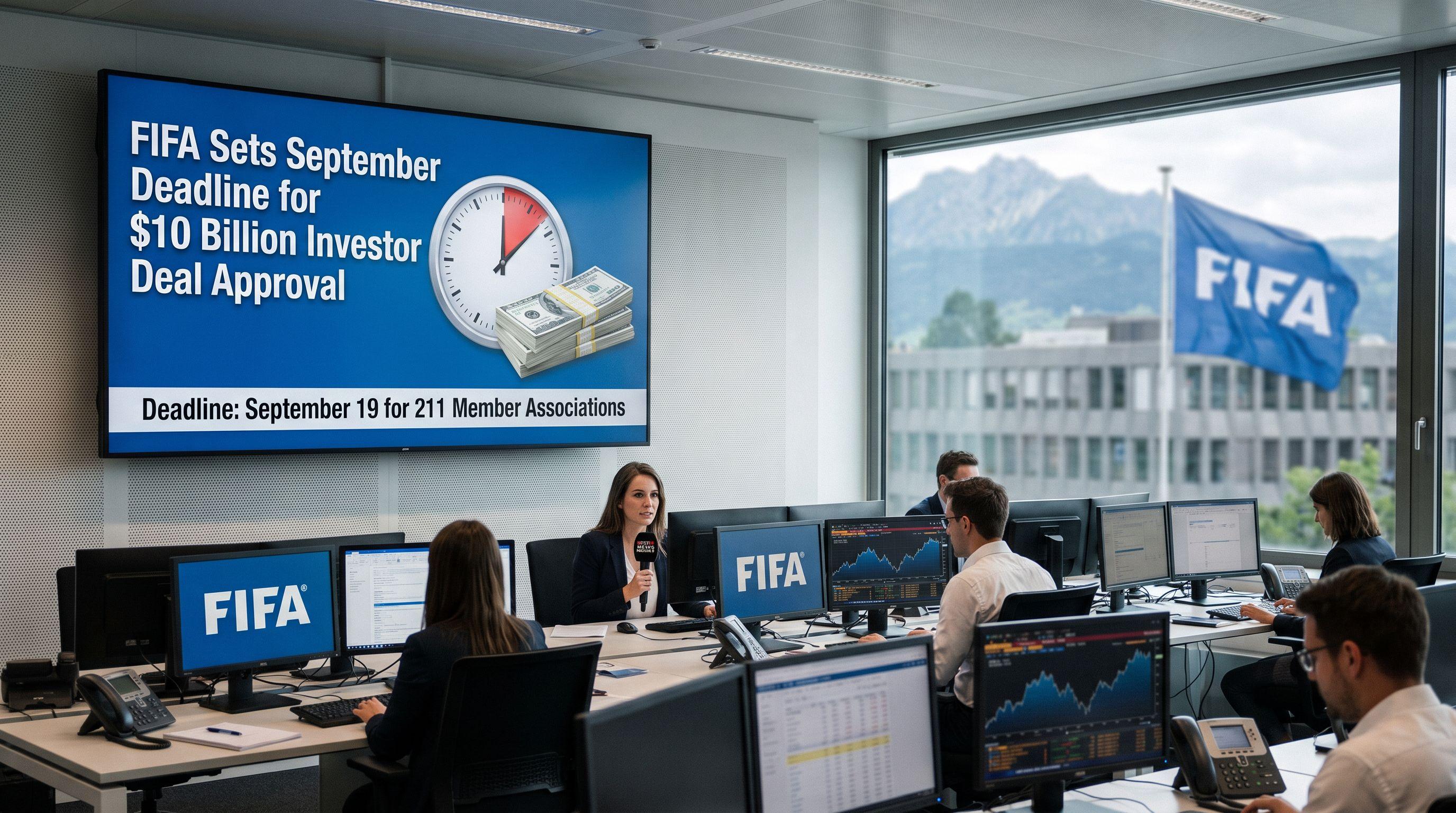
FIFA has issued a deadline of September 19 for its 211 member associations to approve a monumental $10 billion investor package. In a letter from President Gianni Infantino, the world football governing body promised a potential quadrupling of annual payments to each association if the deal proceeds.
Infantino Triggers a $10 Billion Financial Earthquake
A staggering $10 billion is on the table, and the clock is ticking. FIFA President Gianni Infantino has shattered the summer calm by issuing a high-stakes ultimatum to the 211 member associations of world football. In a detailed five-page letter, the Zurich-based governing body set a hard deadline of September 19 for approval of a monumental investor package that could fundamentally reshape the sport's economy. This is not a mere suggestion; it is a definitive power play. FIFA is demanding a decision that will either launch a new era of commercial dominance or cement a bitter divide between the global body and its wealthiest continental partners. The urgency is palpable, as the proposed funds are slated to become available as early as January 1, 2027. By forcing a vote by simple majority, Infantino is bypassing traditional consensus-building, opting instead for a rapid-fire transformation of football's financial architecture. The world watches as Zurich becomes the epicenter of a fiscal revolution that leaves no room for hesitation.
The 400% Payday: Buying Loyalty or Building the Future?
An unprecedented $40 million per year is the carrot being dangled before every national football association. This figure represents a massive 400% increase over current annual payments, a quadrupling of wealth that would be transformative for smaller nations from the Caribbean to Central Asia. Infantino’s message is clear: approve the deal and enter a 'next phase' of prosperity, or reject it and settle for the status quo. The alternative is a significantly smaller $2.7 billion expansion of the existing 'Forward' development program. This stark contrast creates a powerful incentive for the majority of FIFA’s members, for whom $40 million is an astronomical sum. While critics argue this is a calculated move to buy political loyalty, FIFA frames it as the democratization of football wealth. The sheer scale of the investment—surpassing any previous development scheme in sports history—highlights Infantino's ambition to centralize financial power within the Zurich headquarters, effectively making FIFA the primary bank for global football development.
Continental Civil War: UEFA Slams 'Enrichment' Scheme
Opposition is not just simmering; it is boiling over. UEFA, the powerhouse of European football, has launched a blistering counter-attack against the Zurich-based plan. 'FIFA cannot continue to use our sport to enrich itself and its friends,' a UEFA spokesperson declared, signaling a total breakdown in relations between the two most powerful entities in the game. While continental confederations in Asia and North America have expressed cautious openness, they too have voiced frustration over being kept in the dark until the final hour. This lack of transparency has fueled a narrative of a 'secret deal' orchestrated behind closed doors in Switzerland. The tension is palpable as the September deadline approaches. UEFA views the $10 billion package as a direct threat to the sovereignty of regional leagues and the financial stability of the European model. As the deadline nears, the football world is witnessing a civil war where the stakes are measured in billions, and the prize is the very soul of the beautiful game.
Zurich's Global Shadow: The Swiss Economic Ripple Effect
Switzerland remains the undisputed nerve center of this global financial drama. With FIFA’s headquarters firmly rooted in Zurich, the implications of a $10 billion influx of capital extend far beyond the pitch and into the Swiss economy. While the 2026 World Cup is already expected to provide a localized boost, this new investor deal represents a permanent shift in the scale of financial operations managed from Swiss soil. The influx of billions in private investment would solidify Zurich's status as the world capital of sports finance, attracting a new wave of consultants, lawyers, and financial analysts to the region. However, the controversy surrounding the deal also places Swiss regulatory and ethical standards under the international microscope. As FIFA pushes for a simple majority to bypass European dissent, the 'Swiss way' of consensus and neutrality is being tested by a more aggressive, corporate-style governance. The outcome of the September 19 vote will determine if Zurich remains a steady steward of the game or becomes the headquarters of a controversial new era of hyper-commercialized global sport.