Law
European Court Rules Switzerland Must Provide Vegan Meals in Prisons
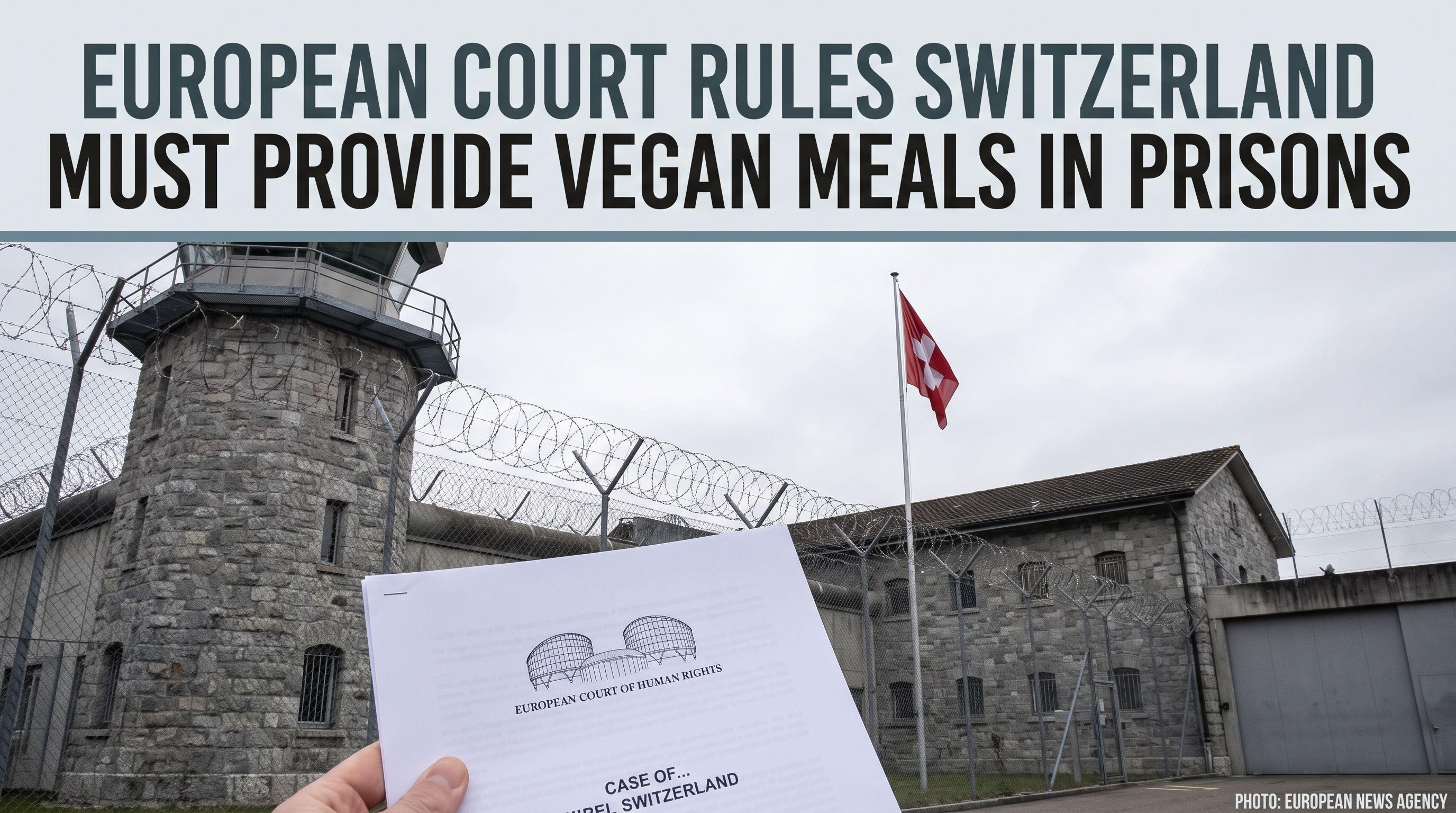
The European Court of Human Rights has ruled against Switzerland in a landmark case, establishing that public institutions such as prisons must provide a fully vegan diet to individuals whose veganism constitutes a protected philosophical conviction.
Strasbourg Shatters the Status Quo
The European Court of Human Rights (ECHR) has just delivered a seismic blow to administrative convenience in public institutions. In a landmark ruling that reverberates across the continent, the court declared that veganism is not merely a lifestyle choice but a protected philosophical conviction. This decision forces Switzerland—and by extension all member states—to recognize that freedom of conscience extends to the very plates of those behind bars. The court asserts that when practiced sincerely and consistently, veganism constitutes a cornerstone of individual identity deserving of full legal protection. Switzerland now faces an immediate mandate to overhaul its institutional catering, as the era of dismissing plant-based diets as a 'special request' comes to an abrupt end. This isn't just about food; it is about the fundamental dignity of the individual versus the rigid machinery of the state.
Champ-Dollon Confronts a Dietary Revolution
Nearly 365 days of dietary struggle defined the experience of a Swiss activist held in Geneva’s notorious Champ-Dollon prison. While the institution made sporadic attempts to provide vegan options, the ECHR found these efforts 'inconsistent' and fundamentally inadequate. A staggering year in pre-trial detention without reliable access to food aligned with one's core beliefs is no longer acceptable under European law. The court highlighted that even in a psychiatric hospital in Vaud, the state failed to strike a fair balance between logistics and liberty. This ruling exposes a critical failure in the Swiss penal system, where administrative ease was prioritized over the deeply held convictions of detainees. The judgment makes it clear: providing a vegan meal is not an act of charity, but a mandatory fulfillment of a human right that Swiss authorities can no longer ignore.
Swiss Law Grapples with Philosophical Freedom
Switzerland’s domestic courts previously insisted that no legal obligation existed to cater to vegan inmates, a stance the Strasbourg court has now thoroughly dismantled. The ECHR criticized the absolute absence of a clear legal framework in Switzerland, leaving citizens with no effective means to enforce their rights. While the Swiss government argued for a 'broad margin of discretion' in managing its prisons, the court countered that this discretion does not permit the erosion of fundamental freedoms. This creates an immediate urgency for Swiss legislators to codify these protections. The contrast is stark: while Switzerland prides itself on direct democracy and individual liberty, its institutional rigidity has been found wanting on the international stage. The ruling serves as a sharp reminder that Swiss sovereignty must still operate within the boundaries of the European Convention on Human Rights.
Europe Braces for a Human Rights Surge
The implications of this judgment soar far beyond the Swiss border, threatening to upend prison protocols across all 46 member states of the Council of Europe. Currently, rules governing prison diets vary wildly; some nations offer vegetarian options, while others force inmates to rely on food parcels from relatives. That inconsistency is now legally untenable. This ruling triggers a continent-wide re-evaluation of how public institutions—including schools, hospitals, and military barracks—accommodate philosophical beliefs. As veganism continues to grow in popularity, the number of individuals seeking these protections will only surge. Governments must now prepare for a dramatic shift in public procurement and institutional management. The Strasbourg court has set a new standard: the state’s duty to feed its citizens must respect the mind as much as the body. The message is clear: the future of institutional catering is plant-based by law.