Technology
Drones and Volunteers Save Record 7,590 Fawns from Mowers Across Switzerland
A new record has been set in Switzerland as volunteer drone teams successfully located and saved 7,590 fawns from agricultural mowers this season. The effort involved around 800 teams using thermal imaging drones to search over 73,000 hectares of grassland.
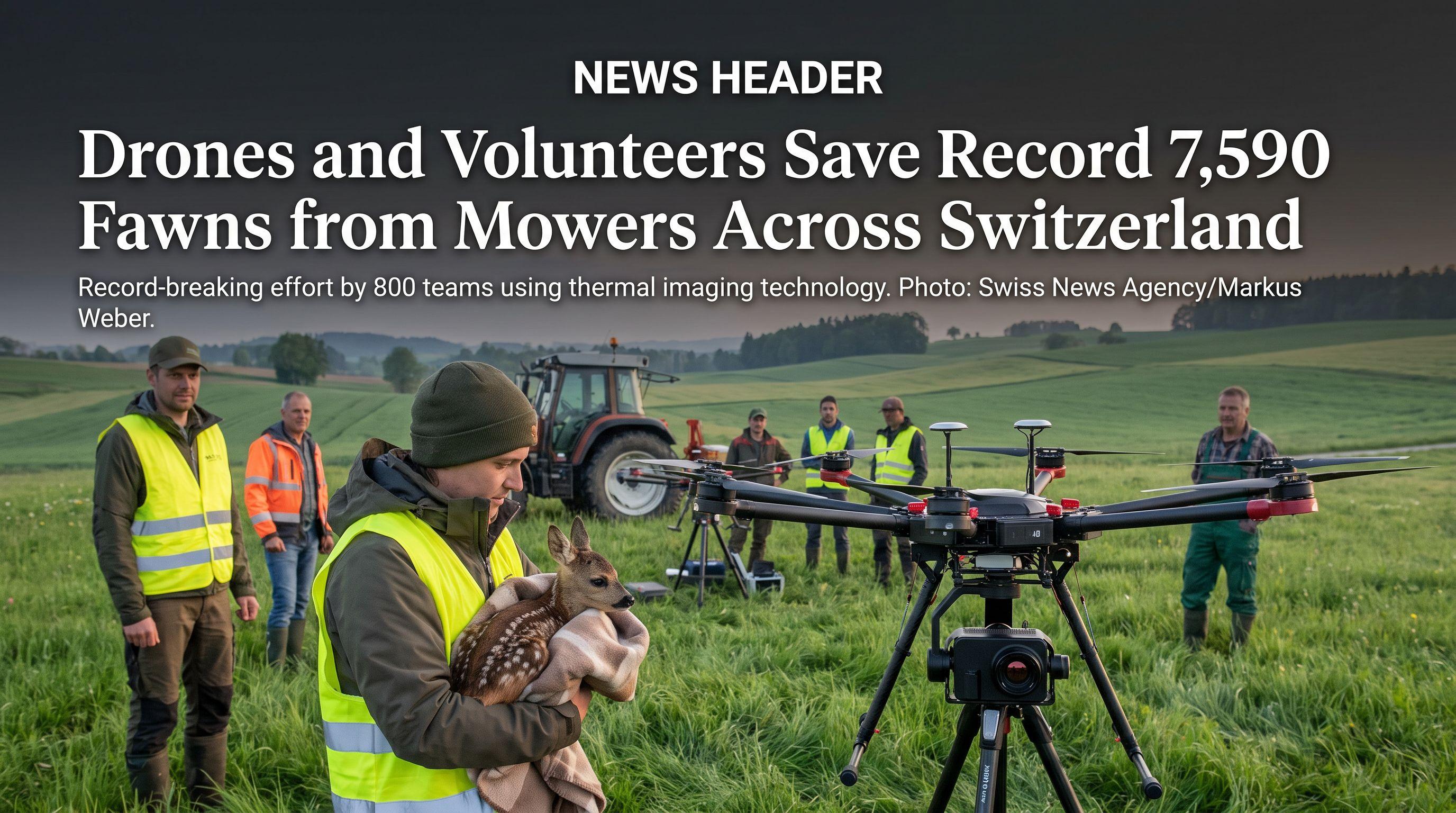
Swiss Volunteers Smash Records to Save 7,590 Fawns
A staggering 7,590 fawns are alive today thanks to a massive, tech-driven rescue operation that has shattered all previous Swiss records. Between April and July, an army of volunteers took to the skies, deploying thermal imaging drones to prevent a seasonal bloodbath in the nation's hayfields. This figure represents a dramatic surge of more than 1,000 animals compared to 2025, signaling a new era in Swiss wildlife conservation. While agricultural mowers have historically been a death sentence for young deer, the 2026 season proves that human intervention, powered by cutting-edge technology, is winning the war against accidental slaughter. The scale of the success is unprecedented, turning what was once a quiet tragedy into a loud victory for biodiversity. This isn't just a minor improvement; it is a total transformation of how Switzerland balances modern farming with ecological stewardship.
Thermal Tech Conquers the Fatal Crouching Reflex
Nature’s own defense mechanism is the fawn’s greatest enemy, but technology is finally providing the antidote. In their first weeks of life, roe deer fawns rely on a 'crouching reflex'—they freeze and press themselves into the earth to avoid predators. However, this instinct is useless against a multi-ton agricultural mower. Hidden deep in tall vegetation, these animals are virtually invisible to farmers. Official statistics suggest that 1,500 fawns are killed annually, but experts warn the true death toll is likely much higher. Enter the drone: by utilizing thermal imaging, 800 volunteer teams can now detect the heat signatures of these hidden animals from the air. This allows rescuers to safely relocate the fawns before the blades arrive. This technological shield is the only thing standing between thousands of animals and a grizzly end, effectively neutralizing a biological vulnerability that has existed for millennia.
Massive Mobilization Across 73,000 Hectares
The logistics of this year's rescue operation are nothing short of monumental, covering a total area of 73,000 hectares. To put that in perspective, the search area encompasses more than half the entire territory of Canton Aargau. This massive undertaking required a staggering 7,700 days of collective service from volunteers—an increase of 1,400 days over the previous year. Rehkitzrettung Schweiz has successfully scaled its operations by training a new generation of pilots, ensuring that the Swiss Animal Protection Society’s fleet of drones is constantly in the air. This is a nationwide mobilization of civil society, where tech-savvy citizens and farmers collaborate to protect the landscape. The sheer volume of grassland searched demonstrates a level of community commitment that is uniquely Swiss, proving that when technology and volunteerism align, the results are statistically undeniable.
Climate Shifts and the Future of Conservation
This year’s record-breaking success occurred despite—and in some ways because of—unusual weather patterns that are reshaping the agricultural calendar. An exceptionally dry and warm April allowed many farmers to mow their meadows earlier than usual, often before the peak of the fawning season. This shift meant that in some regions, the danger passed before the fawns were even born. However, as climate volatility becomes the new normal, the timing of both births and harvests will continue to fluctuate. Rehkitzrettung Schweiz is already looking toward the horizon, launching a series of information events across Switzerland starting in August to recruit even more teams for 2027. The goal is clear: total coverage. As the technology becomes more accessible and the volunteer network expands, Switzerland is setting a global gold standard for how drones can be used for humanitarian and ecological good. The message to the world is bold: no animal should die for the sake of a harvest.