Aviation
Switzerland releases jet-fuel reserves to protect Zurich Airport
Switzerland has released up to 30 million litres of jet fuel from compulsory reserves to prevent a shortage at Zurich Airport. Disruptions to river and rail freight have threatened deliveries over the next two weeks.
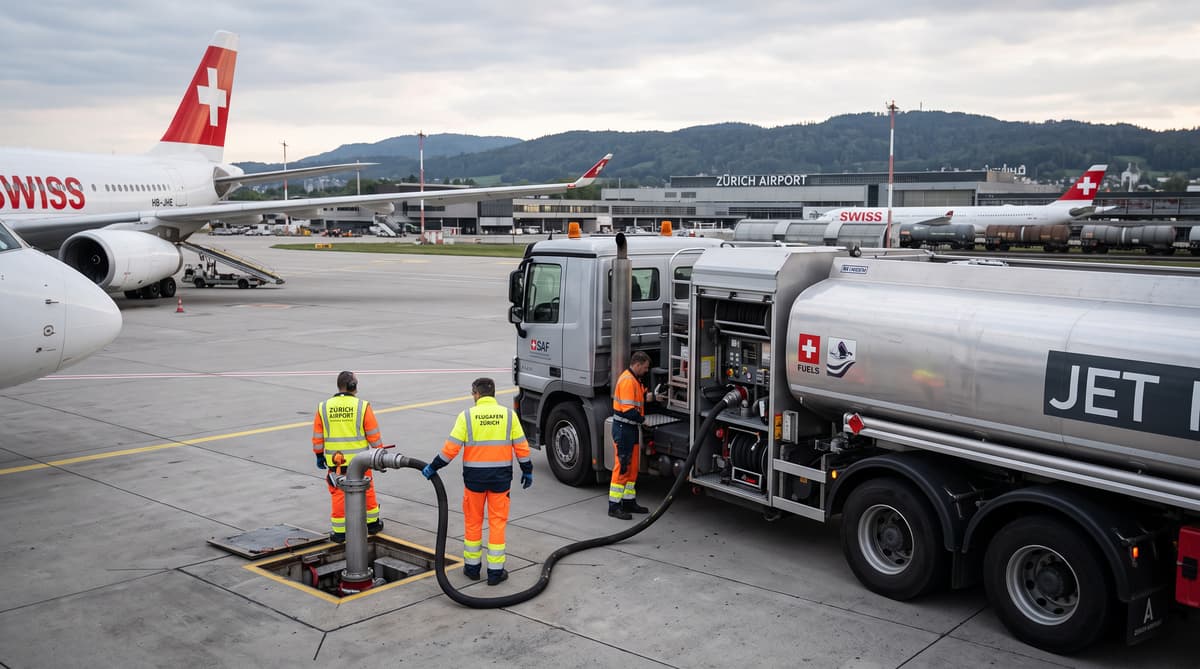
Up to 30 million litres of jet fuel are being released from Switzerland’s compulsory reserves to protect Zurich Airport from a supply shortfall over the next two weeks.
The Federal Office responsible for compulsory stocks approved the measure after disruptions on the transport routes serving Switzerland’s biggest airport threatened incoming deliveries. The immediate bottleneck lies on rail routes from Germany, where delays and cancellations have interrupted fuel movements. Low water on the Rhine has added pressure, reducing the loads that barges can carry and forcing some services to stop.
The release covers 6.5% of the country’s aviation fuel reserves. It gives airlines and fuel distributors additional room while rail and river freight operators try to restore normal flows. Zurich’s importance extends well beyond the airport perimeter. The hub connects Switzerland to European and intercontinental destinations, and a disruption would affect passengers, cargo operators, airport businesses and the wider economy.
Airlines have not reported operational consequences so far. Swiss has continued refuelling aircraft without restrictions at Zurich, while Geneva Airport has also reported normal operations. The federal intervention is designed to keep that position intact.
Trace the bottleneck through rail and river
Rail delays from Germany form the main supply bottleneck. Jet fuel normally reaches Switzerland through a transport network that combines river shipping, rail freight and distribution infrastructure near the airports. Disruption in one link has exposed the dependence of the other links on available capacity.
Freight trains arriving from Germany have faced severe delays and cancellations. That has left fewer reliable routes for moving fuel into Switzerland, a landlocked country that imports essential energy products. The Rhine has offered little relief. Low water levels mean barges must carry smaller loads, reducing the amount of fuel delivered on each journey. Some river services have been cancelled altogether.
The resulting freight has shifted towards railways already operating under strain. This has created a tight window for fuel distributors, even though the issue has not yet reached aircraft operations. Zurich Airport can continue serving passengers while its suppliers work to rebuild delivery schedules, but the margin for delay has narrowed.
The federal release targets that short-term gap. It does not remove the transport problems on the Rhine or the German rail network. It provides supply while those networks remain congested.
Keep flights moving while suppliers recover
Swiss has reported no interruption to aircraft refuelling at Zurich Airport. The carrier has also faced no restrictions on its operations, according to the available information. Geneva Airport is in the same position, giving travellers no immediate indication of the pressure building behind the supply chain.
That gap between airport operations and fuel logistics is central to the federal decision. Authorities acted before airlines had to reduce flights or impose limits. Releasing reserve stocks gives distributors time to manage deliveries without forcing airports to compete for every incoming shipment.
Zurich handles a large share of Switzerland’s international air traffic, making it especially sensitive to prolonged supply disruption. A fuel shortage could affect passenger flights, freight movements and airline schedules, with knock-on effects for tourism, business travel and time-critical cargo. No such restrictions have been announced.
The measure is therefore preventive. It keeps fuel available at the airport while transport operators address the underlying delays. The government has not indicated that passengers should expect cancellations because of the current shortage. Airlines and airport users remain dependent on freight conditions improving during the two-week reserve release period.
Track the wider fuel market
Global refining pressure is making transport disruptions harder to absorb. Crude oil remains available on world markets despite attacks in the Strait of Hormuz, according to reporting cited by the source. Refining capacity, however, is under strain. Refineries in the Gulf are not yet fully operational, while Ukrainian attacks may have affected about half of Russia’s refining capacity, according to S&P Global reporting cited in the article.
Russia is a major supplier of diesel and jet fuel. The European Union has banned imports of Russian refined petroleum products, and disruption at Russian refineries adds pressure to a market already adjusting its supply routes. The International Energy Agency has urged member countries to release some reserves to help prevent further shortages.
Switzerland is feeling pressure beyond aviation. Federal figures show that the availability of petrol, diesel and heating oil has deteriorated since the previous week. Supplies remain secure nationwide, but the trend underscores the sensitivity of a country that depends on imports and has limited room to replace disrupted deliveries quickly.
Zurich’s jet fuel release is therefore part of a broader response to fragile logistics and constrained refining capacity, rather than an isolated airport problem.
Use the buffer, then rebuild deliveries
Switzerland’s compulsory stocks are built for precisely this kind of interruption. As a landlocked country dependent on imported energy and other essential goods, Switzerland requires private companies to hold reserves. The federal government sets the products and quantities, while companies own and maintain the stocks.
The aviation fuel release shows how that system is intended to work. Authorities can draw on supplies before a transport disruption becomes an operational crisis, then allow normal commercial deliveries to resume when routes recover. The decision also limits the immediate pressure on airlines and airports while freight operators manage the Rhine’s low water and the rail network’s congestion.
The next two weeks will test whether that buffer is sufficient. The government has authorised up to 30 million litres, not announced a permanent change to the country’s reserve policy. The volume represents 6.5% of aviation fuel reserves, leaving most compulsory stocks in place for future disruption.
For passengers, the immediate outlook remains normal at Zurich and Geneva. For policymakers and fuel companies, the episode highlights the need to watch water levels, rail capacity, refining markets and geopolitical risks as one connected supply chain.