housing
Swiss housing shortage prevents tens of thousands from setting up home
A study estimates that 40,000 to 50,000 additional households could form in Switzerland if the housing market were less constrained. Young adults are particularly affected, while high housing costs are also contributing to net departures from Zurich to other cantons.
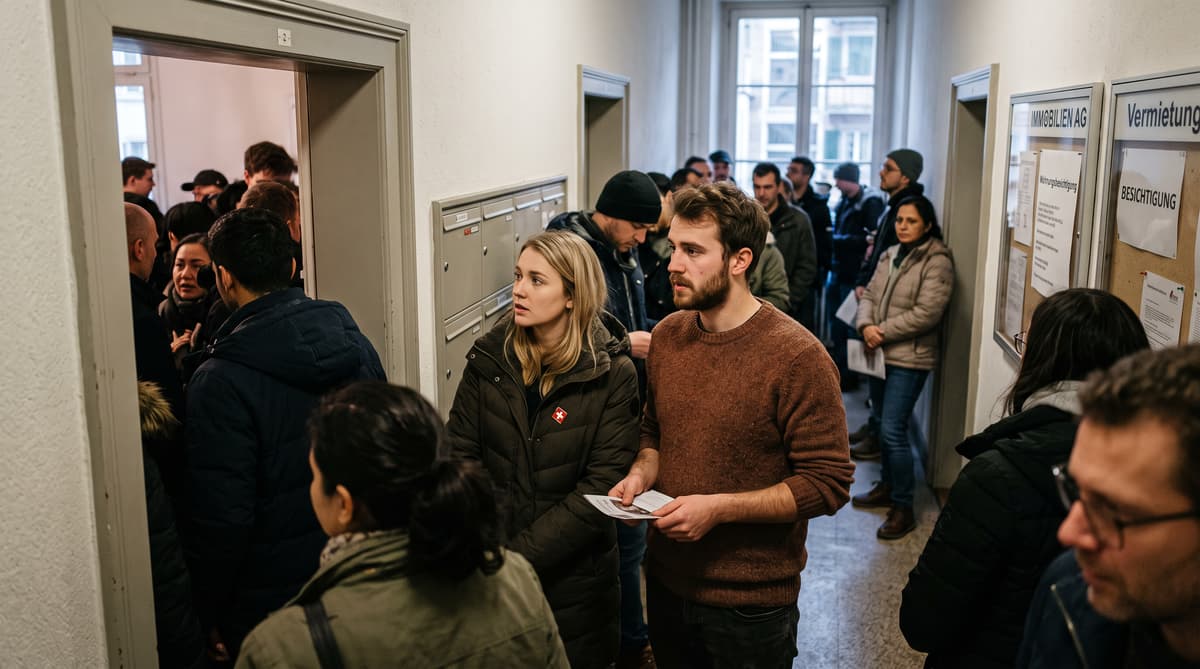
As many as 50,000 households could be waiting for a home of their own. A conservative estimate by property consultancy Wüest Partner puts the number of additional households that could form in Switzerland, if the housing market were less constrained, at 40,000 to 50,000.
The shortage is delaying a basic step in adult life: setting up an independent home. Young adults are staying with their parents longer or sharing flats with others. Some separated couples cannot afford to maintain a second home.
The estimate comes as Switzerland continues to build homes, but the extra supply has not yet eased pressure on households. Around 40,000 new households formed each year in recent years, and the people who have postponed moving out could add to demand as homes become available.
That pressure reaches beyond rent listings. It affects where people live, when they can leave the family home and whether they can establish a separate household after a relationship ends.
Show how young adults adapt
Young adults are bearing a particular share of the shortage. Many remain in the parental home for longer, while others share flats because independent accommodation is difficult to secure or afford. For separated couples, the same pressure can make a second home financially unworkable.
The pattern is visible in migration to Zurich. The annual net inflow of people aged 15 to 34 from other cantons has fallen by half compared with the pre-pandemic period, to around 2,750. At the same time, the share of young adults living alone has declined since 2022, particularly in Zurich, Schwyz and Zug.
These figures point to housing constraints shaping household choices as well as address changes. The ability to move for work or study, live alone, or establish a separate home after a separation depends on access to suitable accommodation. When that access narrows, young adults may delay moving out or choose a shared household rather than an independent one.
Track Zurich’s changing pull
Zurich has shifted from attracting residents to losing them to other cantons. The canton now records a net departure of around 3,500 people a year to elsewhere in Switzerland. Before the pandemic, it gained around 1,850 residents annually from other cantons.
A growing share of demand is moving towards more affordable regions. Aargau, Thurgau and Schaffhausen are among the cantons receiving people from Zurich. The change is especially marked among younger residents: Zurich’s net inflow of 15- to 34-year-olds from other cantons has halved to around 2,750 a year.
The city’s asking rents fell 1.7% in the third quarter of 2026, even as advertised rents rose across Switzerland. Wüest Partner said the decline could signal that prices in Zurich have reached a threshold that many households can barely afford. The shift suggests that housing costs are influencing where people choose, or are able, to live within the country.
Build more, watch demand rise
More construction is coming, but demand may absorb much of the new supply. Wüest Partner forecasts net additions of around 45,000 flats in 2026, rising to around 50,000 in 2027. Those totals exceed the approximately 40,000 new households formed annually in recent years.
The consultancy expects people who have postponed setting up home to take up some of the additional flats. That could keep pressure on the market even as construction activity increases. In the third quarter of 2026, advertised rents across Switzerland were 1.9% higher than a year earlier, despite the number of rental flats advertised reaching its highest level since early 2024.
Wüest Partner anticipates a further 0.9% rise in asking rents in 2027, while rents for existing tenancies are likely to remain stable. Owner-occupied homes also became more expensive: flat prices rose 5% year on year in the third quarter of 2026, and detached houses rose 3.2%. The forecasts point to a market where new homes will have to serve both ongoing household formation and people waiting to move out.