Ukraine
Ukraine says Russian missiles contain components from Swiss companies
Ukraine’s military intelligence service says it has identified components made by 11 Swiss companies in Russian drones and missiles used against Ukraine. A Ukrainian sanctions adviser says 95% of the weapons contain mass-market industrial parts, many believed to reach Russia through intermediaries in China.
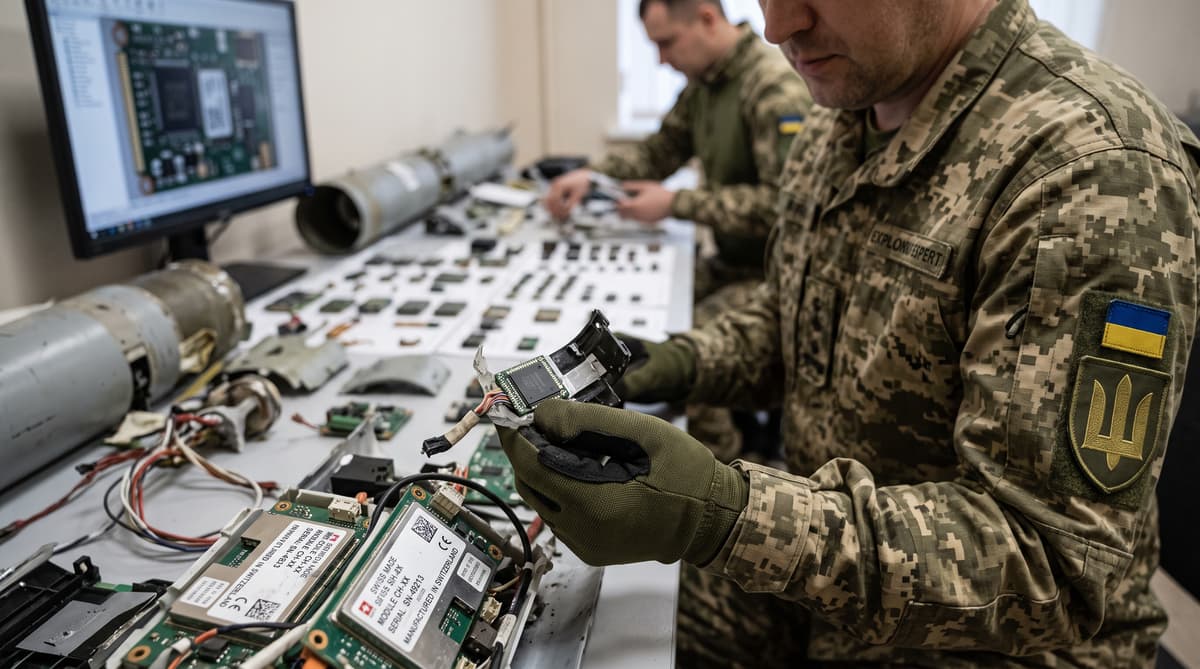
Ukraine says it has identified components from 11 Swiss companies in Russian weapons used against the country. The parts appear in missiles and drones, where they can perform functions essential to navigation, control and other onboard systems, Ukraine’s military intelligence service HUR says.
HUR regularly publishes inventories of electronic components recovered from Russian weapons wreckage. Its latest findings put Swiss-made parts under scrutiny again, with Ukrainian officials urging Switzerland to enforce international sanctions more firmly.
The issue reaches beyond weapons used by Russia. Swiss components have also reportedly been found in North Korean ballistic missiles fired at Ukraine. That finding underscores how electronic parts manufactured for wider industrial use can turn up in weapons deployed on the battlefield.
The claims place Swiss companies and the country’s export controls in focus as Ukraine traces the supply chains behind Russia’s military technology.
Trace the technology inside the weapons
The identified parts include microcontrollers, navigation-data processors, voltage converters, sensors and memory chips. HUR says components from 11 Swiss companies play crucial roles in Russian missiles. The range spans parts that process information, support navigation and manage electrical power.
These are electronic components with industrial applications, not necessarily equipment designed specifically for weapons. Ukrainian presidential sanctions adviser Vladyslav Vlasiuk told SRF that mass-produced industrial parts from Swiss companies appear in the vast majority of Russian drones and missiles.
HUR’s component inventories provide a way to identify manufacturers whose products have appeared in recovered weapons. Swiss components have also reportedly been found in North Korean ballistic missiles fired at Ukraine, extending the concern beyond Russian systems.
For Switzerland, the findings bring attention to how widely distributed technology can enter military supply chains. The reported presence of a component in a weapon does not by itself establish how it was sold or transferred, but Ukraine says the parts have become a recurring feature of weapons used against it.
Follow the route through intermediaries
Vladyslav Vlasiuk estimates that 95% of Russian drones and missiles contain mass-produced industrial parts from Swiss companies. He told Swiss public broadcaster SRF that many components are believed to reach Russia through intermediaries in China.
Some Swiss companies manufacture in China, according to the report. That adds a cross-border dimension to the issue: components made for industrial markets can pass through third-country channels before ending up in Russian hands, despite international sanctions.
Vlasiuk has called on Switzerland to improve enforcement of those sanctions and prevent Swiss components from being used by Russia’s military. His estimate points to the scale of the challenge as Ukrainian officials examine weapons recovered from the battlefield and seek to track the parts inside them.
The reported China connection is central to that scrutiny. It focuses attention on export and resale practices involving third countries, as well as on companies’ responsibilities when their goods move through international supply chains.
Put Swiss export controls to the test
SECO says Swiss companies must conduct due diligence on customers and block re-exports to Russia when selling goods to third countries. The State Secretariat for Economic Affairs told SRF that companies must include a contractual prohibition on re-exporting goods to Russia in those transactions.
SECO also said effective and comprehensive enforcement of sanctions against Russia is a priority for the Swiss government. Its stated requirements address sales through third countries, the route Ukrainian officials believe many components take before reaching Russia.
Vlasiuk is pressing Switzerland to enforce international sanctions more firmly so that Swiss-made parts do not end up in Russian military equipment. The Ukrainian findings put that request alongside the obligations SECO describes for exporters and sellers.
The debate now touches both corporate checks and public enforcement. HUR’s inventories continue to identify electronic components in Russian weapons, while Swiss rules place responsibility on companies to assess customers and restrict onward sales to Russia.