Social affairs
Single-parent households far more likely to rely on social assistance
About a quarter of single-parent households in 20 Swiss cities received social assistance in 2023, nearly five times the rate for households overall. Children from single-parent families made up 59% of minors receiving assistance.
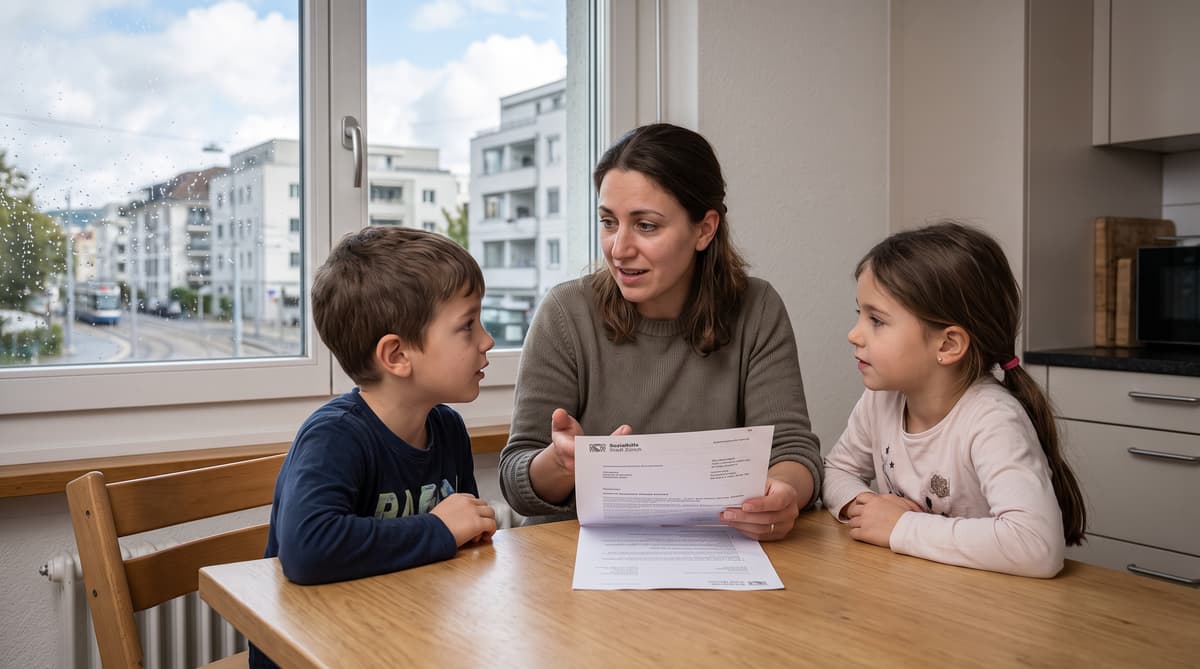
About one in four single-parent households in 20 Swiss cities received social assistance in 2023, almost five times the rate for households overall. The figures show how often one income must cover both the costs of raising children and a household’s basic needs.
Show Why Work Does Not Always Pay
Children from single-parent families accounted for 59% of minors receiving assistance, up from 52% in 2010. Women headed about 93% of single-parent households on welfare. Foreign nationals headed 64% of those households, compared with 53% in 2011.
Paid work does not always lift a family out of hardship. In 2023, an average of 41% of single parents receiving assistance were employed, up from 36% in 2011. They were more likely to be working than recipients without children, yet their earnings remained too low to meet family living costs.
Michelle Beyeler of the University of Zurich describes pressures that can compound one another: parents must earn a living, care for children and run a household. Ill health, financial difficulties and limited support can make those responsibilities harder to balance. The figures point to families facing hardship even when a parent is already in work.
Break the Cycle of Long Assistance Spells
About 70% of single parents receiving assistance had no recognised qualification beyond compulsory schooling. Caring for children can make returning to education difficult, while social services report a shortage of suitable training. The consequences are reflected in the length of support: the median spell was 26 months for parents without recognised qualifications, compared with 16 months for those with vocational or upper-secondary qualifications.
For cases opened between 2013 and 2017, single-parent families received assistance for a median of 22 months. The figure for people living alone was 13 months, and a quarter of single-parent cases still received support after five years.
Childcare access can restrict both work and training. Just over half of the social services surveyed reported at least occasional difficulty finding suitable places. Opening hours often clash with jobs in care, cleaning, hospitality and retail, which can involve early starts, evenings or weekends. Emergency care and places for children with additional needs were also scarce.
Fit Support Around Family Life
The Cities Initiative for Social Policy says assistance alone cannot resolve the pressures facing single-parent families. Its recommendations include more flexible training, such as part-time courses, and childcare that can accommodate irregular working hours. It also calls for reliable maintenance payments and better support for families leaving assistance.
Supplementary family benefits appear to help. In cities that offer them, the gap between families and households without children in the rate of leaving social assistance was smaller. The finding highlights the role that additional support can play alongside employment and training.
For Swiss cities, the challenge is to make routes back to financial independence workable for parents who also carry day-to-day care responsibilities. Training that fits around family life, childcare beyond standard office hours and dependable payments can address practical barriers identified in the study. These measures are among the report’s proposals for helping families move off assistance and remain financially secure.