Business
Swiss court orders review of Levi’s jeans-stitching trademark bid
Switzerland’s Federal Administrative Court has ordered the intellectual property office to examine whether Levi Strauss’s curved jeans-pocket stitching qualifies for trademark protection. The company says it has used the design on its jeans since 1873.
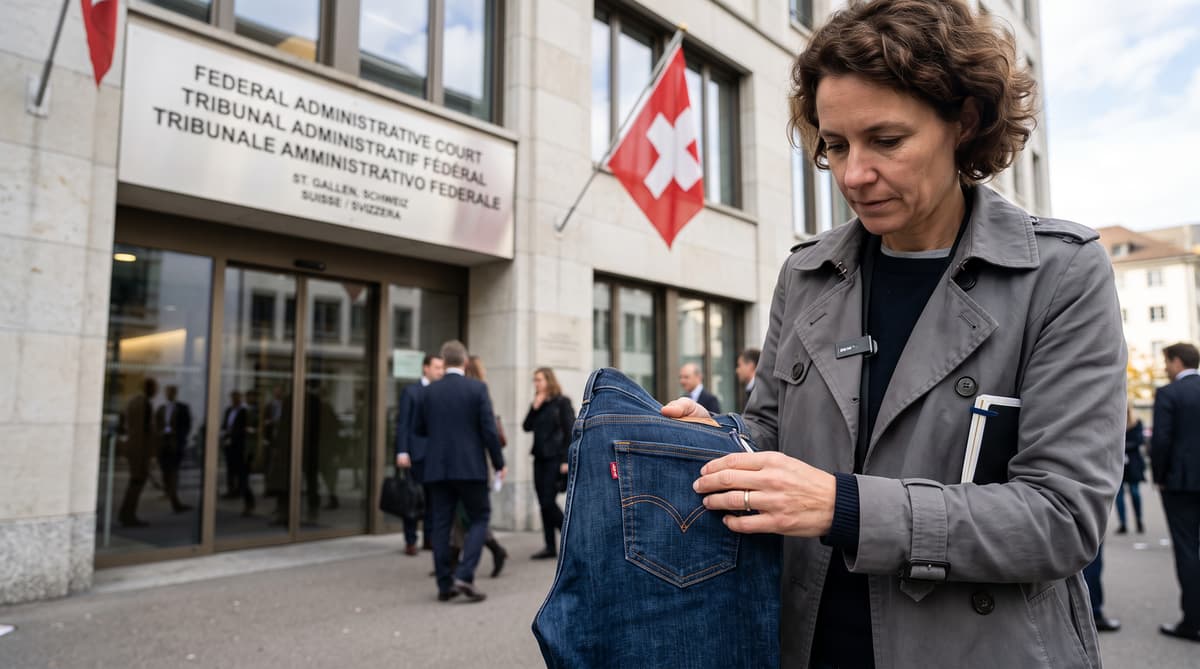
A familiar pocket seam is back before Switzerland’s trademark authorities. The Federal Administrative Court has ordered the Swiss Federal Institute of Intellectual Property to assess whether Levi Strauss’s curved double stitching has become recognised by consumers as a sign of the company’s clothing.
The ruling gives the San Francisco-based jeans maker a partial victory, but it does not grant trademark protection. The court upheld the rejection of Levi Strauss’s main argument that the design, on its own, qualifies for protection. Judges regarded the submitted mark as a standard back-pocket outline with decorative stitching, rather than a distinctive company identifier.
The application concerns clothing including jeans, trousers, shorts and skirts. Levi Strauss calls the curved seam its “Arcuate Back Pocket Stitching” and says it has applied the pattern to jeans since 1873. The court’s order now sends the case back to the intellectual property office for a separate assessment of whether decades of use in Switzerland have given the stitching a recognisable commercial meaning.
That distinction leaves the brand with another route to pursue, while preserving the court’s finding that the design is not distinctive by its appearance alone.
Separate the Design from the Brand
The judges saw an ordinary pocket design, not a distinctive mark. The Federal Administrative Court considered the submitted image as a back-pocket outline with a curved seam. In the context of legwear, it treated the dotted lines as decorative stitching and concluded that the simple design did not stand out from styles customary in the industry.
The judgment described the design elements as “kept simple” and the mark as “rather banal in design”. On that reasoning, the visual itself belongs to the public domain. Levi Strauss therefore did not persuade the court that the stitching should receive protection simply because it appears as a particular pattern on a pocket.
That finding addresses the mark’s inherent distinctiveness: whether its appearance alone can identify a commercial source. The court’s decision leaves that conclusion intact. But it also recognises a different possibility for the company to establish, one tied to how consumers have encountered the design over time in Switzerland.
The ruling keeps the two arguments separate. The pocket seam may be too commonplace in form to qualify automatically, while its history of use could still matter if it has come to signal Levi Strauss to Swiss customers.
Make the Swiss Office Test Recognition
Long use is now the question the Swiss office must investigate. After rejecting Levi Strauss’s application for all the listed goods in October 2025, the Swiss Federal Institute of Intellectual Property must assess whether intensive and long-standing use has established the stitching as an indication of origin in the Swiss market.
Legal experts call this “establishment through use”. It asks whether consumers have learned to associate a feature with a particular company, even when the feature does not stand out as distinctive on its own. The court has directed the office to examine that alternative claim; it has not decided that Levi Strauss has met the test.
The company’s stated history of using the seam since 1873 supplies a long timeline, but the Swiss assessment concerns its significance among consumers in Switzerland. The application covers several categories of clothing, from jeans and trousers to shorts and skirts.
The next step is therefore an evidence-based review by the intellectual property office. Its assessment will determine whether Levi Strauss can establish that the pocket stitching has acquired a source-identifying role through use, despite the court’s view of its basic design.