Education
Zurich Defends 'Toy-Free Kindergarten' Initiative Amidst Political Backlash
Zurich's city council is standing by its 'Toy-Free Kindergarten' project—where children play only with basic materials for several weeks—despite harsh criticism from the Swiss People's Party. This article examines the educational philosophy, the political controversy, and the project's reported positive impact on children's life skills.
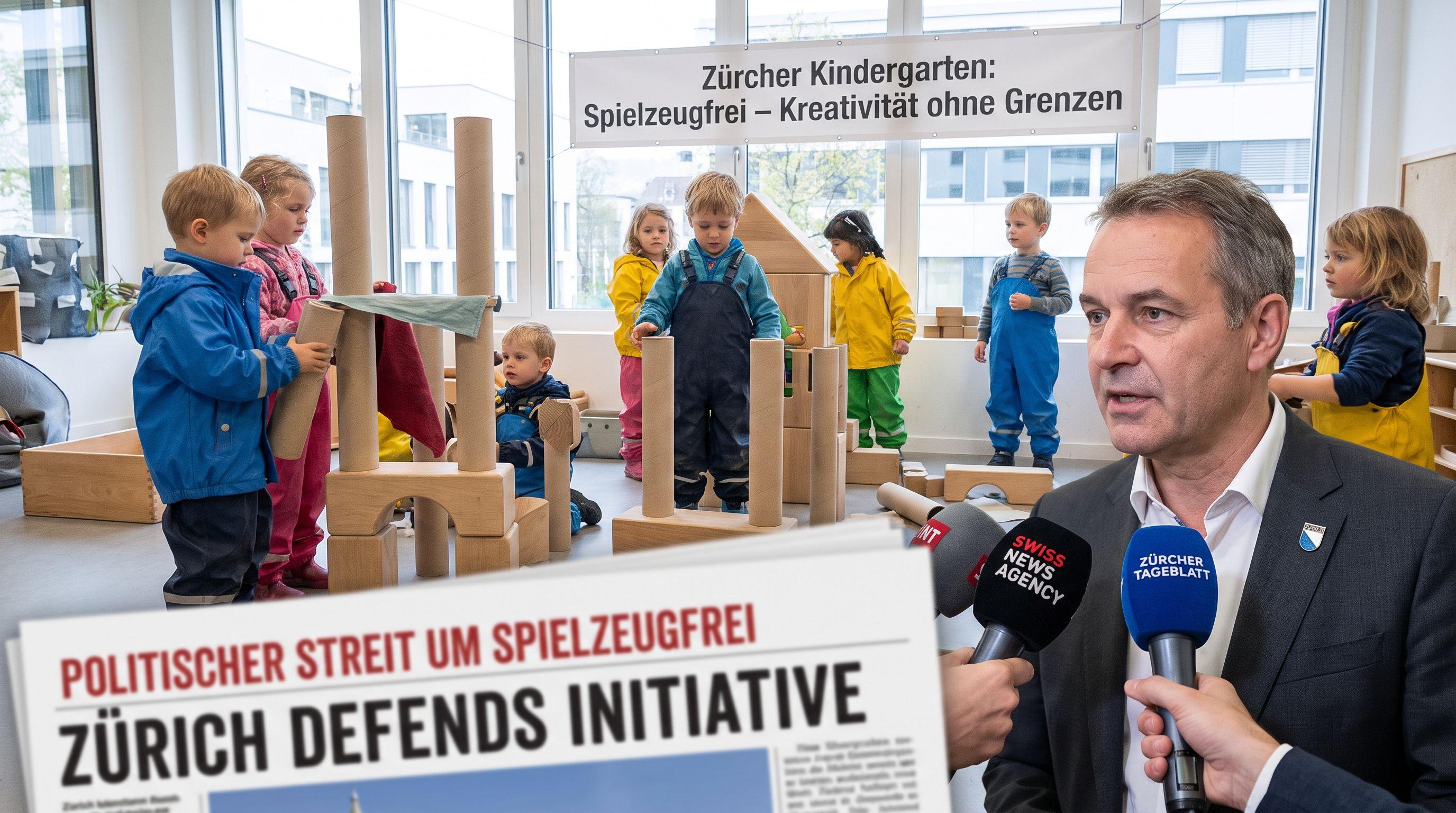
Zurich Defies Political Firestorm Over Toy Bans
Zurich's City Council is doubling down on a radical educational shift that has transformed 57 kindergarten classrooms into laboratories of imagination. For eight to ten weeks, children are stripped of every conventional toy, left with nothing but planks, ropes, and cardboard boxes. This is not a budget cut; it is a calculated strike against passive consumption. Since its launch in the 2021/22 school year, the 'Toy-Free Kindergarten' has moved from a niche German concept to a cornerstone of Zurich’s pedagogical strategy. The city insists this 'different way of playing' forces children to confront boredom and build resilience from the ground up. While the classroom shelves sit empty, the city argues the children's minds are fuller than ever. This bold stance sets the stage for a national debate on whether Swiss education should prioritize traditional play or psychological grit.
SVP Slams 'Social Experiment' on Children
The Swiss People’s Party (SVP) is launching a blistering offensive against the initiative, branding it a 'deliberately induced stress' experiment designed to manipulate child behavior. In a formal motion, the right-wing party characterized the absence of toys as an unnecessary psychological burden on the city's youngest residents. They argue that childhood should be a time of comfort, not a forced struggle for entertainment. This political friction highlights a deep-seated divide in Swiss society: the tension between traditional upbringing and progressive, state-led social engineering. The SVP's rhetoric suggests the project is less about education and more about 'shaping behavior' through deprivation. However, the City Council remains unfazed, retorting that the project is not an attack on toys themselves, but a vital exercise in developing life skills that plastic figurines simply cannot provide.
Data Confirms Surge in Social Empathy
Hard data is now silencing the skeptics as scientific evaluations reveal 'slight but significant' positive developments in core life skills. More than 80% of parents have signaled their approval, rating the project as positive or somewhat positive—a staggering majority that contradicts the political outcry. The metrics are clear: children participating in the program show increased frustration tolerance, sharper concentration, and enhanced social integration. Most notably, empathy toward peers has soared. In a world increasingly dominated by digital distractions and instant gratification, these 'toy-free' weeks serve as a cognitive reset. Out of dozens of implementations, only one single instance required the program to be cut short, proving the overwhelming stability of the initiative. While children with autism spectrum disorders are provided tailored environments to ensure their needs are met, the general population is thriving under this minimalist regime.
Navigating the Future of Swiss Education
Switzerland stands at a crossroads as Zurich's toy-free initiative challenges the very definition of early childhood development. This is no longer just a local trial; it is a signal of a broader shift toward 'resilience-based' learning. As the project expands, the responsibility now falls on school management and teaching staff to assess the readiness of each individual child. The Zurich City Council has made it clear: the familiar environment is not a sacred cow. By removing the 'crutch' of manufactured toys, they are betting on the innate creativity of the Swiss youth. This move mirrors recent skepticism toward smartphones in schools, suggesting a wider movement to reclaim the focus of the next generation. As 57 classes pave the way, the rest of the Confederation watches closely. The question is no longer if the toys will return, but whether the children will even want them back once they've discovered the power of their own imagination.