UBS
Swiss Senate delays decision on tougher UBS capital rules
The Senate has postponed its decision on stricter capital requirements for UBS’s foreign subsidiaries. The dispute pits the government’s financial-stability concerns against UBS’s warning that it could need roughly CHF18 billion in additional core capital.
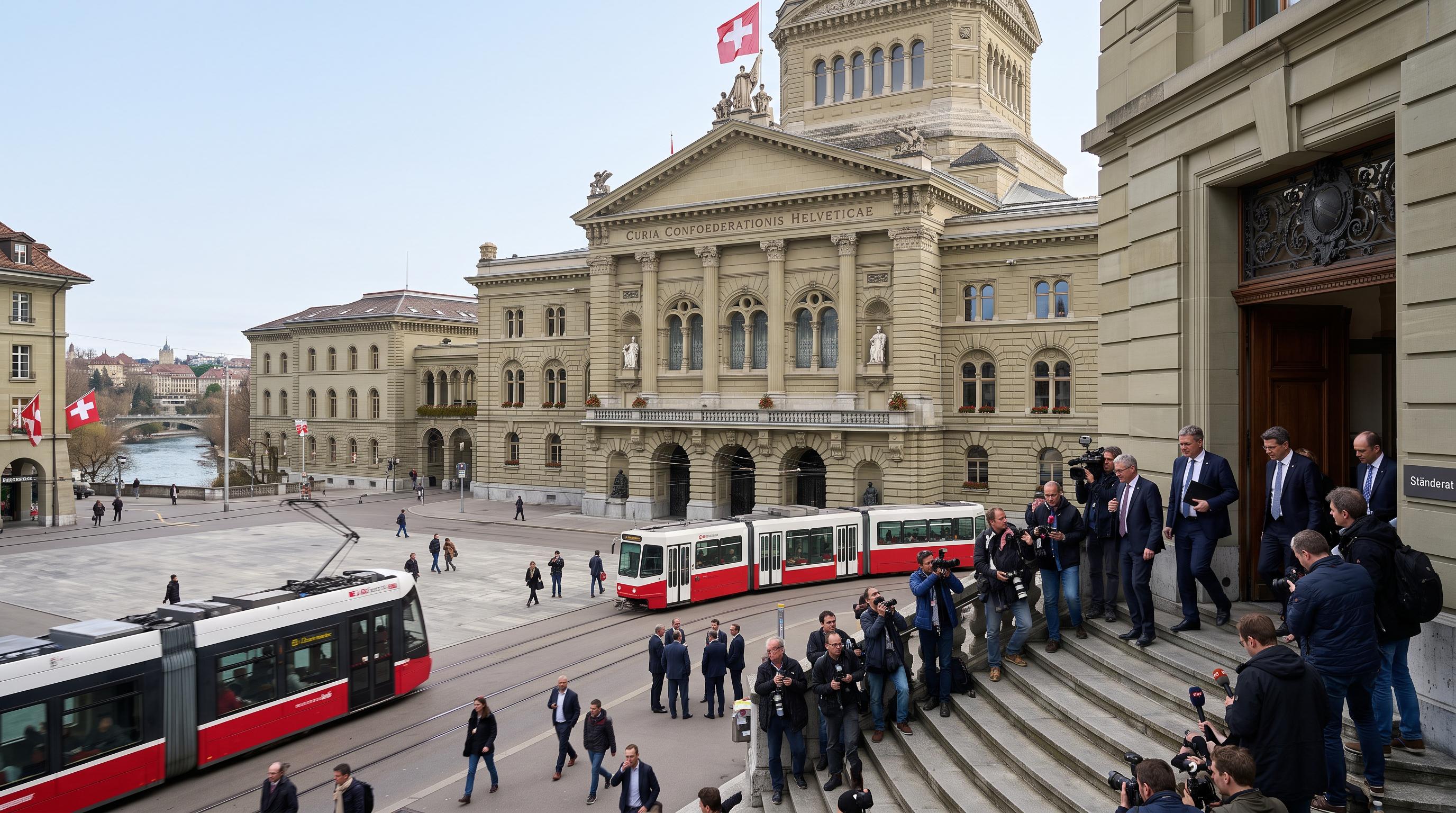
Senate Delays UBS Capital Vote
The Senate ended Thursday without a vote on the capital rules that would, in practice, apply mainly to UBS. Lawmakers spent the sitting debating the future of Switzerland’s safeguards for systemically important banks with substantial foreign holdings. Time ran out before the chamber could decide on minority motions, and the discussion will resume next week.
The delay leaves Switzerland’s largest bank facing continued uncertainty over the scale and form of any new capital requirement. The federal government wants foreign subsidiaries to be backed by 100% common equity tier 1 capital, or CET1, the most loss absorbing form of bank capital. UBS has rejected that approach and says it could have to raise around $22 billion, equivalent to CHF18 billion, in additional core capital.
The dispute carries direct significance for Switzerland’s financial system. UBS is the only major bank that the legislation would currently affect in practice, according to the source report. The Senate’s eventual position will shape the next stage of the parliamentary process and determine how the country updates its “too big to fail” framework after the collapse of Credit Suisse and its takeover by UBS. No final rule emerged from Thursday’s sitting.
Government Demands Full CET1 Backing
The government’s plan would require UBS to cover every franc of relevant overseas exposure with the highest quality capital. CET1 consists primarily of common shares and retained earnings, giving banks a buffer that can absorb losses while the institution continues operating. The proposal would impose a 100% CET1 backing requirement on foreign subsidiaries covered by the legislation.
UBS argues that the requirement would carry a major financial cost. Its estimate of CHF18 billion in additional core capital reflects the bank’s assessment of what the government’s approach would demand. The source does not specify how UBS would meet that amount, whether through retained earnings, a capital raising, changes to its balance sheet, or a combination of measures.
The argument reaches beyond the bank’s own financing decisions. More capital can strengthen resilience and reduce the risk that losses at an international unit threaten the wider group. It can also affect how a bank allocates funds across markets and businesses. The Senate is weighing those effects alongside the government’s financial stability concerns. UBS has opposed the government proposal forcefully and also rejects the committee majority’s alternative.
Committee Offers 50% CET1 Alternative
The Senate committee majority has offered a two-part formula that would lift hard capital to 50% and allow AT1 bonds for the balance. Under the proposal from the Economic Affairs Committee of the Senate, 50% of UBS’s foreign holdings would need backing from CET1. The remaining 50% could be supported by additional tier 1 bonds, known as AT1 instruments.
That would tighten the current framework while stopping short of the government’s full requirement. The existing rule cited in the debate combines 45% CET1 capital with 17% AT1 bonds. The committee proposal would therefore increase the CET1 share from 45% to 50%, while changing the treatment of the remainder.
UBS rejects this model as well. The source report does not give the bank’s estimate of the capital cost under the committee plan, so the financial impact cannot be stated precisely. The committee’s approach has nonetheless become the main parliamentary alternative to the government’s proposal. It reflects an attempt to strengthen the “too big to fail” regime through a higher hard capital component, while retaining a role for AT1 bonds in the capital structure.
Senate Minority Pushes 90% Rule
A sizeable Senate minority is backing a 90% CET1 requirement, keeping the government’s tougher direction alive. The minority position would require foreign holdings to be backed with 90% hard core capital, only slightly below the federal government’s 100% proposal. Representatives of left wing parties supported the government’s approach during the debate, according to Keystone-SDA.
The split shows that the Senate has not settled on a single interpretation of the lessons from Switzerland’s banking crisis. One side prioritises a large, immediately loss absorbing buffer around the international activities of the country’s biggest bank. The committee majority seeks a narrower increase in CET1 and continued use of AT1 instruments. UBS opposes both proposals described in the report.
The Senate’s next sitting will determine whether lawmakers can move from competing positions to a formal decision. The outcome will matter for UBS’s capital planning and for the government’s effort to revise the rules governing systemically important banks. It will also clarify how much room Parliament is prepared to leave between Switzerland’s existing framework and a requirement that would place nearly all foreign holdings behind CET1 capital. Until the debate concludes, the current rules remain in force.