Economy
Increased Longevity in Switzerland to Reduce Individual Pension Payouts
As Swiss residents live longer, calculations show a significant impact on retirement funds, potentially reducing the total pension amount individuals receive over their lifetime and highlighting a growing challenge for the national pension system.
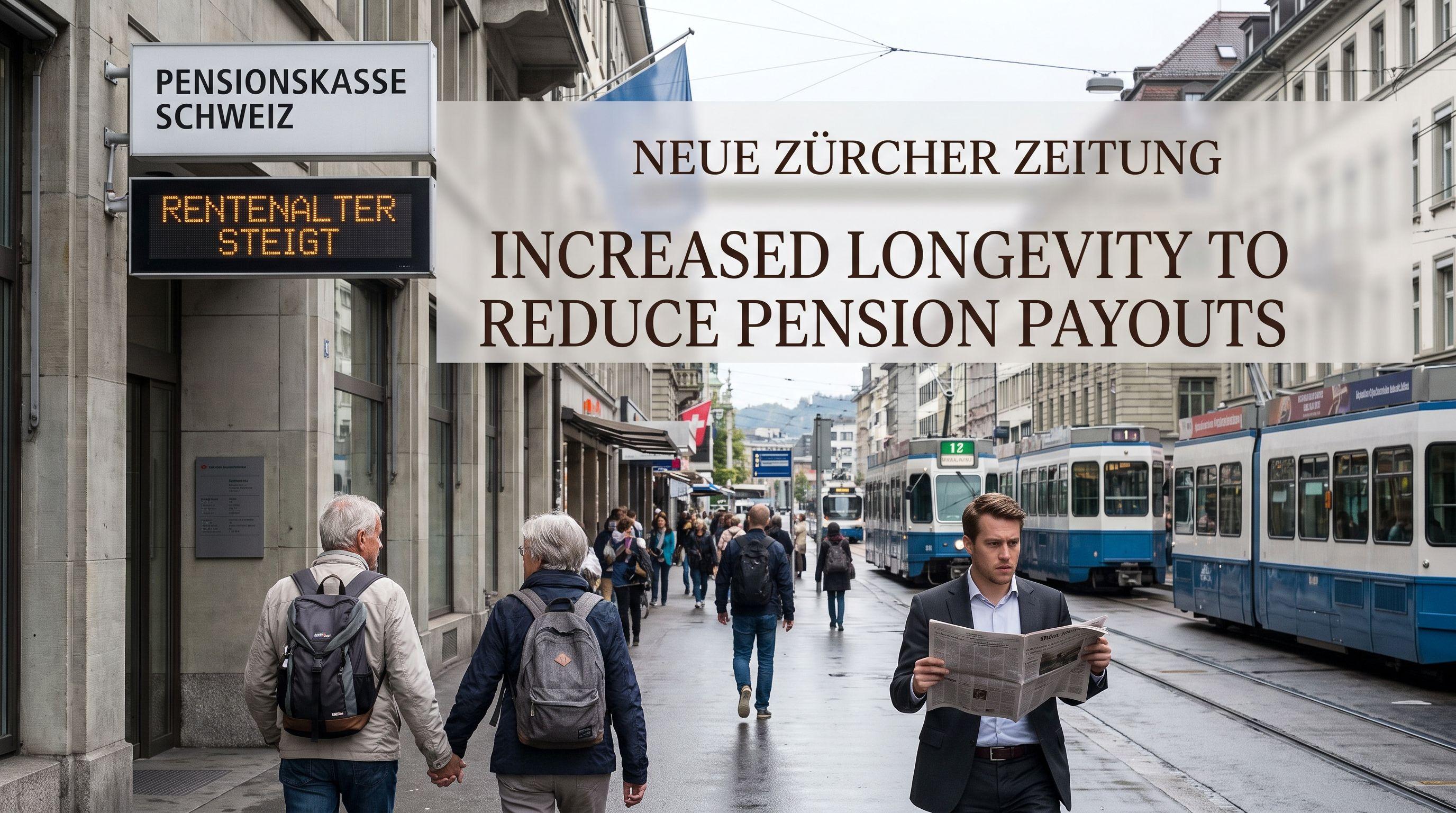
The Longevity Tax: A 12,260 Franc Deficit
A staggering 12,260 francs is set to vanish from the pockets of Swiss retirees. This is not a hypothetical projection; it is the cold, hard reality of a nation grappling with its own success in extending human life. As Swiss residents live longer than ever before, the mathematical foundations of the national pension system are shifting beneath their feet. The very longevity that we celebrate as a triumph of modern medicine and high living standards has become a financial liability. This 12,260-franc shortfall represents a dramatic erosion of purchasing power for those entering their golden years. While the Swiss population continues to set records for life expectancy, the funds meant to support them are being stretched to a breaking point. We are witnessing a fundamental recalibration of the Swiss social contract, where the reward for a long life is a thinner wallet. The urgency of this crisis cannot be overstated, as current workers face a future where their contributions buy significantly less security than those of their parents.
Living Longer, Earning Less
Switzerland confronts an unprecedented demographic paradox: the more we thrive, the more our individual pension payouts plummet. Data reveals that the sheer duration of retirement is now outpacing the growth of the funds designed to sustain it. This isn't just a minor adjustment; it's a significant structural decline. In contrast to previous decades where retirement was a shorter, well-funded chapter, today's Swiss seniors are facing a marathon with fewer supplies. The conversion rates that dictate how much monthly income a retiree receives from their accumulated capital are under relentless downward pressure. Every additional year of life expectancy adds weight to a system already straining under the weight of negative interest rates and global economic volatility. The math is simple but brutal: when the same pot of money must last longer, the monthly slice inevitably gets smaller. This trend is not a temporary blip but a sustained trajectory that demands immediate attention from policymakers and citizens alike.
Systemic Strain Cracks the Golden Nest Egg
Nearly every pillar of the Swiss pension system is now feeling the heat of this demographic surge. The second pillar, or occupational pension, is particularly vulnerable to the longevity effect. As life expectancy soars, the capital required to guarantee a lifelong pension grows exponentially. However, investment returns have failed to keep pace with this rising demand. This creates a critical gap that can only be closed by reducing payouts or increasing contributions—both of which are unpalatable to a public already squeezed by the high cost of living. The Swiss model, once the envy of the world for its stability, now faces a reckoning. Experts warn that without radical reform, the 'Golden Nest Egg' that Swiss workers have spent decades building will continue to shrink. The tension between maintaining current payout levels and ensuring the long-term solvency of the funds is reaching a boiling point. We are no longer talking about distant risks; the impact is being felt by those retiring today.
Navigating the New Retirement Reality
The future of Swiss retirement demands a bold new strategy, as the era of predictable, high-value payouts draws to a close. Individuals must now take a more active role in their financial planning, as the state and occupational cushions grow thinner. This shift signals a move toward the third pillar—private savings—as the essential stabilizer for future retirees. Meanwhile, the national debate over raising the retirement age or adjusting the conversion rate will only intensify. The implications are clear: the Swiss population must adapt to a reality where longevity is a gift that comes with a price tag. As we look ahead, the challenge will be to preserve the dignity of retirement in a world where 100-year lives are becoming the norm. The 12,260-franc warning is a wake-up call for every worker in the Confederation. The time for complacency has passed; the time for action is now. How Switzerland responds to this demographic challenge will define the economic health of the nation for the next century.