Business
Roger Federer Loses Billionaire Status as On Running Shares Plunge
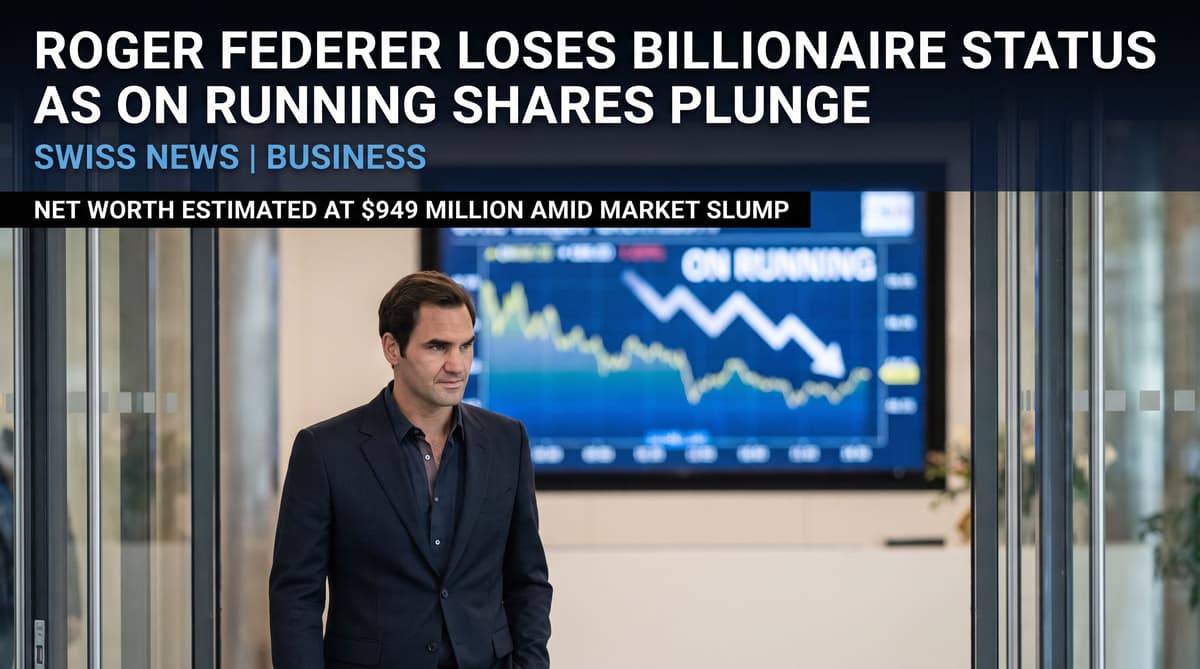
Swiss tennis legend Roger Federer is no longer a billionaire, according to Forbes magazine. His net worth dropped to an estimated $949 million following a significant slump in the share price of Swiss footwear brand On, in which he has been an investor and partner since 2019.
The Billion-Dollar Baseline Crumbles
A staggering $51 million evaporation has stripped Roger Federer of his billionaire title. The Swiss maestro, who ascended to the exclusive ten-figure club just one year ago in 2025, now confronts a revised net worth of $949 million. This financial fault line emerged not on the grass courts of Wimbledon, but on the trading floors of the New York Stock Exchange. While Federer remains one of the wealthiest athletes in history, the psychological blow of losing 'billionaire' status resonates across the global sporting landscape. This shift underscores the volatile nature of celebrity-backed ventures, where personal brand equity is inextricably linked to market performance. For a man who defined precision for two decades, this sudden $949 million valuation serves as a stark reminder that even the most curated portfolios are susceptible to the gravity of global economics. The fall is swift, decisive, and entirely public.
On Running Stumbles on the Global Stage
Shares of On Holding AG plummeted by a gut-wrenching 19% in a single Tuesday session, sending shockwaves through Zurich and Wall Street alike. The catalyst? A quarterly report that, while showing significant turnover growth, failed to clear the sky-high hurdles set by hungry investors. Federer, who holds a critical 2.5% to 3% stake in the footwear giant, saw his paper wealth dissolve as the stock price buckled. Since joining as an investor and partner in 2019, Federer has been the face of the brand's meteoric rise, turning a niche Swiss running shoe into a global fashion powerhouse. However, the market is a cold judge; even the 'Federer touch' cannot insulate a company from the pressures of missed expectations. This 19% dive represents more than just numbers—it is a test of the brand's resilience in a post-peak hype cycle. As the company grapples with these results, the question remains whether this is a temporary correction or a long-term cooling of the On phenomenon.
Diversified Empire Faces Market Volatility
Federer’s financial fortress is built on far more than just sneakers, yet even a legendary portfolio has its limits. Beyond his $130 million in career prize money—a figure that remains a benchmark in tennis history—his empire is bolstered by blue-chip partnerships with Rolex, Lindt, Mercedes-Benz, and Uniqlo. These long-standing deals provide a massive, stable foundation of passive income that most athletes can only dream of. In contrast to the volatile tech and retail sectors, these luxury endorsements act as a stabilizer. Yet, the sheer scale of his On investment means that when the shoe brand sneezes, his net worth catches a cold. This recent slump highlights the risk of high-concentration stakes in single entities, even for a global icon. While his $949 million valuation still places him in the stratosphere of global wealth, the transition from billionaire back to multi-millionaire serves as a cautionary tale for the new era of athlete-entrepreneurs who trade sweat equity for corporate shares.
Swiss Identity Beyond the Balance Sheet
Switzerland watches the fortunes of its favorite son with a mixture of concern and characteristic stoicism. To the Swiss public, Federer is more than a net worth; he is a national monument. However, the 'Made in Switzerland' tag that On carries so proudly is now under intense scrutiny. As the brand navigates this financial turbulence, the reputation of Swiss business excellence is on the line. Federer’s journey from the courts of Basel to the boardrooms of New York has been a source of immense national pride, and his loss of billionaire status is unlikely to dim his luster at home. Looking ahead, the focus shifts to On’s ability to innovate and recapture investor confidence. For Federer, the path back to the billion-dollar mark is clear: it requires the same grit and strategic adjustment that saw him win 20 Grand Slams. The King of Grass may have lost a set in the financial arena, but the match is far from over. Switzerland and the world will be watching the next quarter closely.