Crime
Organized Gangs Targeting Swiss Farms in Spate of High-Tech GPS Thefts
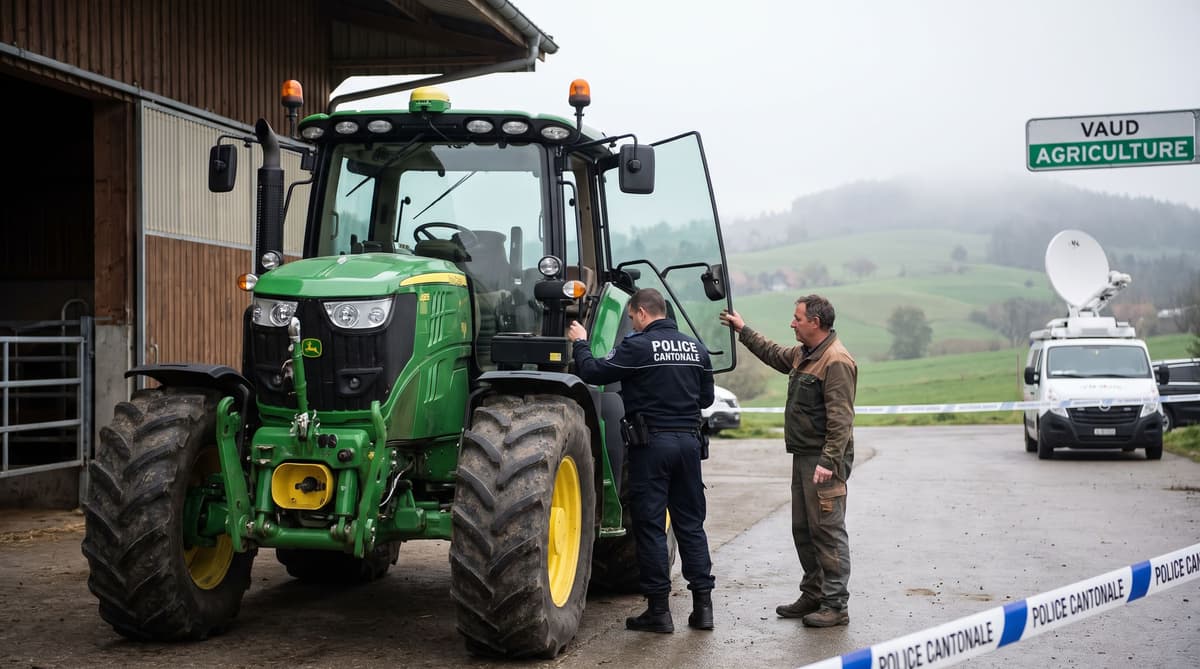
A crime wave is hitting Swiss agriculture as organized gangs carry out targeted thefts of valuable GPS systems from tractors, particularly John Deere models. Cantons like Vaud and Bern report a dramatic increase in incidents, with losses mounting to hundreds of thousands of francs.
Precision Crime Hits the Heartland
Switzerland’s quiet agricultural landscape is reeling from a surgical strike by international criminal syndicates. These are not opportunistic thieves; they are highly skilled technicians who dismantle high-value GPS systems with military-grade efficiency. In the canton of Vaud, the numbers tell a chilling story: 20 cases have already been recorded in 2026, shattering the previous annual average of just two to six incidents. The target of choice is almost exclusively John Deere technology, prized for its lucrative resale value and a design that, unfortunately, makes it vulnerable to quick removal. While farmers sleep, these gangs infiltrate barns and fields, stripping tractors of equipment worth tens of thousands of francs in minutes. This wave of high-tech looting represents a direct assault on the modernization of Swiss farming, turning essential precision tools into liabilities overnight. The audacity of these thefts suggests a deep understanding of farm layouts and equipment vulnerabilities, leaving the agricultural community in a state of high alert.
Data Points to a Staggering Escalation
The financial hemorrhage facing Swiss agriculture is reaching a critical mass. In Thurgau—a region that had never recorded such a crime until this year—five thefts in 2026 alone have resulted in losses surpassing several hundred thousand francs. Meanwhile, the canton of Solothurn saw four John Deere tractors targeted in a single month, racking up damages in the tens of thousands. Each stolen unit commands a staggering black market price between CHF 10,000 and CHF 30,000, fueling a cycle of theft that is as profitable as it is damaging. The Bernese police report a similar spate of incidents over the last two months, indicating that no corner of the country is safe from this mobile criminal enterprise. This isn't just about the hardware; it’s about the economic stability of farms already struggling with climate adaptation and rising costs. When a single piece of equipment costs as much as a luxury sedan, its loss can be the difference between a profitable harvest and financial ruin for a family-owned Swiss farm.
Tracing the Eastern European Connection
This is a pan-European crisis that transcends Swiss borders, and the trail leads directly to the East. Fedpol has confirmed that it is working in lockstep with Europol to dismantle networks that have been ravaging farms across Germany, Britain, and France since 2023. The logistics are sophisticated: stolen devices are often whisked across borders before the theft is even discovered. When GPS signals remain active, they frequently ping from locations in Romania and Lithuania, where the hardware is laundered and resold to unsuspecting or complicit buyers. In France, the gendarmerie has successfully broken up organized cells from these regions, yet the flow of stolen goods continues largely unabated. The criminals exploit the open borders of the Schengen area, utilizing well-established smuggling routes to move high-value electronics. This international dimension makes local policing difficult, requiring a level of cross-border intelligence sharing that is now being tested to its limits. The Swiss authorities are no longer just fighting local thieves; they are battling a globalized shadow economy.
Securing the Future of Swiss Harvests
The Swiss agricultural sector now faces a stark ultimatum: adapt or be exploited. Police are urging farmers to move beyond traditional barn locks and implement advanced surveillance, including motion sensors and geofencing for their machinery. However, the burden of security adds yet another layer of stress to an industry already grappling with calls for emergency loans and higher food prices. The long-term implications are severe; if high-tech farming becomes too risky or expensive to insure, the efficiency of Swiss food production could stall. As investigations continue, the focus shifts to manufacturers like John Deere to enhance the anti-theft measures of their hardware. For now, the message from authorities is clear: vigilance is the only defense. Farmers are encouraged to report any suspicious vehicles or individuals immediately, as every minute counts in the race to intercept stolen goods before they leave Swiss soil. The battle for the heart of the Swiss countryside is no longer fought over land, but over the silicon and software that powers it.