Neuchâtel
Watch collection stolen from private museum in Le Locle
Thieves broke into the Ulysse Nardin museum in Le Locle and removed watches from display cases. Police and prosecutors are investigating, while the museum works to establish the value and inventory of the stolen collection.
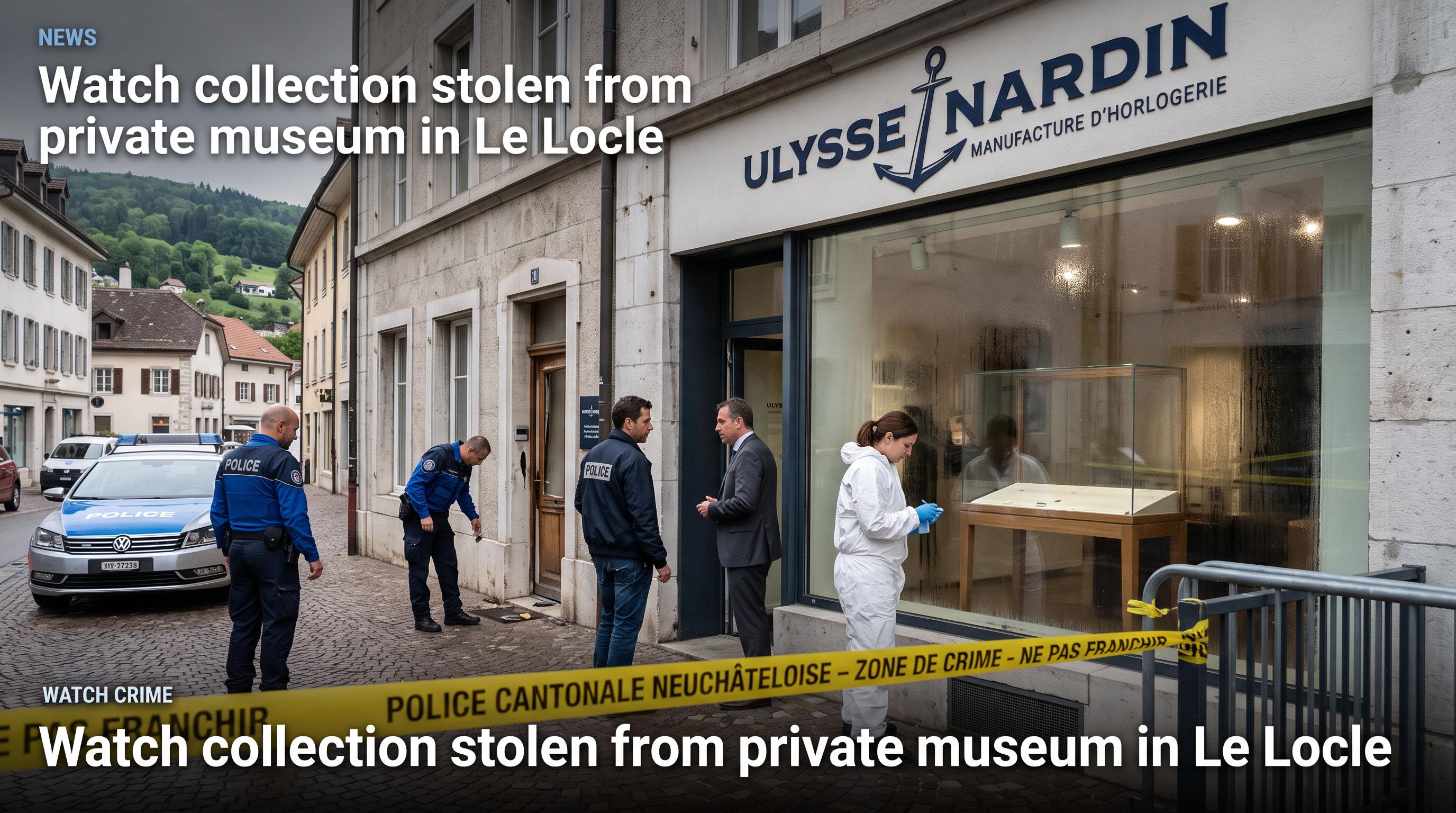
Thieves Target Le Locle Watch Museum
Several people broke into the Ulysse Nardin museum at around 3am on Monday, taking collectors’ watches from display cases in Le Locle, canton Neuchâtel. The theft places a private collection at the centre of a criminal investigation in one of Switzerland’s historic watchmaking towns.
Neuchâtel police said the perpetrators forced their way into the museum and broke into cases holding the watches. They escaped before officers were notified. The museum has begun checking its records and displays to establish exactly what is missing.
The break-in occurred overnight from Sunday into Monday, according to the police account cited by Keystone-SDA. The incident was reported publicly on September 15, 2026, while the value of the stolen watches remained unknown.
Le Locle is closely associated with Swiss horology. Its watchmaking heritage gives collections held in the town both cultural and commercial significance. In this case, however, authorities have not yet released a list of the missing pieces, their brands, or their estimated market value. That information will depend on the museum’s inventory and the progress of the investigation.
Alarm Sounds, Security Searches, Thieves Escape
The museum’s alarm system activated a security response, but the theft was not immediately located. A security firm was called after the alarm went off. The initial response did not identify the point of entry, and the stolen watches were discovered only about an hour later.
That delay forms a central part of the known timeline. The perpetrators had already left when the breach was found, according to the police statement. Neuchâtel police were then notified and took over the investigation.
Authorities have not disclosed how many people entered the museum, how they escaped, or whether investigators have recovered surveillance footage or other evidence. They have also not said whether the alarm was triggered by the forced entry, damage to the display cases, or another movement inside the building.
The available details show the limits of the information released at this early stage. Police and prosecutors are focused on identifying the perpetrators, while the museum is working separately to establish the scope of the loss. Further updates may clarify the sequence of the alarm, the security company’s intervention, and the route used to leave the site.
Inventory Holds the Key to the Loss
The financial value of the stolen collection remains undetermined. The museum is compiling an inventory of the watches removed from its display cases before assigning a value to the loss. Police have not published the number of missing pieces or identified the models involved.
That inventory will be important for investigators, insurers, auction specialists, and watch dealers. Precise descriptions, serial numbers, photographs, and ownership records can help authorities circulate alerts and assess whether any pieces appear on the secondary market. None of those details has been released in the account of the break-in.
The theft also comes amid wider concern about stolen luxury watches. Swissinfo reported in 2023 that watches worth more than £1 billion, or about $1.1 billion, had been reported stolen or missing worldwide. That figure concerns the broader luxury watch market and does not indicate the value of the Le Locle collection.
For now, the museum’s own records will determine the scale of this particular case. Until that work is complete, any estimate would be premature. Authorities have given no indication that the stolen watches have been located.
Prosecutors Begin the Search for Answers
The Neuchâtel public prosecutor’s office has opened a criminal investigation. Prosecutors and cantonal police are seeking to identify and arrest those responsible for the break-in. The case remains at an early stage, and authorities have released no information about suspects, arrests, stolen models, or a possible escape vehicle.
The next steps will likely depend on the museum’s completed inventory and the evidence gathered at the scene. Investigators may use records from the display cases, alarm data, security company reports, surveillance material, and forensic examinations. Those are standard investigative avenues, but police have not confirmed which forms of evidence they are examining in this case.
The theft gives Switzerland’s watchmaking region a reason to review how valuable collections are protected and documented. Le Locle’s museums and private collections preserve industrial history as well as high-value objects. A stolen watch can carry significance beyond its resale price, particularly when its provenance links it to the development of Swiss horology.
Until prosecutors or police publish further information, the public record is limited to the overnight break-in, the damaged cases, the missing watches, and the continuing effort to identify the perpetrators.