cultural heritage
Switzerland returns ancient Egyptian mask seized at Geneva border
Switzerland has returned an ancient Egyptian burial mask to Egypt after authorities determined that it had been imported illegally. The handover highlights Swiss efforts to prevent the trafficking of cultural property and follows a customs seizure in Geneva.
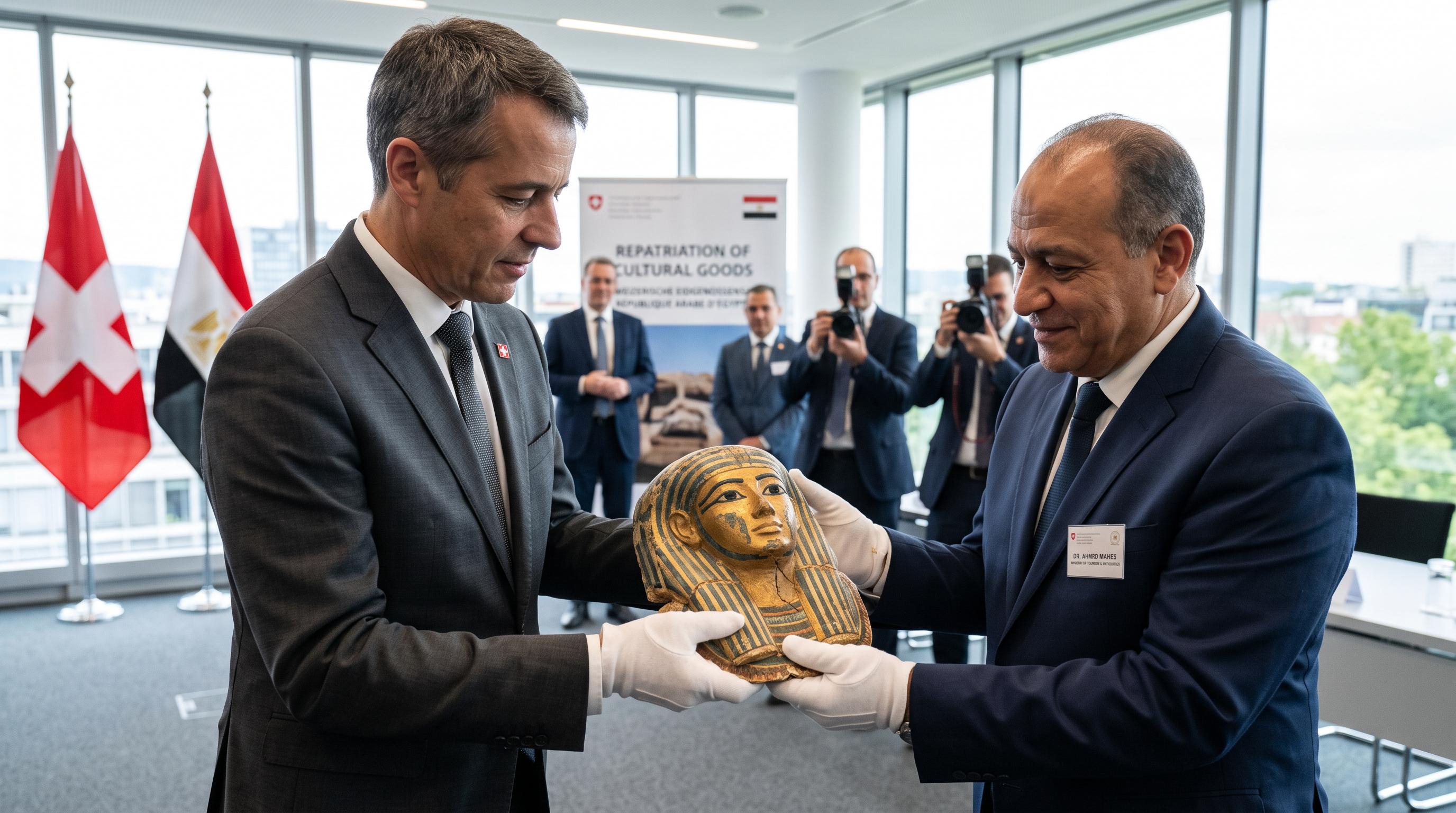
Bern Hands Egypt Its Ancient Mask
A nearly 3,000-year-old Egyptian burial mask is back in Egypt after Swiss authorities determined that it entered the country illegally. Interior Minister Elisabeth Baume-Schneider handed the object to Egypt’s ambassador during a ceremony at the Beatrice von Wattenwyl House in Bern on September 15, 2026.
The handover followed a customs seizure in Geneva and a review by the Federal Office of Culture. The case places Switzerland’s border controls at the centre of an international effort to stop the movement of archaeological objects whose legal origins cannot be established.
The mask dates from the second century BC, according to the source, and was seized as part of criminal proceedings. Swiss officials said the return underlined the country’s commitment to combating the illegal transfer of cultural property.
The ceremony gave a diplomatic setting to a process that began at a customs crossing. It also demonstrated how a shipment moving through Switzerland can trigger cooperation between customs officers, cultural authorities, Egyptologists and prosecutors. For Egypt, the return restores an ancient funerary object to the country where it was created. For Switzerland, it adds a visible case to a policy that combines border enforcement with restitution.
Geneva Border Officers Stop the Shipment
Swiss customs officers blocked the import on September 5, 2022, at Bardonnex in the canton of Geneva. A haulage company had declared the mask while passing through the border, prompting authorities to investigate the shipment.
The Federal Office for Customs and Border Security stopped the import after officials became suspicious. The Federal Office of Culture then commissioned an assessment, and an Egyptology expert confirmed that the mask was authentic. Evidence gathered during the proceedings established that the import was illegal.
The case shows the importance of declarations at transit points. Bardonnex is a major road gateway between Switzerland and France, where commercial traffic moves continuously across the border. The mask did not need to be discovered in a museum or auction house. Its declaration at customs created the point at which officials could examine the object and halt its movement.
Authorities have not provided details in the source about the haulage company, the mask’s precise route or the criminal proceedings. Those gaps matter because provenance, ownership records and export permissions often determine whether an archaeological object can legally cross a border. In this case, the customs intervention preserved the object for expert examination and eventual return.
A 2011 Pact Gives Restitution a Framework
Switzerland and Egypt have operated under a cultural-property agreement since 2011. The bilateral framework covers the import, transit and return of cultural objects, giving authorities a basis for cooperation when an item is suspected of having been trafficked.
The returned mask is one result of that relationship. The Federal Office of Culture said Switzerland has sent approximately 80 cultural objects back to Egypt over the past 15 years. That figure places the latest handover within a longer pattern of restitution rather than treating it as an isolated diplomatic gesture.
Switzerland’s position as a transport, trade and art-market hub makes the enforcement of cultural-property rules particularly significant. Objects can pass through Swiss territory without being destined for Swiss collections, making customs checks and documentation essential. Federal agencies must also rely on specialists who can distinguish an authentic archaeological object from a modern replica and assess whether its movement complies with the law.
The agreement does not remove the need for case-by-case evidence. Officials still have to establish authenticity, identify the legal problem with an import and coordinate the return. The mask’s path from Bardonnex to Bern and then Egypt illustrates that chain of responsibility.
Restitution Tests Switzerland’s Trade Gateways
The return adds to Switzerland’s record of sending cultural objects back to their countries of origin. The Federal Office of Culture says around 80 objects have been returned to Egypt over the past 15 years, while earlier Swiss cases have involved Egyptian antiquities identified in Geneva’s free port and other cultural-property investigations.
That record keeps attention focused on the systems that allow questionable objects to enter international circulation. Customs declarations, specialist examinations and criminal inquiries each address a different stage of the process. Together, they can prevent an object from moving into a private collection or disappearing into an opaque market.
The Bern ceremony also carries significance for Swiss institutions. Restitution decisions can affect museums, dealers, logistics companies and storage facilities, particularly in a country with major free ports and a strong international art trade. Clear documentation helps legitimate commerce while giving authorities grounds to stop objects linked to unlawful imports.
The mask now leaves Swiss custody through an official handover. The source does not identify its future museum or display location in Egypt. Its return nevertheless provides a concrete example of how a border seizure can end with an archaeological object transferred through diplomatic channels rather than remaining in Switzerland’s cultural-property system.