Demographics
Swiss Fertility Rate Plummets to Record Low, FSO Reports
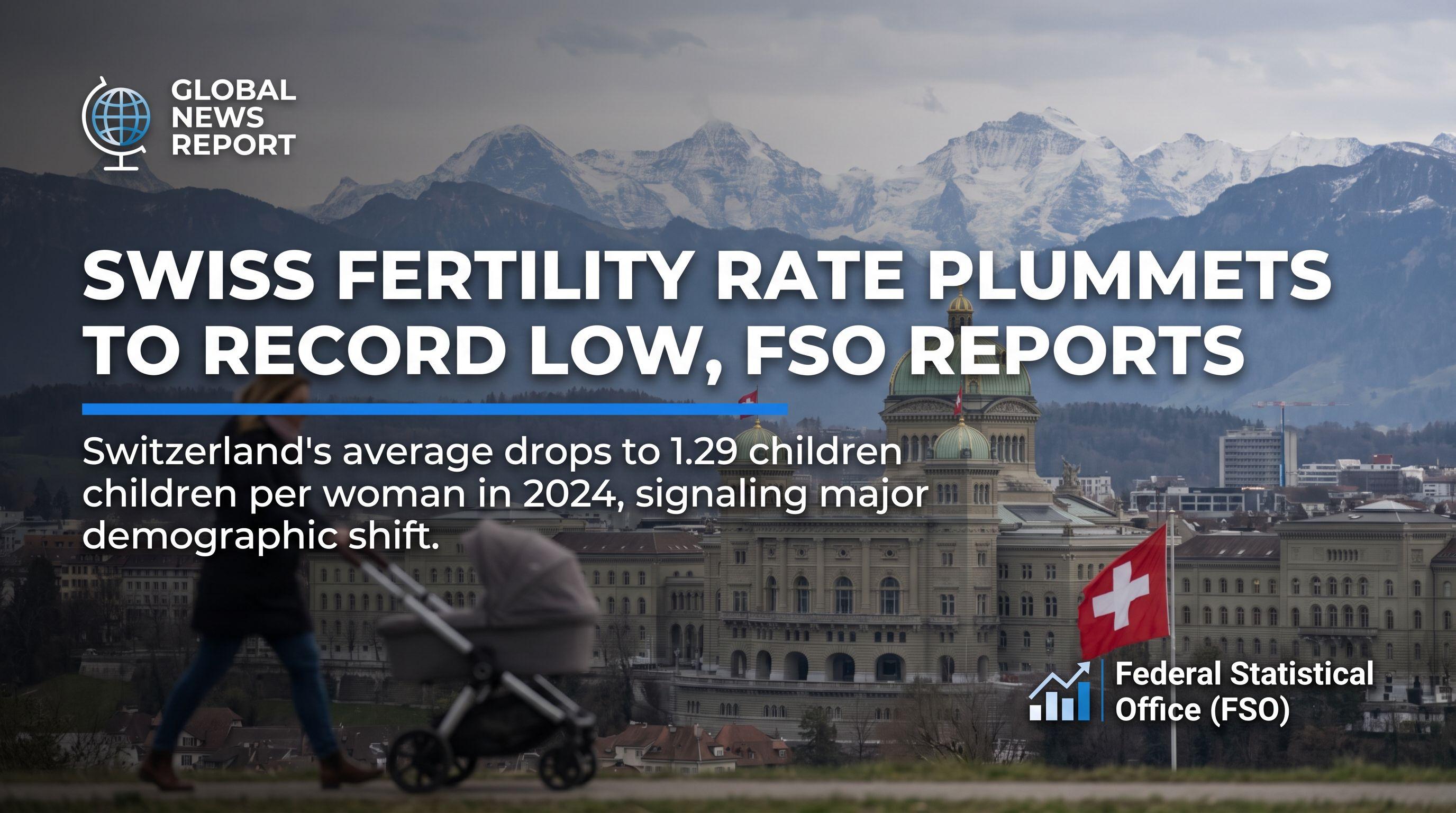
Switzerland's fertility rate dropped to an all-time low of 1.29 children per woman in 2024, according to the Federal Statistical Office. The new data points to a significant demographic shift, with people having fewer children and starting families later in life.
The Demographic Freefall: 1.29 and Falling
Switzerland is currently witnessing a demographic collapse that challenges the very fabric of its future. The fertility rate has plummeted to a staggering 1.29 children per woman, the lowest level ever recorded by the Federal Statistical Office. This is not a minor fluctuation; it is a seismic shift. With only 78,000 live births in 2024, the nation has seen a 9.2% decline since 2019, a broad retreat not seen since the social upheavals of the 1970s. The replacement level of 2.07—the golden number required to sustain a population without migration—is now a distant memory. Switzerland is shrinking from within, grappling with a reality where the cradle is increasingly empty while the workforce grays at an unprecedented pace.
The Biological Clock Confronts Modern Careers
The average Swiss mother is now 32.4 years old, pushing the limits of biology as career ambitions and financial stability take precedence. Mothers are now 31.3 years old on average when their first child is born, while fathers average 35.3. This delay is a calculated response to a professional landscape that many perceive as hostile to parents. A staggering 50% of young adults believe that having a child will inflict damage on their professional prospects. Women, in particular, remain pessimistic about the 'motherhood penalty.' As the center of gravity for childbearing shifts deep into the thirties, the window for subsequent children slams shut. Even the rise in IVF treatments, which accounted for 3.1% of births in 2023, cannot fully compensate for the biological reality of postponement.
The Death of the Large Swiss Family
The dream of the three-child household is evaporating across the Confederation. Third-order births have crashed by 13.6% since 2019, the most significant drop among all categories. While the two-child family remains the nominal Swiss norm, it is rapidly losing ground. The statistics reveal a hardening of hearts toward parenthood: the number of 20-somethings who want no children at all has nearly tripled, soaring from 6% in 2013 to 17% in 2023. This cultural pivot is universal, transcending the Röstigraben and affecting urban and rural areas alike. Whether in Zurich or the Valais, the desire for large families is fading, replaced by a preference for smaller, more manageable domestic units or total childlessness.
Economic Anxiety and the Future of the Confederation
Relationship quality and financial security now dictate the Swiss nursery. In 2023, 56% of respondents cited working conditions and childcare availability as the decisive factors in their family planning. The perceived 'happiness dividend' of children is also in decline; only 41% of young adults believe a child would improve their life satisfaction, down significantly from a decade ago. This shift forces a critical conversation about the Swiss social contract. If the current trajectory holds, Switzerland faces a future of labor shortages and a strained pension system. The FSO data is a clarion call: without radical changes to childcare infrastructure and the division of domestic labor, the Swiss cradle will continue to quiet, leaving the nation to confront an aging destiny it is not yet prepared to handle.