Economy
Swiss Employment Prospects Improve as KOF Indicator Rises in Q3
Despite global economic uncertainties, the outlook for the Swiss labour market is improving, according to the latest employment indicator from the KOF Institute. The index rose to 2.1 points in the third quarter, signaling continued recovery and job market strength, particularly in the retail sector.
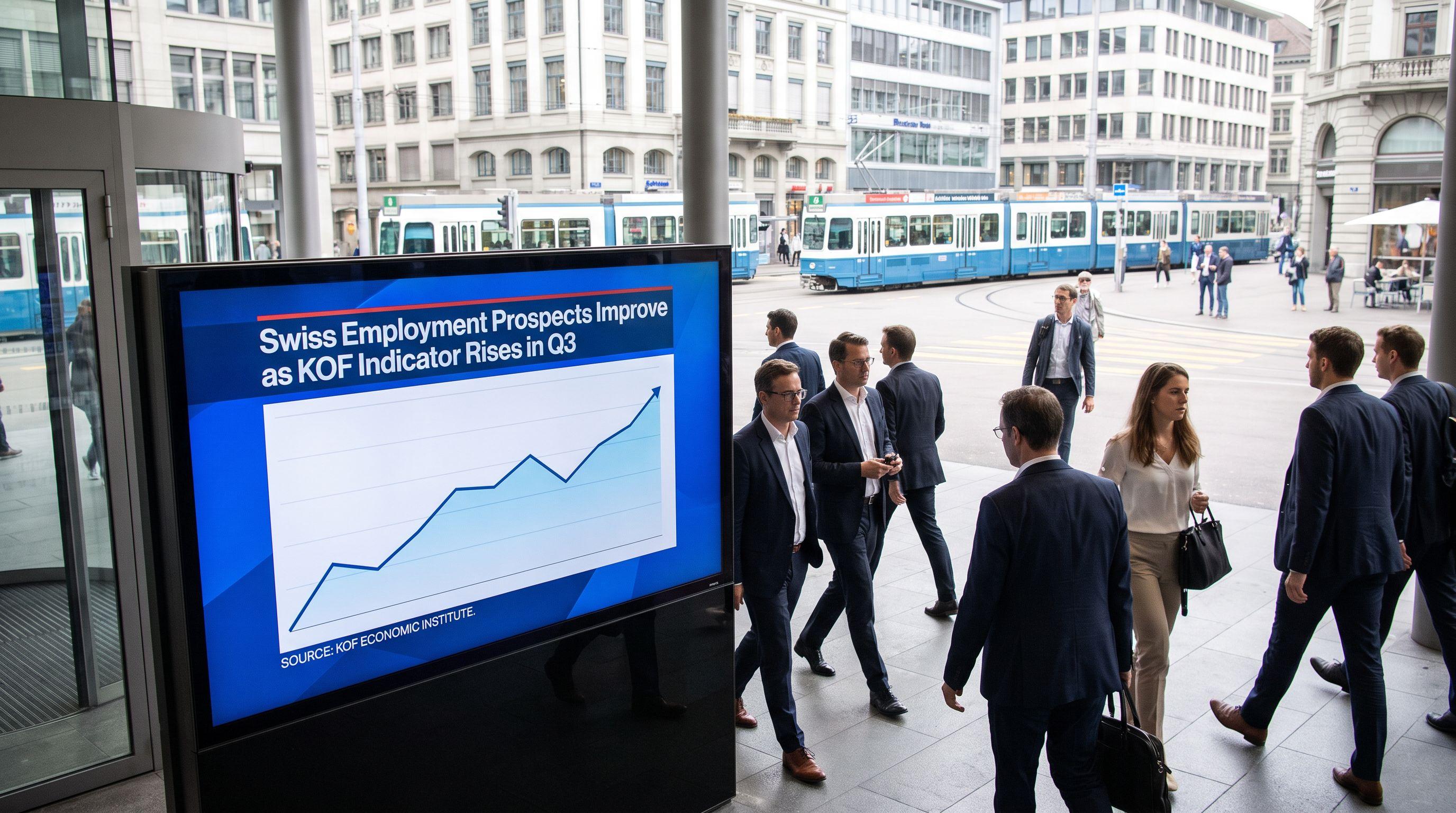
Swiss Resilience Defies Global Gloom
Switzerland’s labor market is charging ahead with a defiance that mocks global economic uncertainty. The KOF Employment Indicator has surged to 2.1 points for the third quarter of 2026, a significant leap of 0.5 points from the previous period. This isn't just a minor fluctuation; it is a robust signal that the Swiss economy is shaking off the stagnation of 2025. By surpassing the long-term average of 1.7 points, the nation proves its structural strength. Over 4,200 companies were surveyed, and their collective voice is clear: the recovery that ignited late last year is not just flickering—it is burning bright. While neighboring European powers struggle with sluggish growth, the Swiss engine is accelerating, reclaiming the momentum lost during the mid-2022 peak. This resurgence marks a definitive end to the negative territory seen just a year ago, positioning Switzerland as a bastion of stability in a volatile world.
Retail Surges as Manufacturing Grapples
A dramatic reversal of fortune has struck the Swiss retail sector, which has finally emerged from a two-year slumber. The indicator for retail trade soared from a dismal -3.1 to a promising 2.9 points, marking its first foray into positive territory since mid-2024. This pivot suggests a renewed consumer confidence that could redefine the year's economic narrative. However, the manufacturing heartland tells a different story. The manufacturing index stands at -5.3 points, struggling to find its footing for the fourth consecutive time. While the pace of decline is easing, the sector remains deeply underwater. Meanwhile, the wholesale trade sector continues to fight an uphill battle, languishing at -1.9 points. This stark contrast between consumer-facing optimism and industrial caution creates a complex tapestry for policymakers to navigate as they attempt to balance the scales of national growth.
Construction Booms While Hospitality Plummets
The Swiss construction sector is operating at an unprecedented level of intensity, boasting a staggering 11.2 points on the KOF scale. This powerhouse performance acts as the bedrock of the current employment recovery, driven by relentless demand and infrastructure investment. In sharp contrast, the hotel and catering industry is confronting a crisis. The sector’s index has plummeted to -8.8 points, its most alarming level since the dark days of early 2021. This divergence is critical; while cranes dominate the Swiss skyline, the service industry grapples with a severe cooling of hiring intentions. The hospitality sector is currently the 'problem child' of the Swiss economy, failing to mirror the recovery seen elsewhere. This tension between the physical growth of the nation and its service capacity highlights a labor market that is shifting its weight toward heavy industry and construction.
Navigating the Path to Stability
Switzerland stands at a pivotal crossroads, with the KOF indicator providing a roadmap for cautious optimism. The return to 2.1 points—matching the strength of early 2026—suggests that the labor market has found its rhythm. The implications for Swiss workers are profound: job security is tightening in key sectors, even as others undergo painful restructuring. The resilience of the retail and construction sectors provides a necessary buffer against the manufacturing slump. Looking ahead, the focus must remain on whether the hospitality sector can claw its way back from its current depths. As 2026 progresses, the Swiss model of economic adaptability will be tested. If the current trajectory holds, Switzerland will not only weather the global storm but emerge with a more diversified and robust labor market. The message to the world is clear: the Swiss economy is not just surviving; it is strategically evolving.