Swiss Army
Amid Geopolitical Tensions, Swiss Army Considers Reopening Disused Bunkers
The Swiss defence ministry is assessing the feasibility of bringing old, disused military bunkers back into service for storing supplies, equipment, and ammunition. The move reflects a broader reassessment of national defense and resilience in light of the current European security situation.
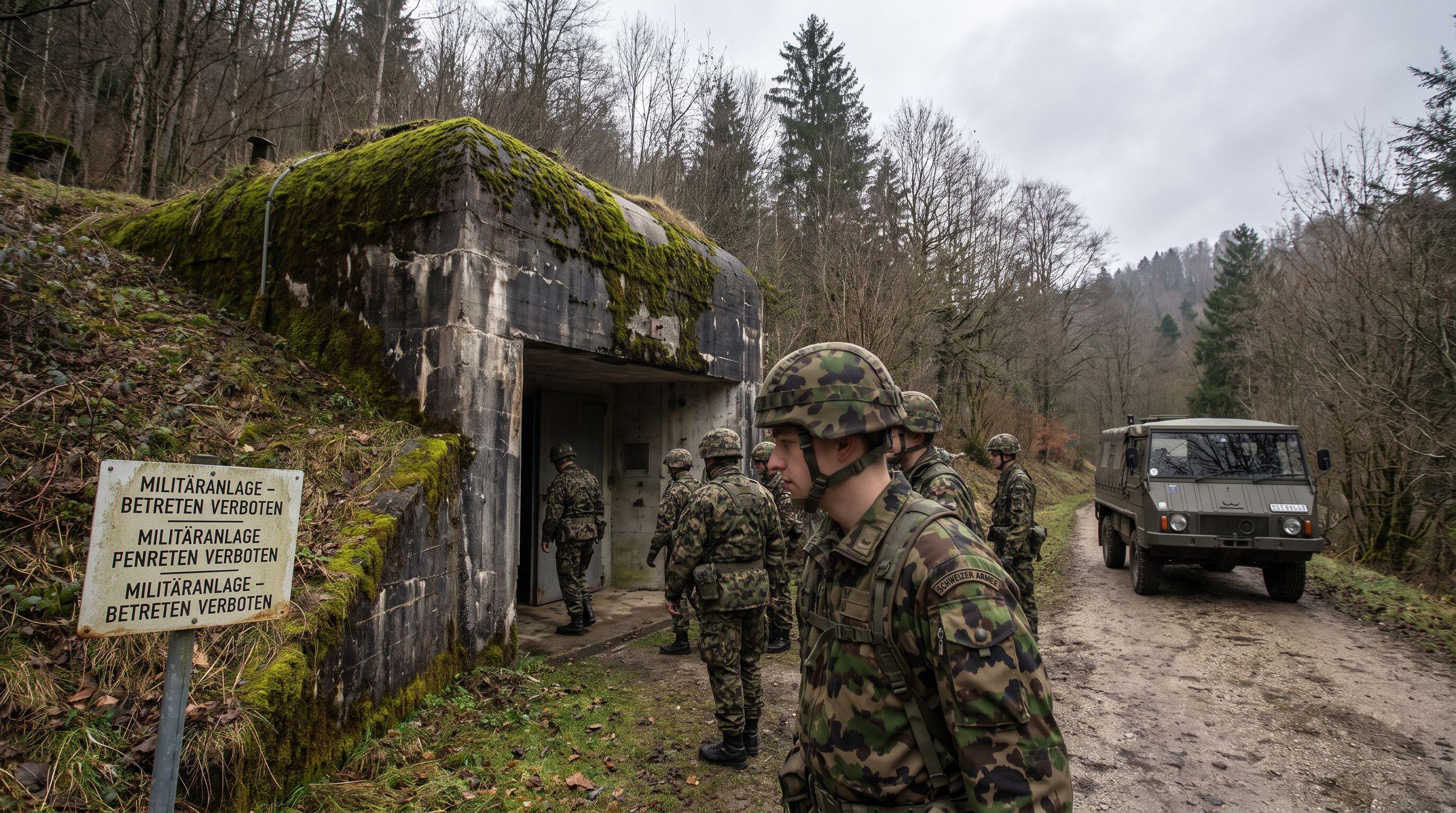
Fortress Switzerland Awakes
Switzerland is dusting off its Cold War legacy as the drums of war echo across Europe. The Federal Department of Defence, Civil Protection and Sport (DDPS) has confirmed a radical shift in strategy: the Swiss Army is now actively considering the reactivation of its vast, disused bunker network. This is not a drill. The tense geopolitical climate has shattered the illusion of a permanent peace, forcing Bern to confront a reality where 'protection, resilience, and decentralisation' are no longer buzzwords, but survival imperatives. As security requirements surge, the army is hunting for secure, hardened locations to house the lifeblood of a modern fighting force. From critical medicines to high-tech electronic equipment and lethal ammunition, the Swiss military is looking to go deep underground once again. This move signals a profound pivot in national defense, transforming dusty relics of the 20th century into vital assets for 21st-century deterrence.
Mobilizing the Underground Network
The Federal Office for Armament, Armasuisse, has officially launched a public tender to breathe life back into these subterranean caverns. This is a high-stakes search for innovation. The army isn't just looking for storage; it is seeking cost-effective, cutting-edge ways to reactivate a portfolio that includes everything from ammunition caverns and military hospitals to aircraft bunkers and command posts. While the exact number of facilities targeted remains a closely guarded state secret, the scope is massive. The military needs decentralized hubs to store consumables and spare parts that could be critical in a prolonged conflict. By spreading its resources across the rugged Alpine landscape, the Swiss Army aims to eliminate single points of failure. This strategy of 'active decentralisation' ensures that even if one hub is compromised, the nation's defensive backbone remains intact. The tender invites the brightest minds to solve the logistical puzzle of modernizing damp, forgotten tunnels into high-tech supply depots.
A Staggering Infrastructure of Survival
Switzerland’s underground capacity is nothing short of legendary, boasting a staggering 9,000,000 protected places. This means the nation can theoretically shelter its entire population and then some within its 370,000 private and public bunkers. However, the military's specific 'defence structures'—estimated by historical sources to number around 20,000—represent a different tier of readiness. These are the gun emplacements, the protected accommodation, and the hardened shelters designed to withstand the shocks of modern warfare. While the public shelters focus on civilian safety, these 20,000 military structures are the gears of the war machine. The sheer scale of this infrastructure is a testament to the Swiss 'Redoubt' strategy, a historical commitment to making the Alps an impenetrable fortress. Today, that commitment is being renewed. The army is grappling with the logistics of this immense portfolio, ensuring that the legacy of the past becomes the shield of the future.
The New Era of Armed Neutrality
This reactivation of bunkers is more than a logistical move; it is a powerful statement on the future of Swiss neutrality. As voters reconsider the very rules of neutrality, the army is taking no chances. The message is clear: Switzerland will defend itself with every tool at its disposal, including those buried deep within its mountains. The transition from 'disused' to 'operational' reflects a world where the luxury of complacency has evaporated. Looking ahead, the successful integration of these bunkers will redefine Swiss resilience for decades. It signals to the world that while Switzerland may be neutral, it is far from passive. The Alps are being re-armed, and the nation's defense strategy is sinking its roots deeper into the earth. As the study by Armasuisse concludes, the results will likely pave the way for a multi-year overhaul of national security infrastructure, ensuring that Fortress Switzerland remains as formidable as ever in an increasingly volatile Europe.