Climate
Germany’s fossil-fuel phase-out puts pressure on Switzerland
Germany plans to end its reliance on oil, coal and gas by 2045, while Switzerland has no equivalent fossil-fuel phase-out roadmap despite relying on fossil sources for almost 60% of its consumed energy. The comparison is likely to intensify debate over how Switzerland can meet its 2050 net-zero target.
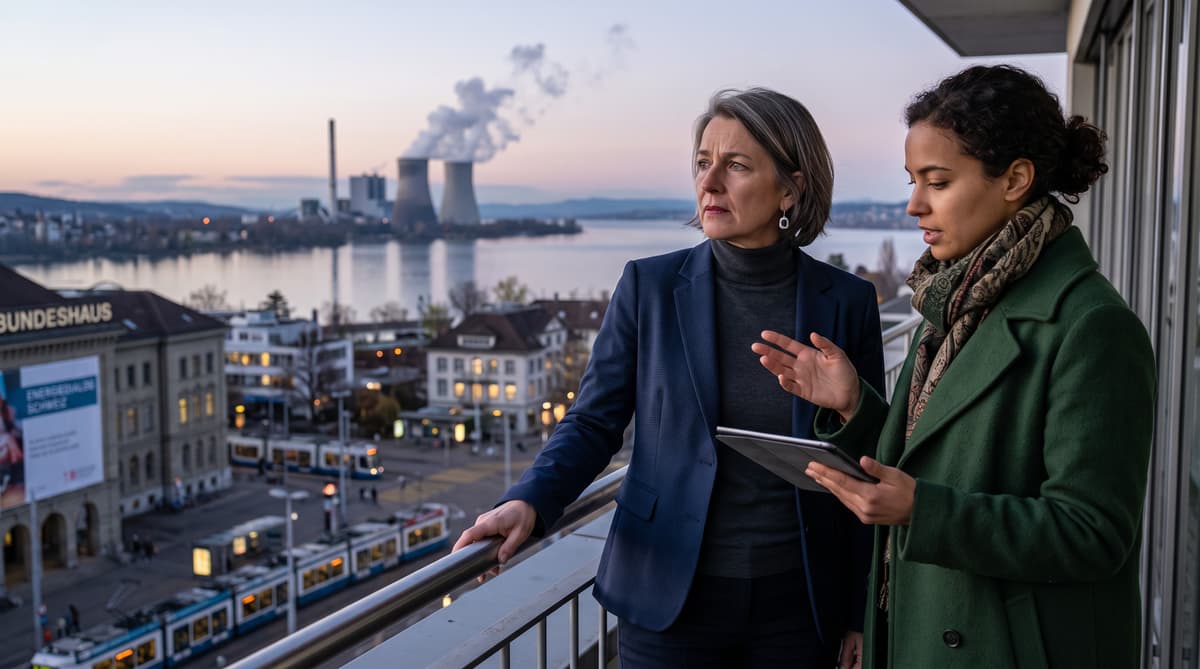
Almost 60% of Switzerland’s consumed energy still comes from fossil sources. That figure gives Germany’s new timetable immediate relevance in Bern, Zurich and households across the country. Germany’s environment ministry announced in September that Europe’s largest economy plans to end its dependence on oil, coal and gas by 2045. Its roadmap foresees an end to petrol consumption and puts electrification at the centre of transport, heating and industry.
Switzerland has a legally established goal of reaching net zero emissions by 2050. It has not adopted a comparable national date for ending fossil fuel use, nor a detailed plan that sets out how oil and gas consumption will fall sector by sector. The gap is becoming more visible as neighbouring countries publish firm milestones.
Extreme weather events and geopolitical crises, including disruption linked to the Strait of Hormuz, helped drive Germany’s decision. German authorities say fossil fuels produce 68% of global greenhouse gas emissions and nearly 90% of global CO2 emissions. For Switzerland, the issue is also practical. The country imports most of its petrol and heating oil from the European Union, tying its fuel supply and future investment choices to policy decisions made beyond its borders.
Follow Europe’s timetable
Germany is the third European country to publish a fossil fuel transition roadmap. The Netherlands and France announced plans before Berlin, creating a regional policy pattern that puts Switzerland’s slower approach under scrutiny.
Germany expects renewable energy to supply 80% of its electricity by 2030, compared with 55% today. The strategy links that expansion to electrification across the economy. New car registrations are expected to be battery powered from 2035, while electric systems are also intended to replace fossil fuels in heating and industrial processes.
France has set out an even more detailed sequence. Its plan targets coal by 2030, oil by 2045 and natural gas by 2050. From 2030, France aims to install at least one million heat pumps every year. Those targets will shape manufacturers, energy suppliers and cross border infrastructure, including markets that serve Swiss consumers.
Switzerland is part of the same European energy system, even when its domestic policy follows a different timetable. A German or French shift can affect vehicle availability, heating technology, fuel distribution and investment costs in Switzerland. It can also make Swiss companies assess whether their supply chains and products remain aligned with the direction of the surrounding market.
Guide household and business choices
A roadmap can influence decisions years before its final deadline. Gianfranco Guidati, deputy director of the Energy Science Center at ETH Zurich, said a clear phase out schedule would give consumers and companies stronger guidance when they replace heating systems or choose vehicles.
“An explicit fossil fuel phase-out roadmap has the advantage of having a strong psychological impact and providing clarity to the market,” Guidati told Swissinfo. His example is deliberately ordinary: a household deciding whether to replace an oil boiler, or a driver considering a diesel powered car. Long lived purchases made today can lock in fuel demand for years.
That investment signal matters in Switzerland because the country’s 2050 net zero objective does not, by itself, specify when petrol, heating oil or gas use must end. Without sector deadlines, households face uncertainty over which technologies will remain affordable, supported or compatible with future rules. Businesses face a similar calculation when they plan buildings, vehicle fleets and industrial equipment.
Germany’s approach therefore reaches beyond its national border. A clearly stated direction can redirect research, manufacturing and finance towards electric systems and renewable power. Swiss companies operating in German and French markets may encounter those expectations through suppliers, customers and regulators even if Switzerland does not copy the same dates.