cost of living
Why more Swiss middle-class households are struggling to make ends meet
Swiss households are facing mounting pressure from fixed costs, insurance and everyday prices despite stable employment and incomes. The article should use the experiences reported in Vaud to examine why financial strain is spreading into the middle class and how people are changing their spending and transport choices.
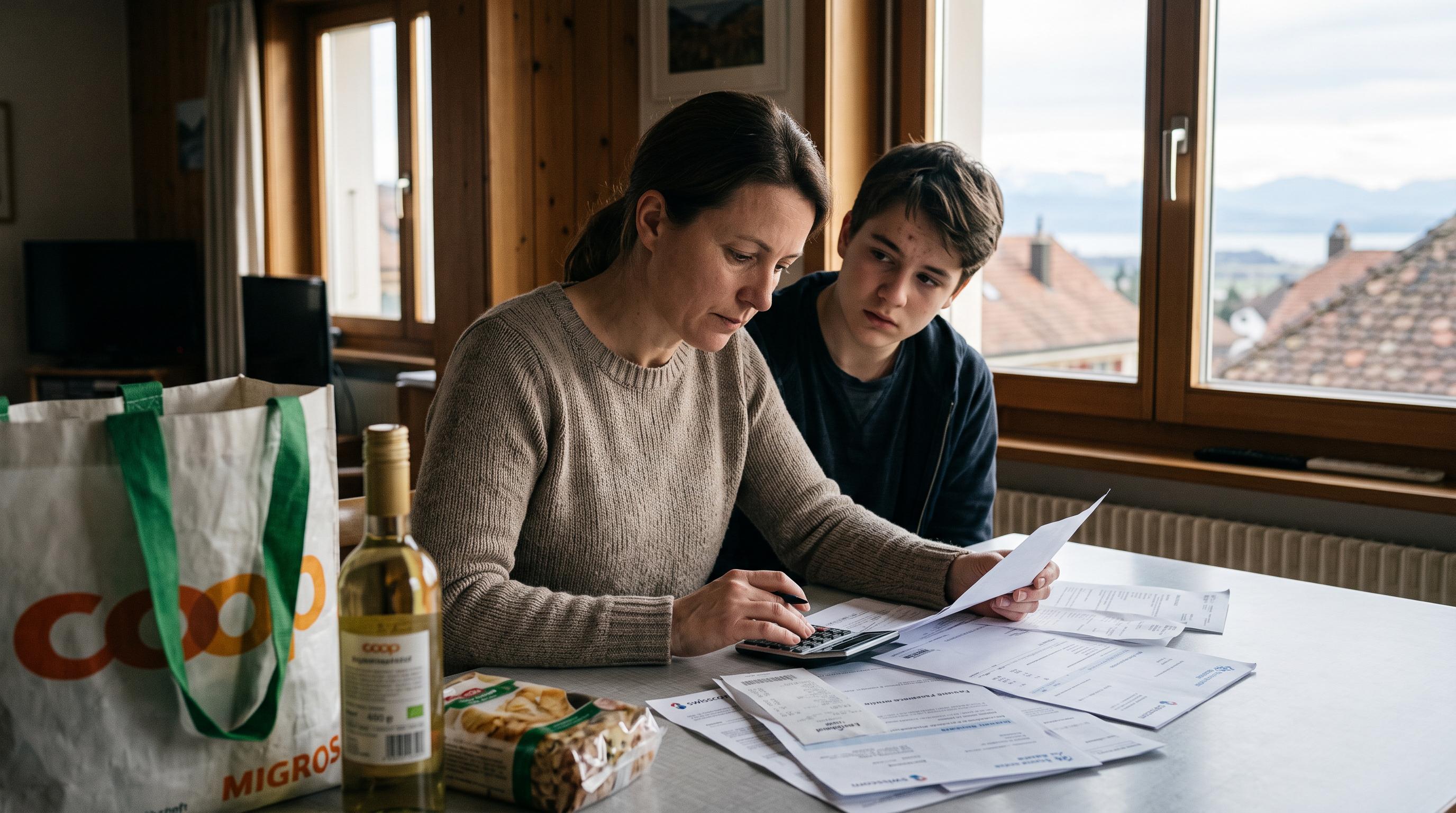
The bills reach the middle class
The pressure is reaching households that still have jobs, salaries and bills paid on time. At the market in Vevey, canton Vaud, shoppers describe ordinary purchases as increasingly difficult. One customer said prices were becoming unbearable. Another compared buying two or three items with “trying to buy gold”. Their comments reflect a wider squeeze driven by fixed costs, insurance premiums, food, fuel and housing expenses.
The strain appears in households with very different financial profiles. In Lucens, home care nurse Sabrina Meriem and municipal landscape gardener Mathieu Rochat have a combined net income of CHF 11,200 a month. Yet their taxes, mortgage, health insurance, food and fuel cost more than CHF 7,000. They can pay the bills, Rochat said, but less money remains for family activities.
The distinction matters in Switzerland, where the middle class is often treated as the country’s economic engine. Stable employment does not protect families from a budget dominated by recurring charges. When those charges rise, households have limited room to respond. They delay purchases, reduce leisure and watch the balance at the end of each month more closely.
Fixed costs consume the margin
More than CHF 7,000 a month disappears from one Lucens family budget before discretionary spending begins. Meriem and Rochat’s figures show how several ordinary obligations can combine into a heavy monthly load. Taxes, the mortgage, compulsory health insurance, food and fuel all compete for the same income. None is easily removed, and several are recurring commitments rather than occasional purchases.
Heating oil has become a particular concern for the family. Rochat has chosen not to fill the household tank completely, hoping the remaining supply will last through the winter and that prices will fall. The decision illustrates how families are managing risk as well as current costs. A household can remain solvent while becoming more exposed to a cold spell, a repair bill or another increase in a basic expense.
The emotional effect is clear in Rochat’s description of family life. The issue is not an unpaid invoice. It is the shrinking amount left after invoices have been settled. Holidays, meals out and other activities are among the first expenses to be reduced. For households with mortgages and children, that loss of flexibility can shape decisions for months.
Families cut leisure and food
89% of people surveyed in French speaking Switzerland said they now watch their monthly spending closely. The Qualinsight survey, conducted in January 2026, records a broad change in household behaviour. More than half of respondents said they were cutting back on leisure activities and holidays. 47% said they were making concessions on food.
These choices show where families can still make adjustments. A mortgage, tax bill or health insurance premium usually cannot be reduced quickly. Restaurant visits, weekend trips and the quality or quantity of groceries offer more immediate control. That flexibility comes at a cost to daily life, especially for households already working full time and planning around limited free hours.
The same pattern appears at the Vevey market, where shoppers describe buying fewer items and thinking harder before spending. The survey does not suggest every household faces the same level of hardship. It does show that financial caution has moved well beyond people on the lowest incomes. Middle income households are changing consumption because higher recurring costs leave less room for choices that once seemed routine.
For businesses reliant on domestic spending, fewer meals out, shorter holidays and smaller shopping baskets also carry consequences.
Transport choices carry a price
Transport costs can force decisions that permanently change how people live. A woman in Vevey who receives a state pension of CHF 1,700 a month sold her car because parking, insurance and other running costs had become unaffordable. The decision removes a major expense, but it can also limit access to shops, healthcare, work and social contacts, particularly outside dense urban areas.
Her experience sits alongside the choices made by working households. In Lucens, fuel is part of the monthly calculation for a nurse and a municipal landscape gardener. In rural Vaud, where daily journeys may be longer and public transport less convenient, fuel costs compete with food, housing and insurance payments.
The source accounts do not provide a regional comparison of car ownership or public transport use. They do show how transport has become part of the household cost cutting exercise. A car may be essential for employment or family logistics, yet its fixed and variable costs can make it one of the few major items that people can remove.
Selling a vehicle, driving less or postponing maintenance can reduce spending quickly. Each option can also narrow a household’s choices, especially for older people and families living beyond major centres.
Income does not end the squeeze
A family farm in Poliez Pittet reports around CHF 280,000 in annual gross income and regular outgoings of CHF 20,000 a month. The figures underline the difference between income and money available for everyday life. Gross earnings do not account for taxes, operating costs, debt, insurance or the other expenses that determine what a household can actually spend.
Aurore Carrard’s description is direct: “We work to pay the bills, that’s all.” Her family’s experience, the Lucens household’s heating decision and the pensioner’s car sale point to the same adjustment across different parts of Vaud. People are protecting essential payments first, then cutting activities, travel, food choices and transport where they can.
The January survey suggests these decisions are widespread in French speaking Switzerland. 89% monitor monthly spending, more than half reduce leisure or holidays, and 47% cut back on food. Those figures offer a snapshot of behaviour rather than a complete measure of household hardship, but they show how the cost of living is changing routines.
The pressure will remain visible in what people postpone and abandon: a restaurant weekend, a full heating tank, a car or a larger grocery shop. In Vaud, households are already making those calculations month by month.