economy
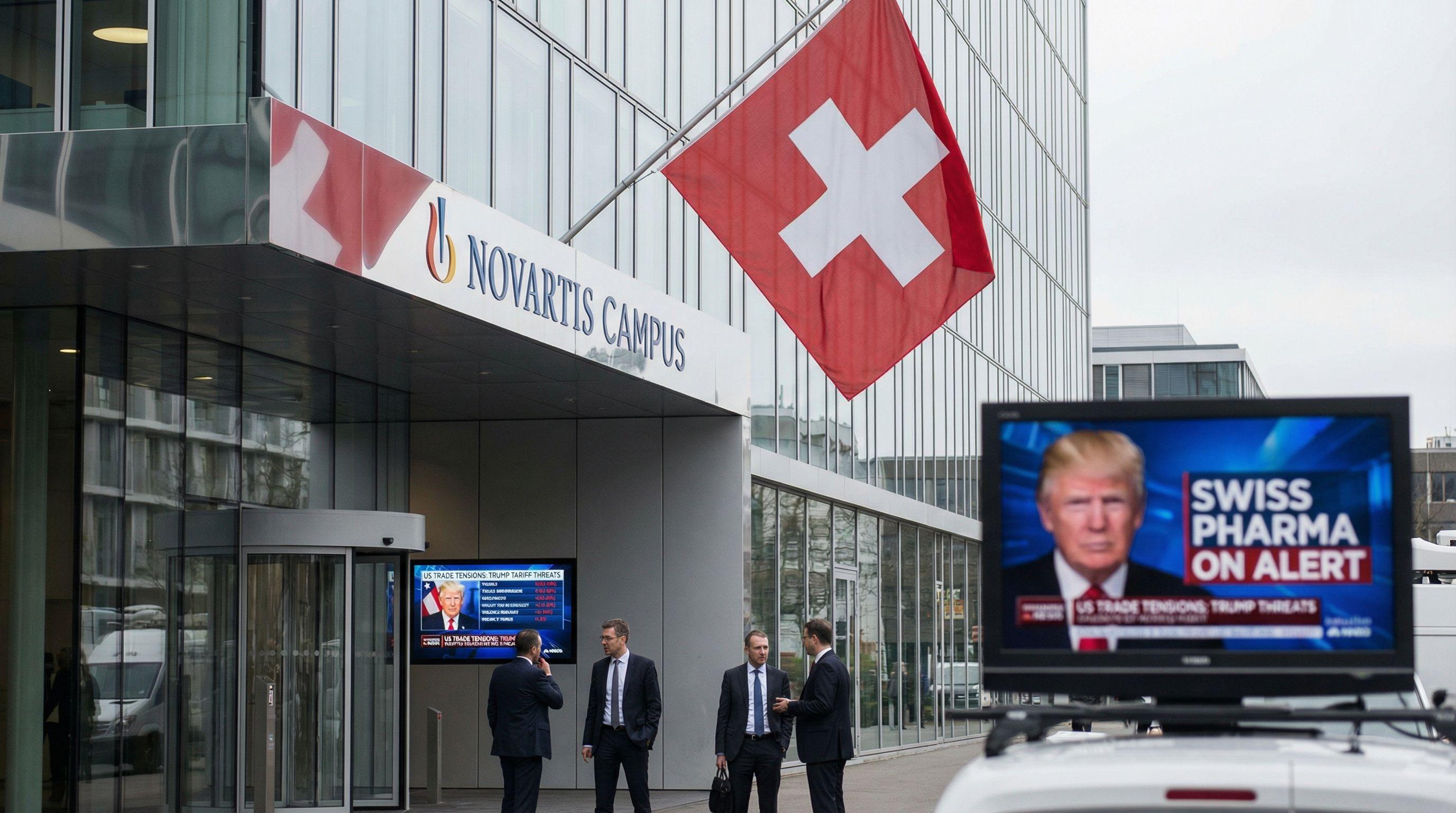
Trump Tariff Threats Put Swiss Pharma Industry on Alert
Swiss pharmaceutical sector faces potential disruption as Trump administration signals new tariff plans, with industry leaders expressing concerns over possible production relocations
The Billion-Franc Target
A staggering 60% of all goods exported from Switzerland to the United States are pharmaceuticals, placing the nation’s most vital industry directly in the crosshairs of President Trump’s aggressive trade agenda. As the new administration signals a return to protectionist policies, the Swiss pharmaceutical juggernaut confronts a precarious new reality. The massive trade surplus Switzerland enjoys—driven largely by medicines—is precisely the kind of economic imbalance that Trump has historically labeled a "thorn in the side" of American interests.
According to a critical new study by UBS, the sector is "particularly vulnerable" to the looming threat of tariffs. While the watch industry remains insulated by the price inelasticity of luxury goods, the pharmaceutical sector faces a more complex battlefield. UBS economists warn that while immediate demand for life-saving drugs may not plummet, the political pressure is undeniable. The sheer volume of exports makes the target on Swiss pharma impossible to ignore, forcing industry leaders to calculate the cost of a trade war that could reshape the transatlantic economic landscape.
Roche Stands Defiant
In stark contrast to the broader industry anxiety, Roche CEO Thomas Schinecker projects an air of calculated calm. "We are relatively relaxed," Schinecker declared, dismissing fears that the pharma giant’s sales targets are in jeopardy. His confidence stems from a strategic footprint that effectively future-proofs the company against border taxes: Roche has already embedded its entire value chain within the United States.
With a massive workforce of 25,000 employees on American soil, Roche is not merely an exporter; it is a major domestic employer. Schinecker argues that because the company has invested heavily in local research, development, and production, it aligns perfectly with Trump’s desire for internal investment. "We are already well invested," he emphasized, positioning Roche as a model of the localized production the Trump administration demands. However, Schinecker did not spare domestic policy, criticizing Bern for implementing the OECD minimum tax too quickly, arguing that Switzerland "should have waited" to see global competitors' moves before surrendering its competitive edge.
The Relocation Risk
While giants like Roche may feel secure, the long-term implications for the broader Swiss economy are alarming. UBS economists caution that sustained trade barriers could force a structural exodus, pushing pharmaceutical companies to relocate production and research departments directly to the US to bypass tariffs. This is not an overnight shift, but a slow, irreversible bleed of industrial capacity.
Such a migration would deal a severe blow to Switzerland, stripping the nation of critical value creation and decimating tax revenues. The UBS study highlights that while expanding new sites takes years, the incentive to do so is growing stronger. If the Trump administration pursues a "very aggressive trade policy," the 1.5% economic growth currently forecast for Switzerland could be slashed. The threat is not just about the cost of selling pills today; it is about where those pills will be invented and manufactured tomorrow.
Diplomatic Leverage
Despite the looming shadows, Switzerland holds a powerful ace in the hole: direct investment. Swiss companies are responsible for employing between 300,000 and 400,000 people across the United States. This massive job creation record offers Bern a potent diplomatic shield. While the trade balance in goods is heavily skewed in Switzerland's favor, the ledger balances out almost perfectly when services are included—a nuance that the Biden administration acknowledged, but one that remains uncertain under Trump.
Roche’s Schinecker underscores the necessity of maintaining open borders, not just with the US, but with the EU, Switzerland’s largest trading partner. He warns that isolationism is a dead end for a globally active company. As the Swiss government navigates this minefield, the argument is clear: penalizing Swiss imports doesn't just hurt Switzerland; it strikes at hundreds of thousands of American jobs sustained by Swiss capital. The question remains whether this economic reality will be enough to stay the hand of an administration focused on "America First."